English
- English
- Español
- Português
- русский
- Français
- 日本語
- Deutsch
- tiếng Việt
- Italiano
- Nederlands
- ภาษาไทย
- Polski
- 한국어
- Svenska
- magyar
- Malay
- বাংলা ভাষার
- Dansk
- Suomi
- हिन्दी
- Pilipino
- Türkçe
- Gaeilge
- العربية
- Indonesia
- Norsk
- تمل
- český
- ελληνικά
- український
- Javanese
- فارسی
- தமிழ்
- తెలుగు
- नेपाली
- Burmese
- български
- ລາວ
- Latine
- Қазақша
- Euskal
- Azərbaycan
- Slovenský jazyk
- Македонски
- Lietuvos
- Eesti Keel
- Română
- Slovenski
- मराठी
- Srpski језик

What is the technical analysis of box-type substations in Europe, the United States, and China?
What is the technical analysis of box-type substations in Europe, the United States, and China?
From the perspective of electrical engineers, European, American, and Chinese (Chinese-style) containerized substations represent three distinct technical approaches based on differing grid standards, geographical environments, and market demands. The core differences lie in four key dimensions: structural integration, protection configurations, thermal management design, and standardization systems. These differences give rise to distinct application scenarios and evolutionary trajectories.
American-style substations prioritize compactness and cost-effectiveness to enable widespread deployment; European substations, on the other hand, emphasize advanced environmental performance and aesthetically pleasing integrated designs; whereas Chinese substations often adopt pragmatic hybrid solutions that balance the differences between the two in terms of integration, cost, and design. These differences profoundly influence the scale, structural composition, internal design, key equipment configuration, safety features, installation and maintenance methods, and ultimately the suitability of the substations for specific applications.
The following provides an in-depth analysis from three perspectives: technical details, application scenarios, and future trends.
I. In-Depth Comparison of Core Technical Details for Three Major Types of Box Type Substations
1. European Box Type Substations (European-style Box Type Substations, EU/IEC Standards)
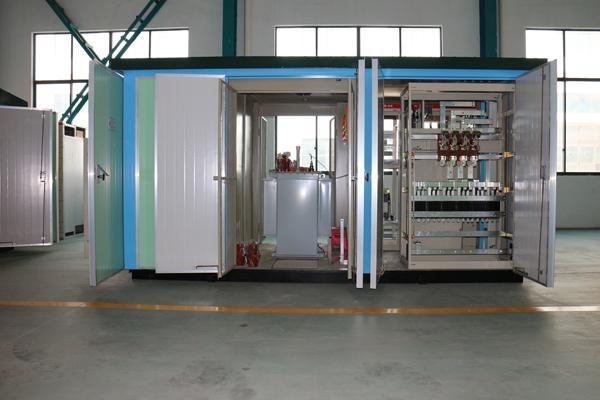
Core Definition: Compliant with IEC 62271-202 and IEC 61330 standards, these substations feature an independent three-compartment modular structure and represent the globally dominant form of “Box Type Substations.”
(1) Structure and Layout
· Three completely independent compartments: The high-voltage compartment, transformer compartment, and low-voltage compartment are fully separated by metal partitions, forming a “目” or “品” shape layout.
· Enclosure and Protection: Double-layer steel plates with a polyurethane insulation layer; protection rating IP54–IP55; strong dustproof, waterproof, and anti-condensation capabilities.
· Foundation Requirements: Requires a standard cable trench, an independent foundation, and a reserved maintenance access passage (≥800 mm).
(2) Core Component Configuration
· High-Voltage Side: Standard configuration includes SF6 ring main units or air-insulated switchgear, integrated with load break switches, isolating switches, earthing switches, and surge arresters, featuring five-prevention interlocks.
· Transformer: Primarily SCB series dry-type transformers (epoxy resin cast), with capacities ranging from 50kVA to 2500kVA; forced air cooling (temperature control + axial fans).
· Low-Voltage Side: Draw-out switchgear, including frame circuit breakers, smart capacitor compensation, smart meters, and surge protection modules, offering exceptional scalability.
· Protection System: The high-voltage side offers optional “load switch + fuse” or circuit breaker protection (overcurrent, instantaneous, overload, and ground fault protection); the low-voltage side features comprehensive distribution protection.
(3) Key Technical Characteristics
· Safety: Independent compartments with strong arc fault isolation capability (internal arc withstand rating of 20kA/0.5s).
· Maintainability: Each unit can be de-energized independently for maintenance; low-voltage side maintenance can be performed without power interruption.
· Losses and Energy Efficiency: Dry-type transformers are fire-resistant, leak-free, and low-noise, but their no-load losses are slightly higher than those of oil-filled transformers.
· Size: Largest in volume for the same capacity, approximately 1.5 to 3 times that of American-style units.
2. American-Style Box Type Substation (American-style Box Type Substation, IEEE/ANSI standards)
Core Definition: Complies with IEEE C57.12.25 and ANSI C84.1 standards; features a highly integrated, common-enclosure structure, also known as a “combined-type transformer (ZGS).”
(1) Structure and Layout
· Integrated Common Tank: No separate high-voltage compartment; the high-voltage load switch, fuses, tap changer, and transformer core are all immersed in the same oil tank.
· Oil-less design: Features a fully sealed “oil + air gap” structure, with the tank and radiator directly exposed for heat dissipation.
· Enclosure and Protection: Single-layer steel plate, protection rating IP34D–IP44, emphasizing protection against dust and solid foreign objects.
· Foundation Requirements: Simple platform foundation; no cable trench required; direct cable plug-in connections.
(2) Core Component Configuration
· High-Voltage Side: Elbow-type cable plug + plug-in fuse + load switch; fully insulated, fully shielded, and touch-safe, simplified to the utmost.
· Transformer: Fully sealed oil-immersed transformer, capacity 315 kVA–1,600 kVA; transformer oil serves as both the insulating and cooling medium.
· Low-Voltage Side: Compact molded-case circuit breaker cabinet with simplified protection configuration (overload, short-circuit, undervoltage).
· Protection System: High-voltage fuses protect against internal transformer faults; low-voltage molded-case circuit breakers protect the line; no relay protection devices.
(3) Key Technical Characteristics
· Compactness: Minimal volume, with a footprint of 1/4 to 1/3 that of European-style units, and 15% to 20% lower cost.
·Installability: “Plug-and-play”; installation time is only one-third that of European-style units.
·Heat Dissipation: Open-air cooling; high overload capacity (allows 2x overload for 2 hours).
Limitations: Maintenance requires a complete power outage; high-voltage components are oil-immersed, making post-failure repairs complex and prone to leakage.
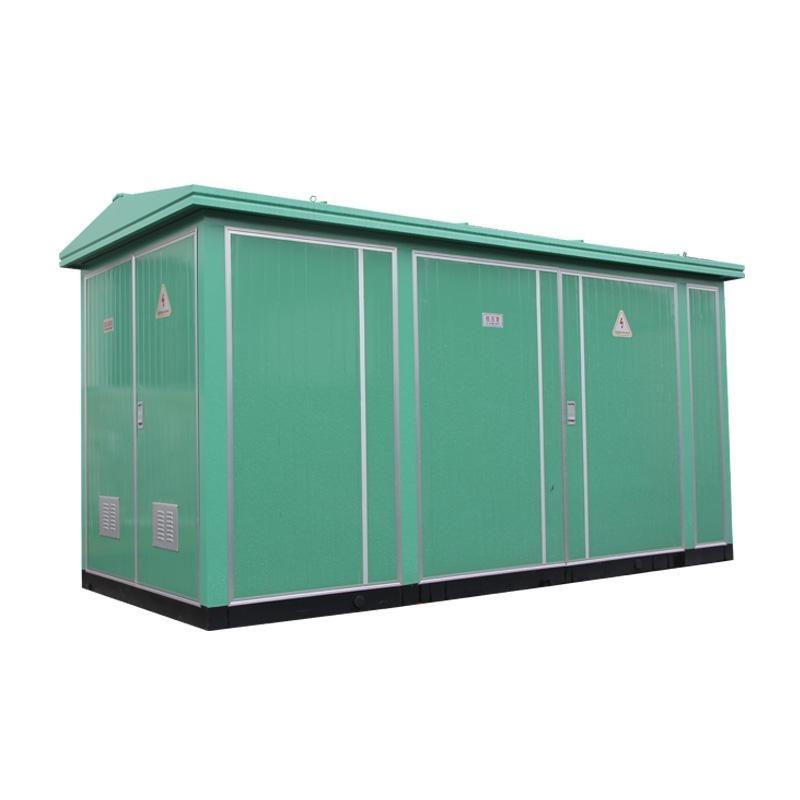
3. Chinese Box Type Substations (Chinese-style / Huashi-style Box Type Substations, GB Standard)
Core Definition: Combining European modularity with American compactness, these substations comply with GB/T 17467-2020 (High-Voltage/Low-Voltage Box Type Substations) and feature a localized, modified three-compartment structure.
(1) Structure and Layout
· Three independent yet compact compartments: The high-voltage, transformer, and low-voltage compartments are separate but feature reduced dimensions (falling between European and American standards).
· Optimized layout: Mainly “目”-shaped, single-row longitudinal layout (compliant with IEEE electromagnetic compatibility requirements), adapted to Chinese power grid installation standards.
· Enclosure and Protection: Double-layer steel plate, IP44–IP54, enhanced corrosion resistance, seismic resistance (designed for seismic intensity IX), and high-temperature resistance (-25°C to +40°C).
(2) Core Component Configuration (Enhanced Localization)
· High-Voltage Side: Standard configuration includes domestically produced air-insulated/SF6 ring main units, compatible with both European circuit breaker solutions and American elbow plug solutions.
· Transformers: Choice of dry-type or oil-immersed models (SCB14/S15, Class 1 energy efficiency); enhanced short-circuit withstand capability (10 kV/25 kA/3 s, exceeding the IEC standard of 20 kA/2 s).
· Low-Voltage Side: Integrated smart power distribution, automatic reactive power compensation, harmonic mitigation, and remote monitoring, tailored to meet China’s distribution network automation requirements.
· Protection System: Dual-redundant protection, with high-voltage fuses + circuit breakers as backup protection; equipped with non-electrical protection features such as over-temperature, gas, and pressure relief.
(3) Key Technical Characteristics
· Adaptability: Fully compatible with China’s 10kV/20kV distribution networks, short-circuit levels, and grounding configurations.
· Cost-Effectiveness: Lower cost than European designs, higher reliability than American designs.
· Intelligence: Standard IoT monitoring (telemetry, telecontrol, and remote control), supports the IEC 61850 protocol.
Technical Parameters Comparison of Three Major Box-Type Substations
|
Comparison Items |
European Box Type Substation |
US Box Type Substation |
Chinese Box Type Substation |
|
Standard System |
IEC 62271, IEC 61330 |
IEEE C57.12.25, ANSI |
GB/T 17467-2020 |
|
Structure Type |
Three fully independent compartments, modular |
Integrated common tank (HV&transformer in one tank) |
Three independent compartments, compact design |
|
Ingress Protection Rating |
IP54~IP55 |
IP34D~IP44 |
IP44~IP54 |
|
Transformer Type |
Dry-type (mainstream) |
Oil-immersed (only option) |
Dry-type / Oil-immersed optional |
|
High-Voltage Configuration |
Ring Main Unit / Switchgear (circuit breaker) |
Plug-in fuse + load switch |
Ring Main Unit (compatible with plug-in connectors) |
|
Short-Time Withstand Current |
20kA/2s |
16~20kA/2s |
25kA/3s (enhanced) |
|
Volume / Footprint |
Largest |
Smallest (1/3 of European type) |
Medium (between European and US) |
|
Maintenance Method |
Independent maintenance per compartment |
Overall power cutoff required for maintenance |
Independent maintenance per compartment |
|
Cost |
High |
Low (15%~20% lower) |
Medium |
II. Precise Matching of Application Scenarios (Selection Criteria for Electrical Engineers)
1. Application Scenarios for European-Style Box Type Substations
Core Selection Criteria: High reliability, high safety, strong scalability, and environmental sustainability as a priority
· City centers / Landmark buildings: Commercial complexes, super-high-rise buildings, CBDs (fire safety, low noise, landscape integration).
· Industrial / High-Reliability Loads: Data centers, precision manufacturing, rail transit, hospitals (uninterrupted power supply, maintenance without power outage).
· Renewable Energy Grid Integration: Wind power / PV step-up substations (harmonic mitigation, reactive power compensation, intelligent monitoring).
· Environmentally Sensitive Areas: Schools, residential areas, scenic spots (no oil leakage, dry-type insulation).
2. Application Scenarios for US Box Type Substations
Core Selection Criteria: Low Cost, Rapid Deployment, Extremely Limited Space
· North American Power Grid: Local distribution networks in the US and Canada (standard compliance).
· Renovation of Older Residential Areas: Urban grid endpoints with limited space and short construction cycles.
· Temporary / Emergency Power Supply: Construction sites, trade shows, disaster relief (plug-and-play, relocatable).
· Rural / Suburban Grids: Areas with low load density, large supply radii, and limited O&M capabilities.
3. Application Scenarios for Chinese Box Type Substations
Core Selection Criteria: Compatibility with the Chinese power grid, high cost-effectiveness, and intelligent O&M
· Urban and Rural Distribution Networks in China: New residential communities, industrial parks, and municipal public facilities (10kV standard, short-circuit level matching).
· Distribution Network Automation Upgrades: Full coverage of “Three Remotes” (remote measurement, remote signaling, remote control), smart grid nodes.
· “New Infrastructure”: 5G base stations, charging station clusters, energy storage power stations (integrated source-grid-load-storage interfaces).
· Export / Belt and Road: Adapted for markets in Southeast Asia, the Middle East, Africa, and other regions with mixed IEC and GB standards.
III. Future Development Trends (Evolutionary Directions of the Three Major Technology Pathways)
1. Global Common Trends (Upgrades Shared by All Three Pathways)
(1) Low-Carbon and High Energy Efficiency
· Mandatory Energy Efficiency Upgrades: Starting in 2026, Tier 1 energy efficiency standards will be mandatory in major global markets (reducing no-load losses by 40%).
· Environmentally Friendly Insulation Substitutes: Zero use of SF6 (replaced by dry air, N₂, and eco-friendly gases); mineral oil replaced by natural ester vegetable oil.
· Widespread Adoption of Amorphous Alloys: No-load losses 70%–80% lower than traditional materials; penetration rate in the State Grid to reach 50% by 2030.
(2) High Intelligence (AIoT)
·Edge Computing + Digital Twins: Real-time status monitoring, fault prediction (accuracy >95%), remote diagnostics, and automated generation of O&M reports.
·Full IEC 61850 Compliance: Plug-and-play functionality, enhanced interoperability, and seamless integration with smart grid dispatch systems.
· 5G + IoT: Remote control, arc detection, over-temperature alerts, energy consumption analysis; unmanned operation becomes standard.
(3) Integration and Prefabrication
· “Multi-compartment integration”: Prefabricated modules integrating substation, energy storage, PV, and charging stations, reducing footprint by an additional 30%.
·Modular, building-block design: Standardized modules, factory pre-assembly, and zero on-site wiring reduce installation time to within one day.
2. Differentiated Evolution of Three Major Product Lines
(1) European Switchgear: Ultimate Safety + Green Zero-Carbon
·Enhanced internal arc protection (arc extinction ≤0.1s), explosion-proofing, and fire resistance ratings.
· Entire series is oil-free, fully dry-type, and made of recyclable materials, compliant with EU “carbon neutrality” regulations.
· Focuses on 40.5kV high-voltage, high-capacity applications and smart microgrid master station scenarios.
(2) U.S. Box Type Substations: Minimalist Integration + Low Cost
· Further miniaturization and weight reduction, tailored for North American distributed PV and residential energy storage systems.
· Utilizes IoT for simplified monitoring, emphasizing a low-cost O&M model based on “failure-to-replace.”
· Focuses on loosely structured distribution grid markets in North America, Latin America, and Australia.
(3) Chinese Box Type Substations: Universal Adaptability + Smart Integration
· Dual-standard compatibility (IEC+GB), with enhanced adaptability to extreme environments (extreme cold, high humidity, high altitude).
· Integrated generation, grid, load, and storage: Deep integration of energy storage inverters (PCS) and energy management systems (EMS).
· AI-powered predictive maintenance: Empowered by domestic algorithms, MTBF increased to over 100,000 hours.
· Leading the way with dual breakthroughs in the global mid-to-low-end market
IV. Summary: Fundamental Differences in Technical Approaches
· European: Safety-first, modular, and highly reliable, representing a “precision-engineering” technical approach.
· American: Cost-first, integrated, and rapid deployment, representing an “economy-oriented” technical approach.
· Chinese Approach: Adaptability-first, localization, and intelligence, representing the “balanced” technical approach.
Over the next 3 to 5 years, these three approaches will draw from one another, and their boundaries will blur: the European approach will become more compact, the American approach more intelligent, and the Chinese approach more internationalized, ultimately converging toward a unified technical paradigm of “intelligence, low carbon, integration, and standardization.”
FAQ for European, American & Chinese Box-Type Substations
1. What are the core standard systems for the three types of box-type substations?
· European: IEC 62271, IEC 61330
· American: IEEE C57.12.25, ANSI
· Chinese: GB/T 17467-2020
2. What are the main structural differences?
· European: Three fully independent compartments, modular design
· American: Integrated common tank, high-voltage and transformer shared oil tank
· Chinese: Three independent compartments, compact and optimized layout
3. Which transformer type is used in each type?
· European: Mainly dry-type transformer
· American: Only oil-immersed transformer
· Chinese: Dry-type or oil-immersed optional
4. Which has the smallest volume and footprint?
American box substation, only about 1/3 of the European type.
5. Which has the strongest short-circuit withstand capability?
Chinese box substation, up to 25kA/3s enhanced level.
6. Can maintenance be performed without full power outage?
· European & Chinese: Yes, compartmental independent maintenance
· American: No, overall power cutoff required
7. Which type has the lowest cost?
American box substation, 15%–20% lower than European type.
8. What are the typical application scenarios?
· European: Urban core areas, data centers, high-safety industrial sites
· American: Narrow space, quick construction, rural and temporary power supply
· Chinese: Urban and rural distribution networks, new infrastructure, smart grids
9. What is the future development trend?
Common: High efficiency, intelligence, SF6-free, integration
· European: Extreme safety, zero carbon, dry-type full series
· American: Miniaturization, low-cost replacement mode
· Chinese: IEC+GB compatibility, source-grid-load-storage integration
10. Which is most suitable for Chinese power grid projects?
Chinese box substation, best matching 10kV/20kV distribution network, protection and intelligent requirements.
Related News
- Start by Choosing the Right JXF
- SG(B)10-10KV environmentally friendly dry-type transformer: How to deliver safe and green answers under non-encapsulated structure?
- What are the hazards of transformer overload operation? How to carry out real-time load monitoring?
- How can oil immersed transformers achieve future green development in the context of "dual carbon"?
- What does the internal structure of a dry-type transformer look like when disassembled?
- How to choose between power cabinet and lighting distribution box?
Leave me a message