English
- English
- Español
- Português
- русский
- Français
- 日本語
- Deutsch
- tiếng Việt
- Italiano
- Nederlands
- ภาษาไทย
- Polski
- 한국어
- Svenska
- magyar
- Malay
- বাংলা ভাষার
- Dansk
- Suomi
- हिन्दी
- Pilipino
- Türkçe
- Gaeilge
- العربية
- Indonesia
- Norsk
- تمل
- český
- ελληνικά
- український
- Javanese
- فارسی
- தமிழ்
- తెలుగు
- नेपाली
- Burmese
- български
- ລາວ
- Latine
- Қазақша
- Euskal
- Azərbaycan
- Slovenský jazyk
- Македонски
- Lietuvos
- Eesti Keel
- Română
- Slovenski
- मराठी
- Srpski језик

What are the hazards of transformer overload operation? How to carry out real-time load monitoring?
As the core hub of the power system, the stable operation of transformers is directly related to the security of the power grid and the reliability of power supply. However, in actual operation, due to factors such as seasonal power peaks, unexpected load growth, equipment aging, etc., transformer overload operation occurs from time to time. This article will start from the harmful mechanism of overload operation, combine it with actual operation and maintenance experience, analyze its potential risks in detail, and introduce several practical load real-time monitoring methods to provide reference for power operation and maintenance personnel.
I. Core hazards of transformer overload operation
1. Increased temperature rise accelerates insulation aging
The most direct consequence of transformer overload is the increase in winding current. According to Joule's law (Q=I^2Rt), copper loss increases in proportion to the square of the current, causing the winding temperature to rise sharply. The insulating oil of oil-immersed transformers will crack under long-term high temperature, producing gas and sludge, reducing the insulation strength and heat dissipation performance. The epoxy resin insulation layer of dry-type transformers will crack and carbonize after exceeding the rated temperature, and the insulation performance will decrease exponentially.
Typical data: For every 6°C increase in the hot spot temperature of the oil-immersed transformer winding, the insulation life is approximately halved (following the "six degrees rule"). If the overload is 10% for a long time, the temperature of the winding hot spot may increase by 15-20°C, and the insulation life will be shortened to 1/3 of the original or even lower.
2. Mechanical stress increases, causing winding deformation
The electromagnetic force endured by the winding during overload is proportional to the square of the current. When short-circuit current or continuous overload current flows through the winding, the axial and radial electromagnetic forces increase significantly, which may cause the displacement of the winding pad, deformation of the wire, and wear of the insulation between turns. This kind of damage is often cumulative and difficult to detect through routine testing in the early stage, but it lays hidden dangers for subsequent sudden short-circuit faults.
3. The cooling system is overloaded, forming a vicious cycle
Overloading causes heat generation to far exceed the design capabilities of the cooling system. If the radiator, oil pump, and fan of an oil-immersed transformer operate at full load or even overload for a long time, problems such as fan motor burnout and oil pump failure are prone to occur. Once the cooling system fails, the winding temperature will rise sharply in a short period of time, which may directly trigger heavy gas protection action or cause insulation breakdown.
4. Shorten equipment life and increase operation and maintenance costs
Long-term overload operation puts the transformer in a "sub-healthy" state, which not only shortens the life of the transformer, but also significantly increases the probability of failure. Statistics show that the unplanned outage rate of overloaded transformers is 2.5-3 times that of normal-loaded transformers, and the maintenance cost increases by more than 40%, which is often accompanied by indirect costs such as power outage losses.
5. Safety risks: fire and explosion hazards
When severe overload occurs and cooling fails, the internal temperature of the transformer can reach over 300°C, and the insulating oil vaporizes to produce a large amount of flammable gas. When the internal pressure exceeds the endurance limit of the tank, it may cause the box to burst or even cause a fire accident. When a dry-type transformer is severely overloaded, the burning of epoxy resin will release toxic gases, threatening personnel safety.
II. Real-time monitoring method of transformer load
To achieve early detection and early warning of transformer overload, a complete real-time load monitoring system must be established. The following introduces several monitoring methods that have been proven in practice:
1. Online monitoring of electrical parameters
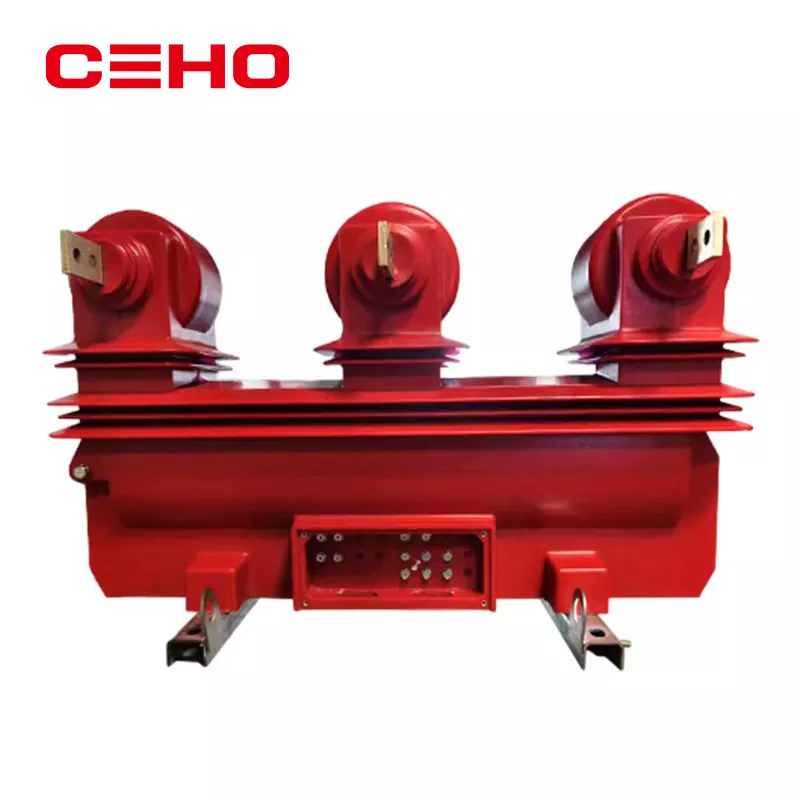
Current transformer + smart meter solution: Install high-precision current transformers on the high and low voltage sides of the transformer, and cooperate with multi-functional smart meters to collect three-phase current, voltage, active/reactive power, power factor and other parameters in real time. By calculating the real-time load rate (load rate = current apparent power/rated capacity × 100\%), set the early warning threshold (usually 80% early warning and 100% alarm are recommended).
Key indicators:
| Monitoring Parameters | Normal Range | Warning Threshold | Alarm Threshold |
| Load rate | ≤70% | 80% | 100% |
| Three-phase unbalance | ≤15% | 20% | 30% |
| power factor | ≥0.9 | 0.85 | 0.8 |
2. Real-time temperature monitoring
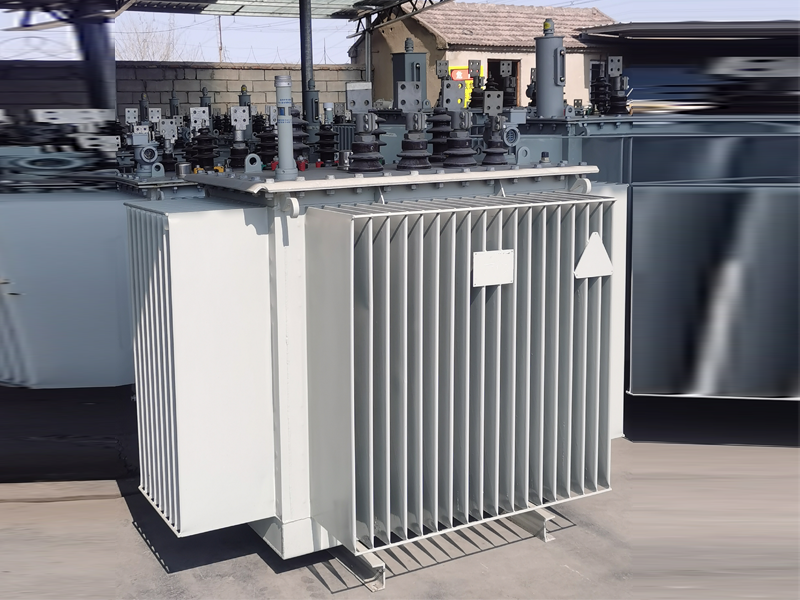
Oil-immersed transformer: Install fiber optic temperature measurement or platinum resistance (PT100) sensors at the winding hot spots, top oil temperature, and bottom oil temperature. The top oil temperature should generally not exceed 85°C (pre-warning 90°C, alarm 95°C), and the winding hot spot temperature should not exceed 105°C (pre-warning 110°C, alarm 120°C).
Dry-type transformer: Use the embedded PT100 temperature sensor or infrared thermal imager to monitor the winding temperature in real time. Class F insulation dry transformer winding temperature is usually controlled below 125°C (pre-alarm 140°C, alarm 155°C).
Intelligent temperature control box: The temperature control box equipped with modern dry-type transformers can automatically collect temperature data and upload it to the monitoring background through RS485 or Modbus protocol to achieve remote viewing and over-limit alarm.
3. Oil chromatography online monitoring (for oil-immersed transformers)
The concentration changes of dissolved gases (H₂, CH₄, C₂H₂, C₂H₄, C₂H₆, CO, CO₂) in the transformer oil are monitored in real time through an online oil chromatography device. When overload causes local overheating, the concentration of characteristic gases (such as ethylene and acetylene) will increase significantly. Combined with the three-ratio method, the fault type and severity can be determined to achieve early warning.
4. Intelligent comprehensive monitoring system
Currently, mainstream smart transformer monitoring terminals (such as DGA online monitoring devices and smart sensor gateways) can integrate the above-mentioned monitoring functions and upload data to the cloud platform or local SCADA system through 4G/5G or wired networks. The system has the following functions:
• Real-time load curve: displays 24-hour load change trend and identifies peak and valley characteristics
• Hot spot temperature calculation: Based on the thermal model algorithm of the IEC 60076-7 standard, calculate the winding hot spot temperature
• Overload capability evaluation: dynamically calculate allowable overload time and multiples based on current temperature and load rate
• Intelligent early warning: send limit violation alarms through SMS, APP push, etc.
5. Simple monitoring solution (applicable to small distribution transformers)
For small distribution transformers without comprehensive monitoring conditions, the following low-cost solutions can be used:
• Regular inspection of the clamp ammeter: measure the three-phase current at least once a week and record the load rate
• Infrared thermometer inspection: Use infrared thermometer to detect the temperature of transformer shell and joints every month
• Intelligent circuit breaker + current transformer: Install an intelligent circuit breaker with communication function to realize overcurrent alarm and remote opening and closing
• Voiceprint monitoring: Connect the voiceprint sensor through the mobile phone APP to identify abnormal sounds from the transformer (usually a low hum increases during overload)
III. Suggestions on coping strategies for overload operation
1. Short-term overload: According to the IEC 60076-7 standard, oil-immersed transformers can withstand 1.3-1.5 times the rated load in an emergency, but the duration should not exceed 2 hours, and the top oil temperature should not exceed 115°C.
2. Medium and long-term overload: A load transfer plan should be initiated to shunt the load through loop closing operations, switching capacitors, and activation of backup transformers.
3. Seasonal overload: Complete transformer capacity expansion or new distribution points before the peak power consumption in summer to avoid "spending the summer sick."
4. Establish an early warning mechanism: Incorporate load monitoring data into daily inspection reports. When the load rate exceeds 80% for three consecutive days, special analysis and countermeasures should be initiated.
Conclusion
The overload operation of the transformer seems to be a "stopgap measure", but in fact it is an overdraft on the life of the equipment and the safety of the power grid. Through the real-time monitoring method introduced in this article, operation and maintenance personnel can accurately grasp the load status of the transformer and take intervention measures before the risk of overload evolves into a fault. With the popularization of smart sensing technology and the Internet of Things, transformer load monitoring is developing in the direction of automation and intelligence. However, no matter how advanced the technical means are, it cannot do without the professional judgment and timely response of operation and maintenance personnel. Putting prevention first, monitoring supplemented, and comprehensive management are the long-term ways to ensure the safe and stable operation of transformers.
Related News
- Start by Choosing the Right JXF
- SG(B)10-10KV environmentally friendly dry-type transformer: How to deliver safe and green answers under non-encapsulated structure?
- How can oil immersed transformers achieve future green development in the context of "dual carbon"?
- What does the internal structure of a dry-type transformer look like when disassembled?
- How to choose between power cabinet and lighting distribution box?
- Why is the XL-21 power distribution cabinet the first choice for power distribution in industrial workshops?
Leave me a message
New Products