News

Start by Choosing the Right JXF

2026-09-29 0 Leave me a message


I. What Exactly Is a JXF Control Panel?

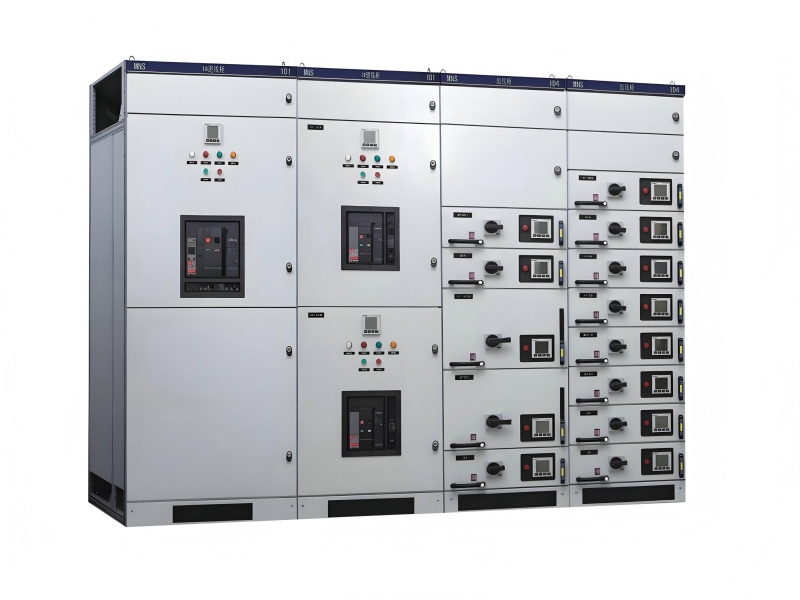
The JXF control panel—whose full name can be understood as the JXF Series Low-Voltage Wall-Mounted/Surface-Mounted Control and Distribution Panel—is a terminal power distribution and control device designed to meet the needs of low-voltage systems. It houses components such as circuit breakers, contactors, terminals, pushbuttons, and indicator lights within a metal enclosure.


It is typically not a large switchgear cabinet, but rather:

  • Designed for wall mounting
  • Used in 220V / 380V / 400V low-voltage systems
  • For lighting distribution, power distribution, motor control, ground fault protection, and overload/short-circuit protection
  • Commonly found in factories, residential communities, shopping malls, schools, pump rooms, fan rooms, and temporary construction site power systems


In a nutshell:

JXF = A metal control and distribution panel located “near the end of the power-consuming equipment” in a low-voltage system.


II. What is the relationship between JXF, JFF, and the “Jiye Box”?

These terms are often used interchangeably in the industry, but you can remember them this way:


Name  
Common Meanings
JXF
Indoor/outdoor wall-mounted control box, Jiye box, power distribution box
JFF Typically refers to outdoor-type or special-installation-type control boxes with rain-proof design
Jiye box
A common market term for a wall-mounted distribution box with functionality similar to the JXF
Power control box
Emphasizes control functions such as contactors, motor start/stop, and thermal relays


Although naming conventions vary slightly among different manufacturers, the core features of the JXF series remain the same:

Metal-enclosed, wall-mounted or recessed, low-voltage power distribution and control, and customizable according to drawings.


III. What’s Inside a JXF Control Panel?

A typical JXF control panel may not be fully equipped, but common components include:

  • Main Circuit Breaker: Molded Case Circuit Breaker (MCCB) / Miniature Circuit Breaker (MCB)
  • Branch Protection: MCB, Residual Current Device (RCD)
  • Motor control: AC contactors, thermal relays, intermediate relays
  • Operation and display: Pushbuttons, indicator lights, changeover switches
  • Wiring components: Terminal blocks, neutral (N) bars, PE grounding bars
  • Optional: Ammeters, voltmeters, current transformers, surge protection devices (SPDs), PLCs, transmitters

Push buttons and indicator lights are typically mounted on the door; what can be installed inside the enclosure depends on its dimensions, depth, protection rating, and schematic diagram.


IV. Key Parameters of the JXF Control Box

When purchasing a JXF control box, don’t just focus on the three letters “JXF”—pay close attention to the following:


1. Voltage and Current

Rated operating voltage: AC 230V / 400V; some products support up to 500V

Rated current: Commonly 63A, 125A, and 250A; larger enclosures are also available with ratings up to 400A / 630A

Frequency: 50Hz


2. Materials

Cold-rolled steel sheet: Most commonly used, with an electrostatic powder-coated finish

Stainless steel 304 / 316L: For corrosive environments, coastal areas, food processing plants, and wastewater treatment plants

Galvanized sheet metal: Used in some industrial control cabinets


3. IP Protection Rating

IP30 / IP40: Dry indoor environments

IP43 / IP54: Environments requiring protection against dust and splashing water

IP55 / IP65: Outdoor use, pump rooms, hallways, and under canopies

 (Use JXF for outdoor applications; do not use IP30 enclosures for outdoor use.)


4. Installation Methods

Surface-mounted / Wall-mounted: JXF is the most common

Flush-mounted / Recessed: Used in renovation projects

Outdoor type: Equipped with rain eaves, sealing gaskets, and stainless steel hinges


5. Dimension Notation

JXF dimensions are typically written as:

Height × Width × Depth

For example, 400×300×200 = 400 mm high, 300 mm wide, 200 mm deep


Depth is critical:

140 mm: Small lighting enclosures

200 mm: Standard power distribution enclosures

250 mm and above: Used when there are multiple contactors, thick cables, or terminal blocks need to be installed


V. Where Are JXF Control Boxes Used?

  • Construction/Residential

Power distribution boxes on residential building floors

Lighting power distribution in shopping malls

End-point power distribution in schools and hospitals

Control of sewage pumps in underground parking garages


  • Industrial Applications

Workshop equipment control

Conveyor line power distribution boxes

Control of fans, water pumps, and air compressors

External control panels for custom automation equipment


  • Outdoor/Semi-Outdoor

Pump station control panels

Fire ventilation fan control

Streetlight power distribution

Temporary power distribution boxes for construction sites (must be designed in compliance with regulations)


VI. What are the differences between JXF, XL-21, and PZ30?


Many people have trouble distinguishing between them:

Type Purpose
PZ30
Indoor lighting distribution box, modular design, commonly used in residential and office buildings
JXF
Wall-mounted control/power box, can accommodate contactors, terminals, and push buttons
XL-21
Floor-standing power distribution cabinet; large size, high current capacity
JFF
Outdoor/special-purpose variant of the JXF

Remember this: 

The PZ30 handles lighting circuits; the JXF handles equipment control and power distribution; the XL-21 is a large, floor-standing power distribution cabinet.


VII. Common Pitfalls to Avoid When Selecting Models

Pitfall 1: Using an Indoor JXF Enclosure as an Outdoor Enclosure

It lacks a rain visor and has an insufficient IP rating, so water seeps in through the door gaps after rain, causing the terminals to rust.

Pitfall 2: Insufficient Depth—Can’t Fit the Contactor

A 300×400×140 enclosure may seem spacious enough, but in reality, there isn’t enough room to bend the wires, and the door won’t even close.

Pitfall 3: Not Allowing for Grounding and Expansion

When adding circuits, electricity meters, or a PLC later on, you’ll find the mounting rails are full and there’s no space left for a grounding busbar.

Pitfall 4: Focusing Only on Price, Not Standards

JXF enclosures must comply with low-voltage switchgear standards such as GB 7251.1 / GB 7251.3 or IEC 61439-3.

Pitfall 5: Not Providing Schematics to the Manufacturer

“Make me a JXF control cabinet” ≠ ready-to-use.

You must provide: primary and secondary circuit diagrams, component brands, cable entry/exit directions, and IP rating.


VIII. When Should You Choose a JXF Control Panel?

You can check the following criteria:

  • Voltage of 400V or less
  • Wall-mounted installation required
  • Need to control motors, water pumps, fans, or small equipment
  • Need a mixed power distribution system for lighting and power
  • Requires outdoor rain protection or indoor dust protection
  • Requires custom design based on project specifications


IX. Summary

The JXF control box is not a specific, off-the-shelf product, but rather a general term for a category of “low-voltage wall-mounted power distribution and control metal enclosures.”

It is flexible, affordable, easy to install, and customizable—making it the most commonly used, yet often underestimated, “end-point brain” in industrial and building electrical systems.


Choosing the JXF means your project’s power supply is already halfway to being secure.


Related News
Leave me a message
X
We use cookies to offer you a better browsing experience, analyze site traffic and personalize content. By using this site, you agree to our use of cookies. Privacy Policy
RejectAccept