News

How to choose between power cabinet and lighting distribution box?

2026-09-10 0 Leave me a message


I. Definition and basic functions


1. Power cabinet

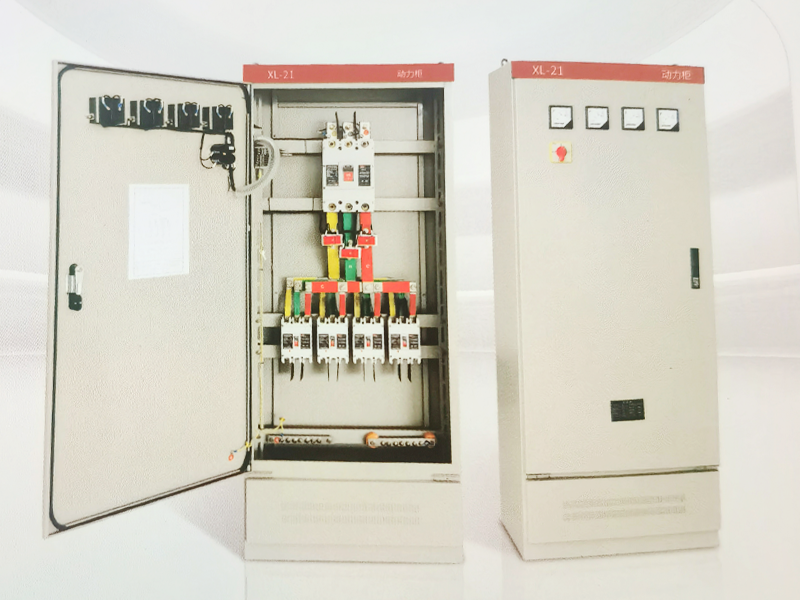
Power cabinets are mainly used to supply power to power equipment. Typical loads include motors, water pumps, fans, compressors, machine tools, etc. Its core task is to distribute and control three-phase power loads and provide protection against overload, short circuit and phase loss.


2. Lighting distribution box

Lighting distribution boxes focus on powering lighting fixtures, sockets and small single-phase electrical equipment. It is responsible for distributing superior power to various lighting circuits and socket circuits to ensure the power needs of offices, businesses, residences and other places.


II. Fundamental differences in load properties

Contrast Dimensions Power cabinet Lighting distribution box
Load type Mainly inductive loads such as motors Mainly resistive/capacitive loads such as lighting and sockets
Number of phases Mainly three-phase 380V Mainly single-phase 220V (a small amount of three-phase)
Launch features There is a starting surge current (5~7 times the rated current) Starts smoothly without significant impact
Power factor Lower (usually 0.7~0.85), need to compensate High (LED fixtures are close to 1.0)
Load fluctuation Frequent starts and stops, large fluctuations Relatively stable and continuous operation
Typical power Several kW to several hundred kW tens of W to several kW

Core difference: Power loads have the characteristics of large starting current, low power factor, and frequent operation; while lighting loads start smoothly, have high power factor, and operate continuously.


III. Differences in circuit design


1. Number and capacity of circuits

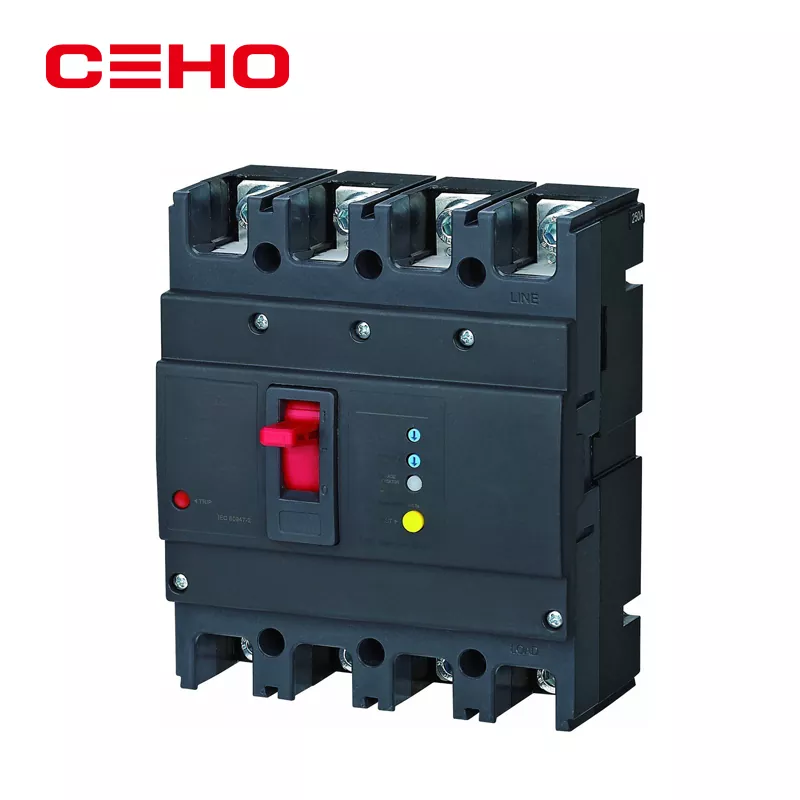
  • Power cabinet: The number of circuits is relatively small (usually 4 to 20 circuits), but the single circuit capacity is large. Each circuit may carry motor loads of 15kW, 30kW or even greater. The main switch and branch circuits adopt circuit breakers with high breaking capacity.
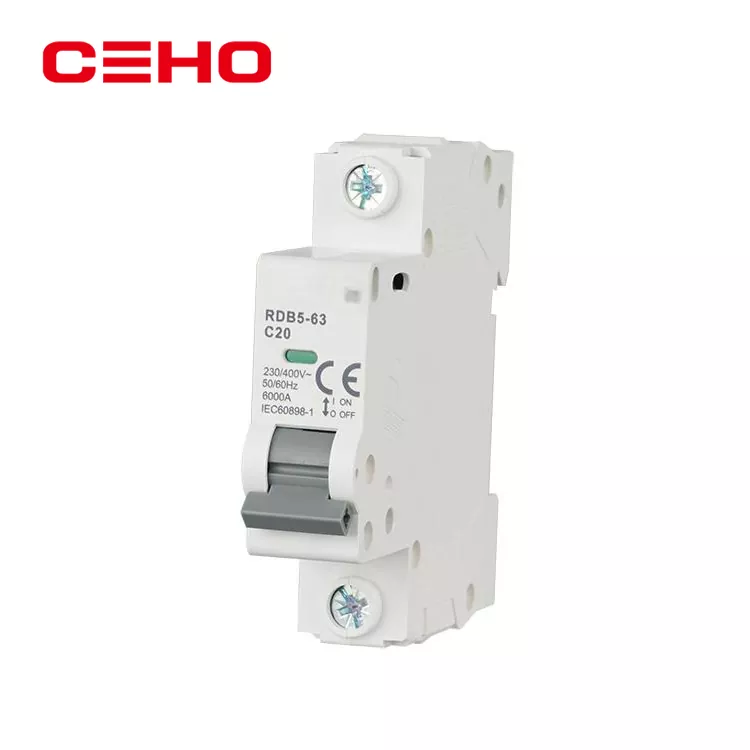
  • Lighting distribution box: There are many circuits (usually 12 to 48 circuits or even more), but the single circuit capacity is small. Each lighting circuit is generally designed to be 16A or 20A and controls several lamps or sockets.


2. Protection device configuration

Protective components Power cabinet Lighting distribution box
Circuit breaker type Motor protection type (MPCB) or plastic case circuit breaker Miniature circuit breaker (MCB)
Trip characteristics C/D type (need to withstand starting shock) Type B/C (quick protection)
Additional protection Often equipped with thermal relays and phase loss protectors Usually only equipped with MCB, RCD is used for socket circuit
Contactor Standard configuration (for start-stop control) Generally not worthy


3. Control method

  • Power cabinet: Usually equipped with local control and remote control functions, the start and stop, forward and reverse rotation and interlocking control of the motor can be realized through buttons, PLC or DCS system. The cabinet is equipped with control components such as control transformers, intermediate relays, and indicator lights.
  • Lighting distribution box: The control method is simple, mostly manual opening and closing circuit breakers or intelligent control such as timing and induction through lighting controllers. Generally does not involve complex logical interlocking.


4. Inlet and outlet methods

  • Power cabinet: The cross-section of the incoming and outgoing cables is large (often ≥16mm²), and the bottom in and out or top in and out methods are often used. There is a cable trench or bridge interface at the bottom of the cabinet.
  • Lighting distribution box: The incoming and outgoing wires have a small cross-section (usually ≤10mm²) and are mostly concealed or exposed. The incoming and outgoing wires are introduced through knock-out holes on the top or bottom of the box.


IV. Differences in installation environment and structure

Item Power cabinet Lighting distribution box
Installation method Floor or wall-mounted (large) Concealed/surface mounted (embedded)
Protection level IP42~IP54 (dustproof and waterproof requirements are higher) IP30~IP40 (mainly indoors)
Thermal requirements High (high current generates large heat) low
Cabinet material Steel plate (≥1.5mm) Steel plate or plastic (0.8~1.2mm)
Dimensions Larger (800×600×2000mm or more) Smaller (about 300×200×100mm)


V. Typical application scenarios


Applicable scenarios for power cabinets


• Factory floor: machine tools, conveyor belts, lifting equipment

• Pump room: water supply pump, drainage pump, fire pump

• Air conditioning room: chiller, cooling tower, fan

• Building equipment layer: elevators, positive pressure fans


Applicable scenarios for lighting distribution boxes


• Office building: lighting and sockets on each floor

• Shopping malls: public area lighting, advertising light boxes

• Residential: indoor distribution box, public lighting box

• School/hospital: classroom lighting, medical equipment sockets


VI. Selection and design considerations


Key points for selecting power cabinets

1. Calculate the starting current: Select a circuit breaker 1.25~1.5 times the rated current of the motor to avoid false tripping.

2. Configure thermal relay: Set according to the rated current of the motor to provide overload protection.

3. Consider the influence of harmonics: The motor circuit driven by the frequency converter needs to be equipped with a filter or isolation transformer.

4. Reserve spare circuits: It is recommended to reserve 20% of spare circuits to facilitate later expansion.


Key points for selecting lighting distribution boxes

1. Reasonable circuit division: Divide circuits according to areas and functions to avoid excessive load on a single circuit.

2. Configure RCD protection: The socket circuit must be equipped with a residual current action protector (30mA).

3. Three-phase balance: Three-phase lighting boxes should distribute single-phase circuits as evenly as possible to reduce neutral line current.

4. Reserve for intelligent control: Consider space for installing intelligent lighting modules later.


VII. Summary


The core difference between power cabinets and lighting distribution boxes stems from the different load properties: the former serves high-current, high-impact power equipment, emphasizing protection and control; the latter serves low-power, continuous-running lighting equipment, emphasizing distribution and convenience.


In engineering practice, correctly distinguishing the two and designing the circuit rationally can not only ensure power supply reliability, but also reduce operation and maintenance costs and improve system security. With the development of intelligent technology, the two are also integrating - intelligent power cabinets and intelligent lighting boxes are gradually emerging, but the basic principles and design ideas still follow the above rules.


In one sentence: The power cabinet is a "powerful housekeeper that supplies power to the machine", and the lighting distribution box is a "fine housekeeper that distributes power to the light sockets."


Related News
Leave me a message
X
We use cookies to offer you a better browsing experience, analyze site traffic and personalize content. By using this site, you agree to our use of cookies. Privacy Policy
RejectAccept