English
- English
- Español
- Português
- русский
- Français
- 日本語
- Deutsch
- tiếng Việt
- Italiano
- Nederlands
- ภาษาไทย
- Polski
- 한국어
- Svenska
- magyar
- Malay
- বাংলা ভাষার
- Dansk
- Suomi
- हिन्दी
- Pilipino
- Türkçe
- Gaeilge
- العربية
- Indonesia
- Norsk
- تمل
- český
- ελληνικά
- український
- Javanese
- فارسی
- தமிழ்
- తెలుగు
- नेपाली
- Burmese
- български
- ລາວ
- Latine
- Қазақша
- Euskal
- Azərbaycan
- Slovenský jazyk
- Македонски
- Lietuvos
- Eesti Keel
- Română
- Slovenski
- मराठी
- Srpski језик

Why have transformers suddenly become a huge hit?
Why have transformers suddenly become a huge hit?
“I used to think chips were the core of computing power, but I never imagined that transformers are actually the ‘power-supplying heart’ of AI!” Recently, the topic “China’s transformers are flying off the shelves” surged to the top of the trending list, sparking heated discussions across the internet.
As global demand for AI computing power has exploded, the demand for power equipment has surged in tandem, leading Chinese transformer manufacturers to experience an unprecedented “surge in orders”—factories across the country are operating at full capacity around the clock, and some overseas orders are already booked through 2027.
According to data from the General Administration of Customs, China’s total transformer exports reached 64.6 billion yuan in 2025, representing a year-on-year increase of nearly 36%, while the average export price rose by about one-third compared to the previous year.
China has become the world’s largest transformer producer, having established the most comprehensive transformer production system globally. The country possesses the “hard power” of full autonomy and control across the entire industrial chain, with production capacity accounting for approximately 60% of the global total. Its exports reach regions including Southeast Asia, Europe, the Middle East, and Africa.
According to a report by a research institute, transformers—which operate on the principle of electromagnetic induction—serve as a critical link connecting all segments of the power system. The industry is characterized by: scale expansion driven by policy and demand for renewable energy; market concentration is polarized, with high-end segments concentrated and low-end segments fragmented. From 2020 to 2024, the market size of the transformer industry grew from 184.493 billion yuan to 375.435 billion yuan, with a compound annual growth rate (CAGR) of 19.44%; it is projected to reach 714.287 billion yuan by 2029, with a CAGR of approximately 13.74%.
According to a research report by Zhongyuan Securities, driven by factors such as the transition to clean energy and the rapid development of the AI industry, electricity demand in overseas markets remains robust. In particular, European and American countries face urgent needs for grid upgrades due to aging infrastructure, while Southeast Asian nations are seeing increased demand for electrical equipment driven by local infrastructure development, presenting favorable opportunities for China’s transmission and transformation equipment exports.
Additionally, a research report by China International Capital Corporation (CICC) indicates that State Grid plans to invest 4 trillion yuan in building a new power system during the 15th Five-Year Plan period, representing a 40% increase compared to the 14th Five-Year Plan; China Southern Power Grid has allocated 180 billion yuan for fixed-asset investment in 2026, marking a new record high for the fifth consecutive year with an average annual growth rate of 9.5%. The report suggests that annual investment by the two power grids during the 15th Five-Year Plan period may reach 1 trillion yuan, with both domestic and international power grid investment trends on the rise, potentially ushering in a major global cycle of power investment.
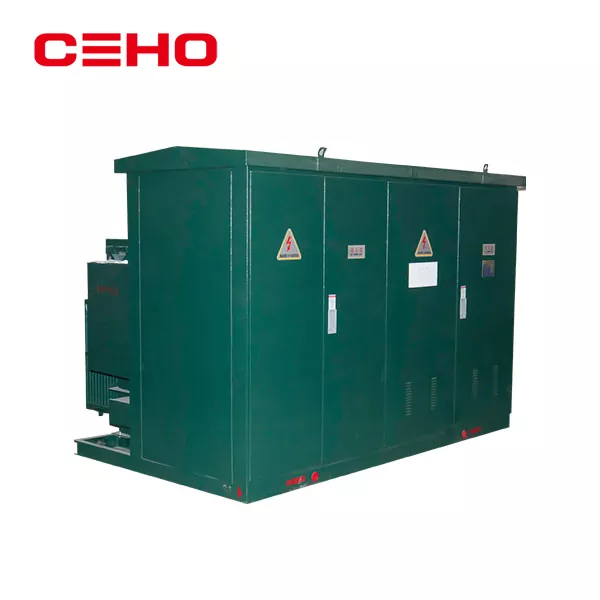
With strong growth in overseas demand, CEHO is also actively expanding into overseas markets.
Why is it that, precisely at this moment, global demand for power equipment is experiencing a concentrated surge?
The answer lies in the insatiable "appetite" of AI data centers.
Experts explain that the power load of a hyperscale data center has already exceeded 1 gigawatt—equivalent to the summer peak load of a medium-sized city. More importantly, large language models are shifting from “training” to “inference,” transforming power consumption from a one-time investment into an ongoing expense. A single medium-sized data center built by Meta requires hundreds of step-down transformers.
The International Energy Agency predicts that by 2030, the world’s new electricity demand will be equivalent to more than twice the current electricity consumption of the European Union, and global data center power demand will more than double by then. Energy consulting firm Wood Mackenzie estimates that the current global supply gap for power transformers is as high as 30%.
Against the backdrop of a global shortage of transformers, why are orders flooding into China?
First, “speed,” driven by the seamless integration of the supply chain.
Second, “compatibility,” stemming from a precise understanding of market demand.
Third, “reliability,” made possible by the support of the domestic market.
Related News
- Start by Choosing the Right JXF
- SG(B)10-10KV environmentally friendly dry-type transformer: How to deliver safe and green answers under non-encapsulated structure?
- What are the hazards of transformer overload operation? How to carry out real-time load monitoring?
- How can oil immersed transformers achieve future green development in the context of "dual carbon"?
- What does the internal structure of a dry-type transformer look like when disassembled?
- How to choose between power cabinet and lighting distribution box?
Leave me a message