English
- English
- Español
- Português
- русский
- Français
- 日本語
- Deutsch
- tiếng Việt
- Italiano
- Nederlands
- ภาษาไทย
- Polski
- 한국어
- Svenska
- magyar
- Malay
- বাংলা ভাষার
- Dansk
- Suomi
- हिन्दी
- Pilipino
- Türkçe
- Gaeilge
- العربية
- Indonesia
- Norsk
- تمل
- český
- ελληνικά
- український
- Javanese
- فارسی
- தமிழ்
- తెలుగు
- नेपाली
- Burmese
- български
- ລາວ
- Latine
- Қазақша
- Euskal
- Azərbaycan
- Slovenský jazyk
- Македонски
- Lietuvos
- Eesti Keel
- Română
- Slovenski
- मराठी
- Srpski језик

Difference Between Power Transformer and Distribution Transformer
Difference Between Power Transformer and Distribution Transformer
If you look at the power grid, it is essentially a vast transmission system. However, from the power plant to your laptop charger, electricity undergoes multiple voltage conversions during transmission. Behind this seemingly seamless flow of electricity lies a piece of critical equipment: the transformer.
Transformers are the backbone of every modern power grid. They regulate voltage levels according to demand, whether for interstate transmission or powering nearby homes. Without transformers, modern power systems would be inefficient, unsafe, and unreliable. From renewable energy grids in India to urban utilities in the United States, selecting the right transformer plays a critical role in ensuring reliable power delivery.
Within the power grid, there are two main categories of transformers: power transformers and distribution transformers. Global energy demand continues to rise. Understanding the differences between these two types is crucial for utility companies, EPC firms, industrial users, and infrastructure developers.
Let’s take a closer look at their differences, their respective roles in the grid, and how to select the right transformer for your application.
What Is a Power Transformer?
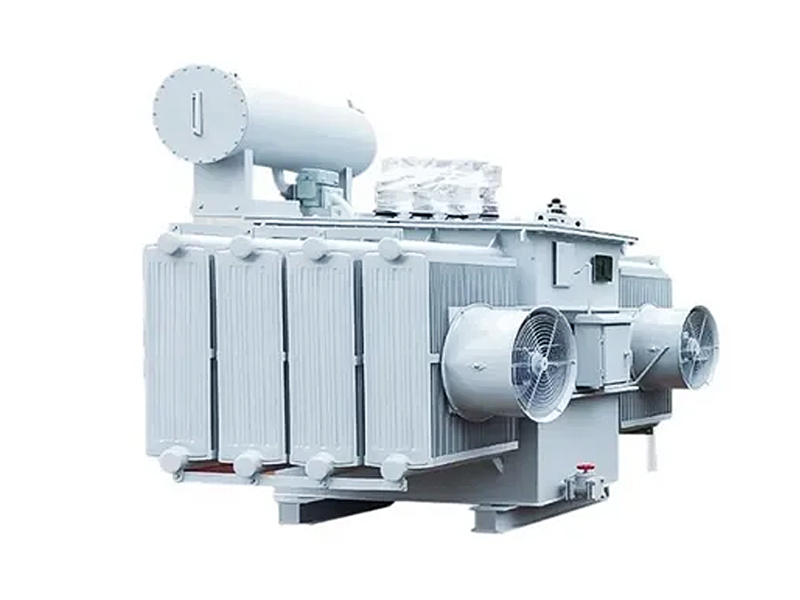
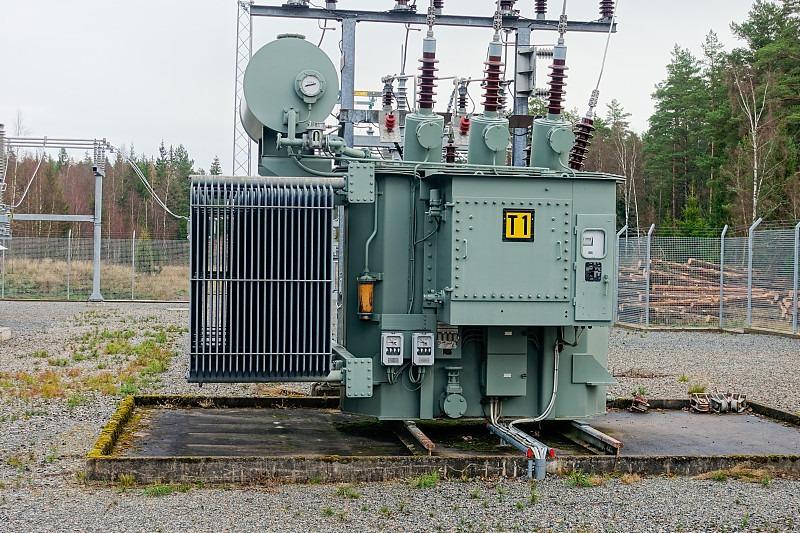
You can think of a power transformer as a heavy-duty worker in the power grid. They are massive high-voltage devices in the transmission network. Their primary function is to handle high voltages and efficiently transmit large amounts of electricity between power generation sites and transmission substations. Because these devices handle such immense amounts of energy, all reputable power transformer manufacturers design them to be extremely robust and durable. Not only are they larger in size, but they are also specifically engineered to withstand extreme stresses.
Applications of Power Transformers in the Power Grid
You can find power transformers in the following locations:
Power plants
Grid interconnections and switching stations
Transmission substations
These transformers are critical assets. They serve as the backbone connecting power plants to the grid. A single failure could affect an entire region.
Design Focus: Capacity, Efficiency, and Load Curves
A key engineering distinction is that power transformers are designed to operate at full load. They are capable of withstanding high electrical and thermal stresses. Since they typically operate under continuous loads at or near peak capacity, power transformer suppliers optimize these units to achieve maximum efficiency at full load. Their design aims to minimize energy losses, provide reliable insulation, and extend service life.
What is a distribution transformer?
A distribution transformer is a device that delivers electricity from the power grid to homes, businesses, and commercial buildings. They are typically installed on utility poles in residential areas or on the sides of buildings with high foot traffic. In some areas where space is limited and overhead lines cannot be installed, they may also be buried underground.
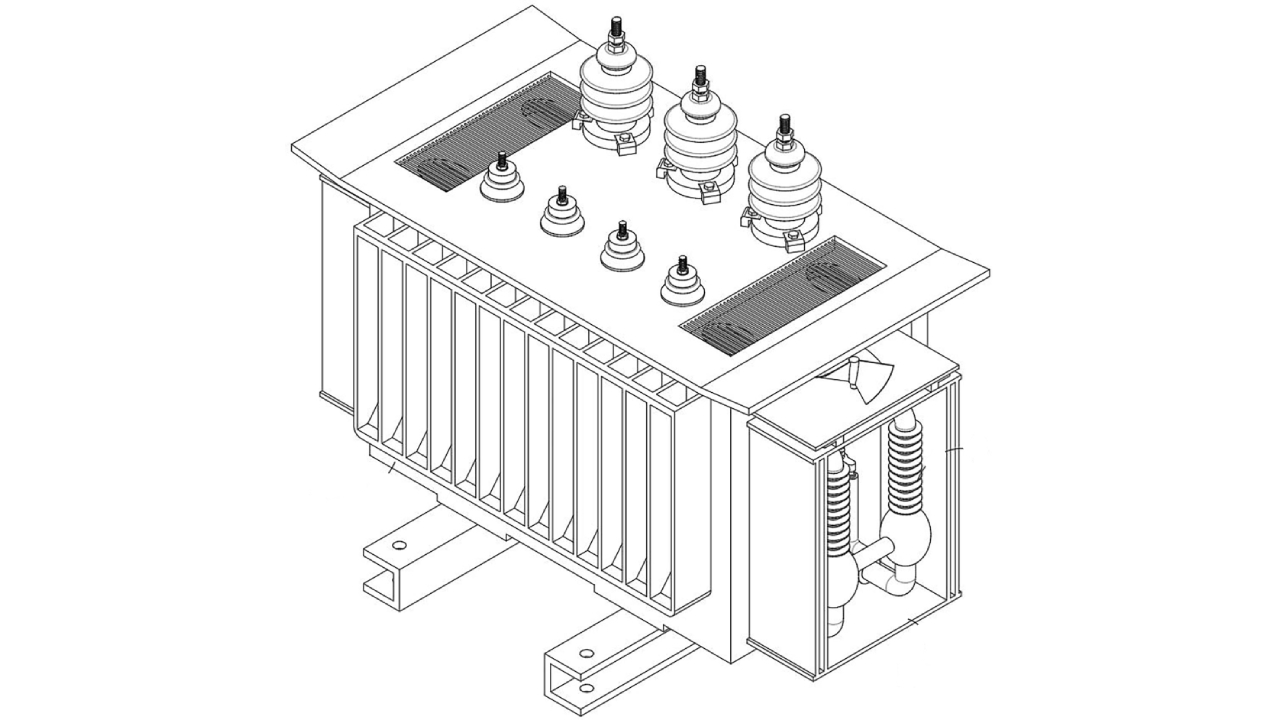
These devices are also known as step-down transformers because they reduce voltage from a higher level to a lower level that users can safely handle without damaging their appliances or electronic equipment. Inside a distribution transformer, large copper coils are wound around an iron core. The coils conduct current through the iron core, transferring energy from one coil to another without causing voltage fluctuations.
They differ from distribution feeders in that they connect only to a single building or a group of buildings, rather than to multiple facilities as feeders do.
Therefore, the function of a distribution transformer is to step down the voltage from the transmission lines. The basic structure of a distribution transformer is the same as that of an autotransformer, but its winding configuration allows it to supply power to both sides of the load.
|
The difference between the two transformers is given below:
|
This table explains why power transformers and distribution transformers are designed differently and why they cannot be used interchangeably.
Key Difference Between Power Transformer and Distribution Transformer
1. Power transformers are used in the transmission network of higher voltages whereas the Distribution Transformers are used in the distribution network of lower voltages.
2. The power transformers are available in various ratings of 400 kV, 200 kV, 110 kV, 66 kV, 33 kV in the market and the distribution transformer are available in 11 kV, 6.6 kV, 3.3 kV, 440 V, 230 Volts.
3. The power transformer always operates on rated full load as the load fluctuation is very less but the distribution transformer is operated at the load less than full load as the variation in the loads are very high.
4. The power transformers are designed for maximum efficiency of 100%, and the efficiency is simply calculated by the ratio of output power to the input power, whereas the distribution transformer the maximum efficiency varies between 50-70% and calculated by All Day Efficiency.
5. Power transformers are used in power generating stations and transmission substations, and the distribution transformer is installed at the distribution stations from where the power is distributed for the industrial and domestic purposes.
6. The size of the power transformer is large as compared to the distribution transformers.
7. In Power Transformer, the iron and copper losses take place throughout the day but in distribution transformer, the iron loss takes place 24 hours i.e., throughout the day, and the copper losses depend on the load cycle.
Applications: When to Use Power Transformers
Power transformers are primarily used for power transmission. They are required in the following situations:
Power Generation: Used to step up voltage at hydroelectric, thermal, or nuclear power plants to enable long-distance transmission.
Grid Interconnection: Connecting different transmission networks and secondary transmission networks to enable power transfer between regional grids.
Industrial Mega-Loads: Providing dedicated high-voltage power supplies for large facilities, such as steel mills and data centers.
Grid Stability: Supporting voltage regulation and reactive power compensation to maintain a stable power supply.
Grid expansion and renewable energy projects typically rely on power transformer manufacturers and globally certified solutions from trusted power transformer suppliers.
Applications: When to Use Distribution Transformers
Distribution transformers are primarily used on the customer side. They are required in the following scenarios:
Renewable Energy Grid Integration: Connecting wind farms and solar power plants to the local grid via step-up distribution transformers.
Residential and Rural Electrification: Providing reliable power supply to apartment buildings, residential areas, and remote villages.
Commercial Infrastructure: Powering high-demand areas such as shopping centers, office buildings, and retail complexes.
Industrial Parks: Supporting light industrial manufacturing, workshops, and clusters of small and medium-sized enterprises.
Conclusion: Selecting the Right Transformer for the Right Application
Each type of transformer has its own unique functions. Power transformers efficiently transmit electricity to the main power grid. Distribution transformers, on the other hand, are designed to handle a variety of loads and ensure a reliable power supply. Selecting the right transformer is a long-term decision that will impact efficiency, reliability, and operating costs for decades to come.
Contact our engineering team today to discuss your project requirements and learn about transformer solutions tailored for high performance, high efficiency, and long service life.
FAQs: Power Transformer vs Distribution Transformer (Simplified)
Q1: What’s the main difference between power and distribution transformers?
A: Power transformers are for high-voltage transmission networks (e.g., 400kV) and run at full load with little fluctuation. Distribution transformers are for low-voltage distribution (e.g., 11kV) to supply end-users, running at partial load with high fluctuation.
Q2: How do their efficiency and calculation differ?
A: Power transformers: 100% max efficiency, calculated by output/input power. Distribution transformers: 50–70% efficiency, calculated by All Day Efficiency (24-hour energy ratio).
Q3: When to use each transformer?
A: Power transformers: Power plants, transmission substations, large industrial loads. Distribution transformers: Residential/commercial areas, distribution substations, light industrial parks.
Q4: What are their key design/physical differences?
A: Power transformers: Larger, higher flux density, full load, 24/7 copper+iron losses. Distribution transformers: Smaller, lower flux density, partial load, 24/7 iron losses (copper losses depend on load).
Q5: Can they be used interchangeably?
A: No. They are optimized for different loads and efficiencies; interchange use causes inefficiency and equipment failure.
Q6: What to consider when selecting?
A: Network level (transmission/distribution), load type, voltage rating, efficiency needs, and application scope (power generation/end-users).
Previous :
Related News
- Start by Choosing the Right JXF
- SG(B)10-10KV environmentally friendly dry-type transformer: How to deliver safe and green answers under non-encapsulated structure?
- What are the hazards of transformer overload operation? How to carry out real-time load monitoring?
- How can oil immersed transformers achieve future green development in the context of "dual carbon"?
- What does the internal structure of a dry-type transformer look like when disassembled?
- How to choose between power cabinet and lighting distribution box?
Leave me a message
New Products