In industrial workshops such as machinery manufacturing, electronic assembly, food and beverage, textiles, and hardware processing, the core demands of power distribution are often very simple: multiple motors can be divided into independent circuits, faults can be quickly isolated, maintenance can be easily done in daily life, and circuits can be easily added in the later stage of production expansion. At the same time, procurement and installation costs can be controlled. The XL-21 power distribution cabinet is an indoor low-voltage complete set of equipment designed around these pain points. It is also a cost-effective choice for 0.4kV power distribution, motor control, and workshop terminal power distribution in many factories.
I. Product positioning: Indoor low-voltage power "distribution + control" integrated cabinet
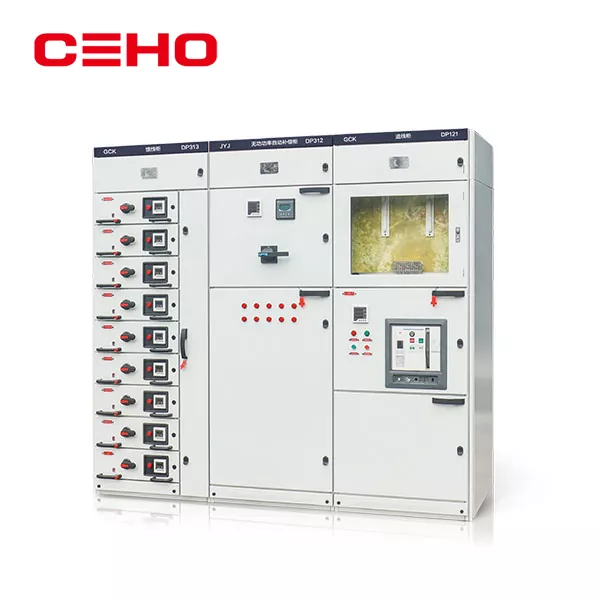
XL-21 is a closed, fixed low-voltage power distribution cabinet, usually used in AC 50Hz systems. The rated operating voltage is mainly AC 380V/220V, and some solutions can reach 660V. It adopts a three-phase three-wire, three-phase four-wire or three-phase five-wire system to undertake tasks such as power distribution, lighting distribution, and motor start and stop control. The cabinet is made of cold-rolled steel plates, which are bent, welded or assembled with bolts. The surface is electrostatically sprayed with plastic. It is mainly installed indoors against the wall. It has a single front door. After opening, the busbar, switch, contactor, thermal relay and other components are intuitively visible, which facilitates inspection and maintenance.
For the workshop, it is neither a complex withdrawable MCC nor a lighting box with only a few micro-breaks, but a universal power cabinet between "main power distribution" and "equipment control": it not only distributes the outgoing lines from the upper low-voltage cabinet, but also directly carries loads such as water pumps, fans, machine tools, conveyor lines, and air compressor auxiliary machines.
II. Core structure and workshop adaptation points
1. Steel plate enclosed cabinet, protection can be upgraded on site
The standard protection level is mostly IP30, which can block the entry of common solid foreign objects; wet pump rooms, cleaning areas, and dust workshops can be customized with IP40 and IP54. Some manufacturers provide options such as stainless steel, anti-corrosion spraying, and anti-condensation heaters. Cold-rolled plates are commonly used for cabinets, with thicknesses ranging from 1.5 to 2.0 mm. Their mechanical strength, impact resistance and long-term stability are superior to those of thin-plate box shells.
2. The main incoming line at the upper part, the outgoing line at the lower part, and the circuit is modularized
Typical layout: horizontal busbars and main switches are installed on the top or upper part of the cabinet; branch outlet circuit breakers, contactors, thermal relays, and current transformers are arranged in the middle; cable wiring space and N/PE terminals are left in the lower part. The number of circuits can be combined into 6, 8, 12 or more circuits, and "pure power distribution circuits + motor control circuits" can be mixed in the same cabinet.
3. The front door opens at a wide angle, making maintenance guesswork.
The door can be equipped with a voltmeter, ammeter, multi-function meter, running/fault indicator light, and start/stop button; the door opening angle is usually ≥120°, and in some cases, it is more than 135°. The internal components are exposed, and there is no need to disassemble large parts to replace the circuit breaker, adjust the heat relay, and check the contactor.
4. Flexible entry and exit lines, adaptable to workshop bridges
It supports bottom entry and bottom exit, top entry and top exit, and side entry and side exit; when multiple units are paralleled, they can be equipped with top busbar boxes or joint-screen busbars to facilitate segmented power supply according to the production line.
III. General technical parameters (selection reference)
The sample parameters of different manufacturers will be different, and the workshop plan can be funded according to the following range:
The overall dimensions can be selected according to the load: the common width is 600–1000mm, the depth is 400–600mm, and the height is 1600–2200mm; 1700/1800mm is mostly ordinary type, and above 1900mm can be equipped with a covered busbar room to facilitate the expansion of multiple cabinets side by side.
IV. Typical configuration scheme of workshop
1) Pure power distribution cabinet
The main incoming line molded case circuit breaker + multi-channel molded case/differential outlet lines provide power to machine tools, welding machines, conveyor lines, and lighting power boxes. It is suitable for the scenario where "the upper-level low-voltage cabinet has already taken charge of protection and the workshop only needs partition distribution".
2) Motor control power cabinet
Main incoming line + several motor circuits, each circuit is composed of circuit breaker, contactor, thermal relay, equipped with start and stop buttons and operating instructions. Small motors can be started directly; 15-75kW can be star-delta step-down. Larger motors or shock-sensitive loads can be started with a soft starter. The frequency conversion equipment has a separate frequency conversion circuit and is provided with heat dissipation and anti-interference processing.
3) Special cabinet for water pump/fan
It includes liquid level or air pressure linkage, automatic manual switching, and fault alarm; one pump can be used for mutual switching control, and the current transformer and multi-function meter can be used to monitor the operating current to avoid idling, stalling, and phase loss to burn the motor.
4) Hybrid cabinet
Some of the wires in the same cabinet are used for sockets and lighting power, and some are directly connected to small equipment motors. It is suitable for small and medium-sized workshops, single factories, and equipment rooms to reduce the area occupied by multiple cabinets juxtaposed.
In terms of protection, XL-21 can cover short circuit, overload, undervoltage/loss of voltage, and phase loss; the feeder circuit can be added with leakage protection, and the motor circuit uses "circuit breaker + contactor + thermal relay" to achieve overload and phase failure protection. Important loads can be heated couple/wireless temperature measurement, arc fault monitoring, or connected to the workshop power monitoring system.
V. Why is it suitable for industrial workshops?
• Free combination of circuits: For new equipment, you only need to add plastic cases/micro-breakers and contactors in the reserved branches or expansion cabinets, and there is no need to replace the entire cabinet.
• Low maintenance cost: the fixed structure has no complexity of drawer mechanism and few failure points; the components are universal and spare parts are easy to purchase.
• High cost performance: Compared with the full-drawer MCC, the XL-21 saves money in workshops with small and medium-sized motors and mainly focuses on power distribution. It also occupies a small area and can be installed against the wall to save space.
• Arrangement close to the load: It can be placed at the end of the production line, equipment room, pump room and fan room to shorten the power cable and reduce voltage drop and line loss.
• Safety compliance: five-wire system, N/PE separation, door grounding, busbar insulation, and complete interlocking prompts, meeting factory safety inspection and acceptance requirements.
XL-21 type power distribution cabinet has the characteristics of "simple structure, flexible circuit, customizable protection, and convenient front maintenance", which can meet most of the indoor low-voltage needs of industrial workshops from new power distribution to later expansion and transformation. When making a plan, provide the complete equipment list, startup method and environmental level, and the manufacturer can issue a system diagram, cabinet dimensions and component list to avoid rework for later capacity expansion.