I. Implement safety measures before performing maintenance
Do not proceed with equipment inspection or maintenance until safety measures have been completed.
Before each power-off maintenance, it is recommended to follow these steps in the order listed below:
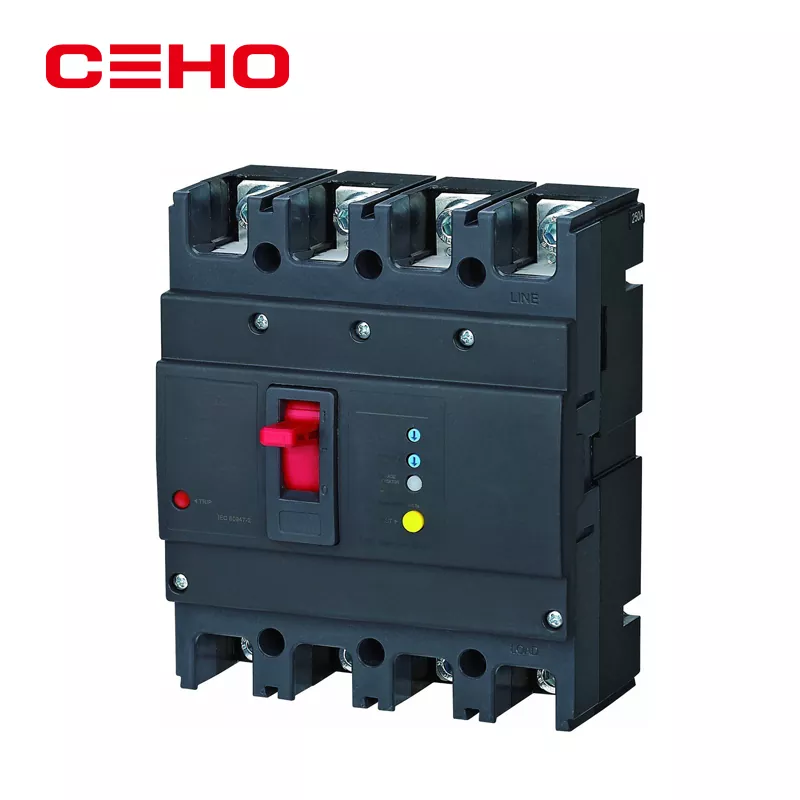
1. Complete power-off procedures: Disconnect the high-voltage and low-voltage circuit breakers and verify that there are clearly visible disconnection points.
2. Test for voltage phase by phase: Test for voltage on both the high-voltage and low-voltage sides; do not omit any phase.
3. Install grounding wires: To prevent hazards caused by accidental energization or induced voltage.
4. Hang warning signs: Hang a “Do Not Close—Work in Progress” sign on the switch operating handle.
5. Prepare protective equipment and tools: Including insulated gloves, a voltage detector, an insulation resistance tester, a temperature gauge, a torque wrench, a vacuum cleaner, etc.
Precautions: The most easily overlooked risk is “assuming the power has been turned off.” Ensure the voltage detector is in good working order and verify its functionality on a known live part before using it to test the equipment in question.
II. Routine Inspections: Focus on Four Key Areas
Routine inspections do not require disassembling the equipment and are generally performed once a week. The inspection frequency should be appropriately increased during peak load periods, in humid weather, or after the equipment has experienced an abnormal impact.
① Listen for Operating Noises
Under normal conditions, a dry-type transformer should emit a uniform, power-frequency “hum.”
If any of the following sounds are heard, further investigation is required:
② Check Operating Temperature
During routine inspections, focus on verifying the three-phase temperatures displayed on the temperature control panel:
③ Inspect the Fan
The fan is a component that is particularly susceptible to dust accumulation and should be included in routine inspections.
Key inspection items:
④ Measure Temperatures at Critical Locations
This does not refer to checking by hand, but rather using an infrared thermometer or thermal imager.
Key areas include:
If the temperature at any point is significantly higher than that of other phases or adjacent areas, do not wait until the next routine inspection; arrange for a power outage and inspection as soon as possible.
III. Annual Power-Off Maintenance: Focus on Three Key Tasks
Many organizations schedule an annual power-off cleaning. This maintenance can be summarized into three core tasks: cleaning, tightening, and testing.
Cleaning
Never rinse equipment with water, and do not use compressed air to blow out equipment while it is energized.
Tightening
Focus on inspecting and tightening the following areas:
When tightening, apply force gradually in a diagonal sequence to avoid deformation of the contact surfaces caused by stress on a single side. Torque values should be applied in accordance with the manufacturer’s manual or on-site maintenance procedures; do not rely solely on manual feel.
Testing
At least the following three tests must be completed:
|
Test Item |
Key Inspection Points |
|
Insulation Resistance |
High-voltage windings to low-voltage windings and ground; low-voltage windings to high-voltage windings and ground; core to ground, etc. |
|
DC Resistance |
Check for three-phase balance and any significant deviations from factory specifications or historical data |
|
Temperature Control Function |
Check whether the overtemperature alarm, overtemperature trip contacts, and automatic fan start/stop functions are operating normally |
When evaluating insulation resistance, it is not advisable to focus solely on a single measurement value. Comparing results with historical data and observing trends is often more meaningful than judging a single value in isolation.
IV. Restoring Power: Follow These Steps
Once maintenance is complete, do not immediately close the circuit breaker to restore power; instead, perform the restoration procedures in the following order.
The recommended procedure is as follows:
1. Take inventory of tools, materials, and personnel, and confirm that everyone has evacuated the site.
2. Remove temporary grounding wires and temporary connections.
3. Reinstall the enclosure, protective covers, and busbar partitions.
4. Verify the number and serial numbers of the grounding wires.
5. Remove warning signs and restore anti-misoperation interlocks.
6. Activate protection functions, close the high-voltage-side switch, and energize the transformer.
7. Observe whether noise, voltage, current, and temperature are normal.
8. After confirming there are no abnormalities, close the low-voltage-side switch and gradually restore the load.
For the first energization following maintenance, it is recommended to assign personnel to monitor the site and observe for at least one operating cycle or follow on-site procedures.
V. Quick Reference Table for Common Anomalies
If an anomaly is detected during a routine inspection, refer to the table below to make a preliminary determination of the cause:
|
Anomaly |
Priority Areas for Inspection |
|
Excessively rapid temperature rise |
Load level, fan status, blocked air ducts, ambient temperature |
|
Significant three-phase temperature difference |
Temperature sensors, fan, contact resistance, winding condition |
|
Abnormal noise |
Fasteners, system voltage, core condition |
|
Decreased Insulation Resistance |
Moisture, dust accumulation, damage to resin insulation |
|
Terminal Overheating |
Oxidation of contact surfaces, loose bolts, insufficient torque |
|
Fan Not Rotating |
Power supply, contactor, seized blades, thermostat |
|
Grounding Abnormalities |
Broken grounding wire, multiple grounding points in the core |
Summary
Maintenance of dry-type transformers can be summarized as follows:
Ensure safety first, then check the operating status; perform regular cleaning and tightening, and conduct inspections according to the specified schedule; conduct follow-up checks both before and after power restoration.
Effective maintenance should not be limited to emergency repairs after a failure occurs; rather, it should involve establishing comprehensive records of patrols, inspections, and repairs. By continuously monitoring three-phase temperatures, load currents, and abnormal data, it is possible to gradually gain an understanding of the equipment’s condition, detect potential defects early, reduce unplanned outages, and extend the equipment’s service life.
Each organization should determine the power-off maintenance cycle for dry-type transformers based on its own equipment operating environment and record the most common types of defects found during patrols to gradually develop equipment maintenance standards tailored to its specific needs.
Please note: This article summarizes equipment maintenance procedures. Specific maintenance cycles, testing methods, and torque values should be determined in accordance with the equipment manufacturer’s manual, local power supply department requirements, and on-site operating procedures. Maintenance of high-voltage equipment must be performed by personnel with the appropriate qualifications.