News

What Makes Amorphous Metal Distribution Transformers Worth It?

2026-10-28 0 Leave me a message


1. Why No-Load Loss Is the Problem Worth Solving

Distribution transformers are the most numerous and widely spread assets in any power grid, and their losses flow straight through to system efficiency. Unlike generation or transmission, the distribution layer is where losses are hardest to see and easiest to accumulate: a transformer consumes no-load (core) loss 24 hours a day, seven days a week, whether it is delivering power or not.


Under carbon-reduction targets and tightening efficiency rules, amorphous metal distribution transformers have moved from a niche option to a mainstream choice for new builds and retrofit programmes. Their headline advantage is extremely low no-load loss, supported by a longer service life, lower noise and a strong environmental case.


2. The Source of Its Advantages: Random Atomic Arrangement

  • Low hysteresis loss: Due to the random arrangement of atoms, there is little resistance to the movement of domain walls, and the area of the hysteresis loop is much smaller than that of silicon steel. Hysteresis loss is only 1/3 to 1/5 that of silicon steel sheets, resulting in a significant reduction in no-load loss
  • Low eddy current loss: The strip thickness is approximately one-tenth that of silicon steel, and its resistivity is about 3 to 5 times that of silicon steel, effectively suppressing eddy currents.
  • Low magnetization power: It is easier to magnetize and demagnetize than silicon steel, resulting in a significant reduction in no-load current.

The combination of these three factors reduces no-load losses, which is the source of all the advantages of amorphous alloy transformers.


3. Six Reasons Buyers Specify Amorphous Cores


3.1 This is the decisive advantage. Compared with different silicon-steel reference designs, no-load loss reductions look like this:

  • Compared with S9 type: about 70% to 80% lower
  • Compared with S11 type: about 60% to 70% lower (some sources put the figure at roughly 35% of S11)
  • Compared with S13 type: about 30% to 57% lower


3.2 Lower no-load current improves power factor

High permeability keeps the magnetizing current small: no-load current is typically around one-tenth of a silicon-steel core's, and more than 50% lower than a silicon-steel dry-type. That reduces reactive power demand and eases the burden on lines and compensation equipment.


3.3 Lower temperature rise means a longer, cheaper life

Less loss means less heat, lower temperature rise and slower ageing of insulation. Design life commonly exceeds 20 years, with many products rated at 30 years. On a 2,500 kVA amorphous dry-type, annual savings of roughly 21,967 kWh mean the energy saved over 20 years pays for the unit.


3.4 A credible environmental and policy story

The mandatory Chinese standard GB 20052-2024, "Minimum allowable values of energy efficiency and energy efficiency grades for power transformers," took effect on 1 February 2025. Its top (Grade 1) efficiency tier is defined by the amorphous alloy core. In February 2026, four ministries including the Ministry of Industry and Information Technology issued the Energy-Saving Equipment High-Quality Development Implementation Plan (2026 to 2028), targeting more than 75% of new transformers being energy-saving types by 2028.


The carbon impact is material. If China and India equipped their entire distribution networks with amorphous transformers, the saving would be about 25 to 30 TWh a year, cutting CO2 emissions by 20 to 30 million tonnes. A single 110 kV amorphous stereoscopic wound-core transformer saves around 120,000 kWh a year, equivalent to about 72 tonnes of CO2. The materials are also recoverable at end of life.


3.5 Lower noise for urban and sensitive sites

Optimized core lap joints and clamping keep noise low: small units can come in below 50 dB(A), with some dry types at 35 dB or less, suitable for schools, hospitals, data centers and residential areas. Note that amorphous material actually has a higher magnetostriction coefficient than silicon steel; it only matches silicon steel in practice because it operates at a lower flux density, around 1.3 to 1.4 tesla.


3.6 High reliability and virtually maintenance-free

  • High short-circuit resistance: The winding feature an independently supported and clamped structure, which keeps the core virtually free of pressure and enables it to withstand the mechanical stress caused by sudden short circuits.
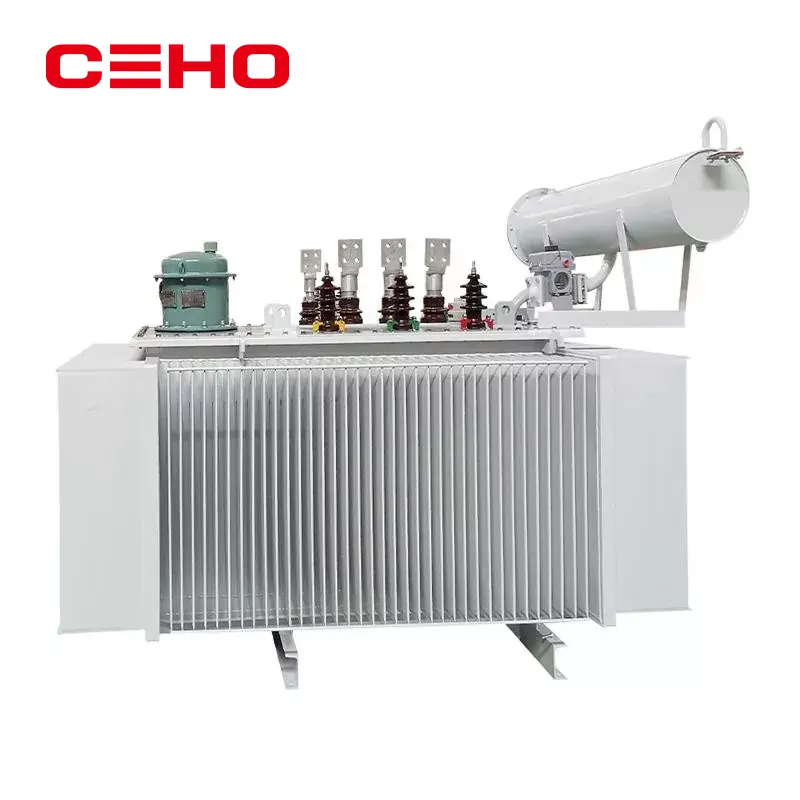
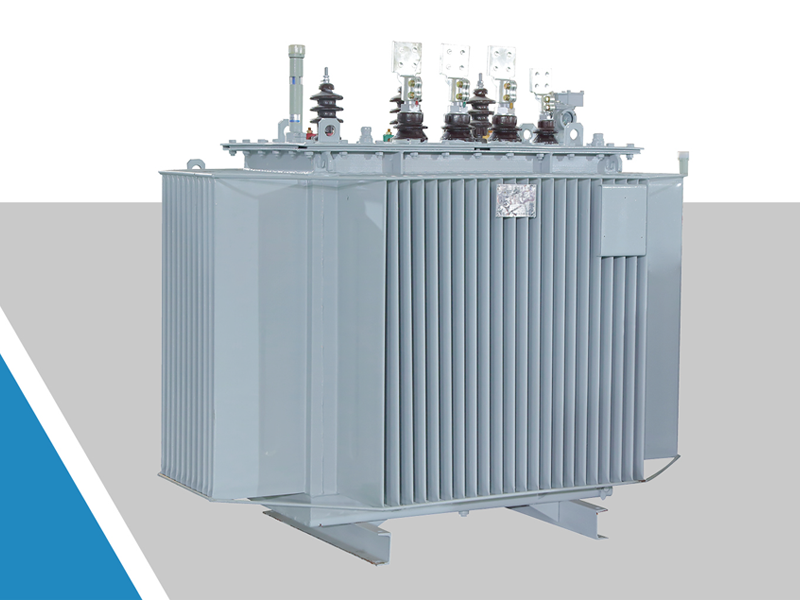
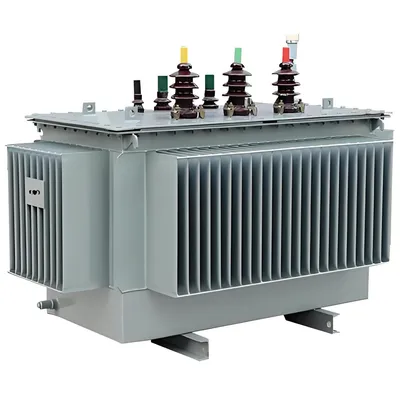
  • Fully sealed design: Oil-immersed products typically use a fully sealed, corrugated oil tank, which prevents the oil from coming into contact with air, thereby slowing oil aging and preventing leaks.
  • Low maintenance requirements: Equipped with devices such as pressure relief valves, gas relays, and oil temperature gauges, these transformers can operate unattended and are essentially maintenance-free during normal use.


4. Where the Business Case Is Strongest

Amorphous transformers pay back fastest where the unit stays energized but runs at low or variable load for long periods. The usual suspects:

  • Residential communities, where day-night load swings leave the transformer near no-load overnight
  • Street lighting, schools and municipal facilities, which run lightly loaded for long hours
  • Rural and township networks, with large load swings and long no-load periods
  • Renewable plants, wind and solar, where intermittent output leaves the transformer idle or lightly loaded and no-load loss becomes a hidden cost
  • Malls, hospitals and data centers, where both efficiency and low noise matter


Payback is commonly quoted at 3 to 5 years; Northwest Oil Field reported recovering the procurement cost within the first year.


5. What to Check Before You Specify


1. The higher purchase price: an amorphous oil-immersed unit costs about 30% more than a conventional S11 oil-immersed transformer.

2. Stress sensitivity: the core must be annealed in a magnetic field after forming, and the annealed ribbon is brittle and prone to flaking, so process control matters.

3. Lower stacking factor, 0.82 to 0.86: the core volume and effective cross-section are about 40% larger than silicon-steel equivalents, so the unit is heavier and bigger.

4. Capacity margin: in fast-growing peri-urban areas, size the unit with headroom so it does not run overloaded.

5.Routine checks still apply: even "maintenance-free" units need periodic inspection for oil leaks and hot terminals.


6. Summary

The case for amorphous metal distribution transformers is easy to summarize: very low no-load loss, low no-load current, low temperature rise and long life, environmental benefit, low noise, and high reliability. As efficiency standards tighten and the share of energy-saving transformers rises, the economics only improve. They are not the right answer everywhere. For heavily loaded, consistently full-load industrial duty, run a full-life economic calculation against your actual load curve before deciding.


Note on the data: No-load loss reduction percentages vary with the reference model, rating and product generation compared. For procurement, use the manufacturer's tested data and the efficiency limits in GB 20052-2024 as your specification baseline.


Related News
Leave me a message
X
We use cookies to offer you a better browsing experience, analyze site traffic and personalize content. By using this site, you agree to our use of cookies. Privacy Policy
RejectAccept