English
- English
- Español
- Português
- русский
- Français
- 日本語
- Deutsch
- tiếng Việt
- Italiano
- Nederlands
- ภาษาไทย
- Polski
- 한국어
- Svenska
- magyar
- Malay
- বাংলা ভাষার
- Dansk
- Suomi
- हिन्दी
- Pilipino
- Türkçe
- Gaeilge
- العربية
- Indonesia
- Norsk
- تمل
- český
- ελληνικά
- український
- Javanese
- فارسی
- தமிழ்
- తెలుగు
- नेपाली
- Burmese
- български
- ລາວ
- Latine
- Қазақша
- Euskal
- Azərbaycan
- Slovenský jazyk
- Македонски
- Lietuvos
- Eesti Keel
- Română
- Slovenski
- मराठी
- Srpski језик

What Are the Core Technologies and Practical Applications of GGD Fixed Low-Voltage Switchgear?
What Are the Core Technologies and Practical Applications of GGD Fixed Low-Voltage Switchgear?
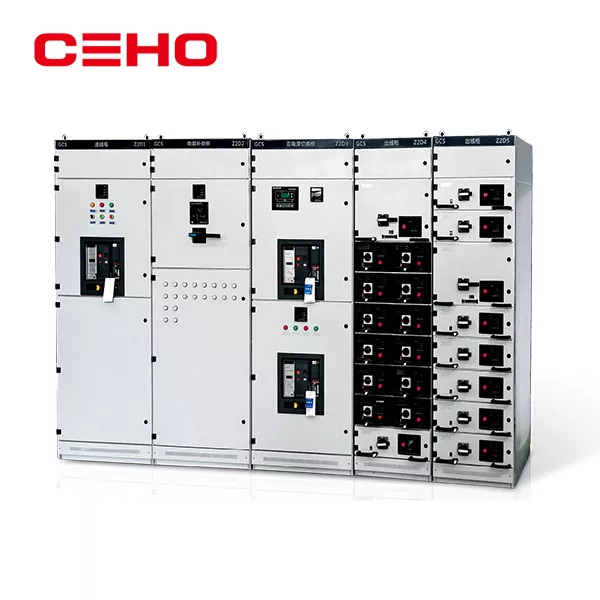
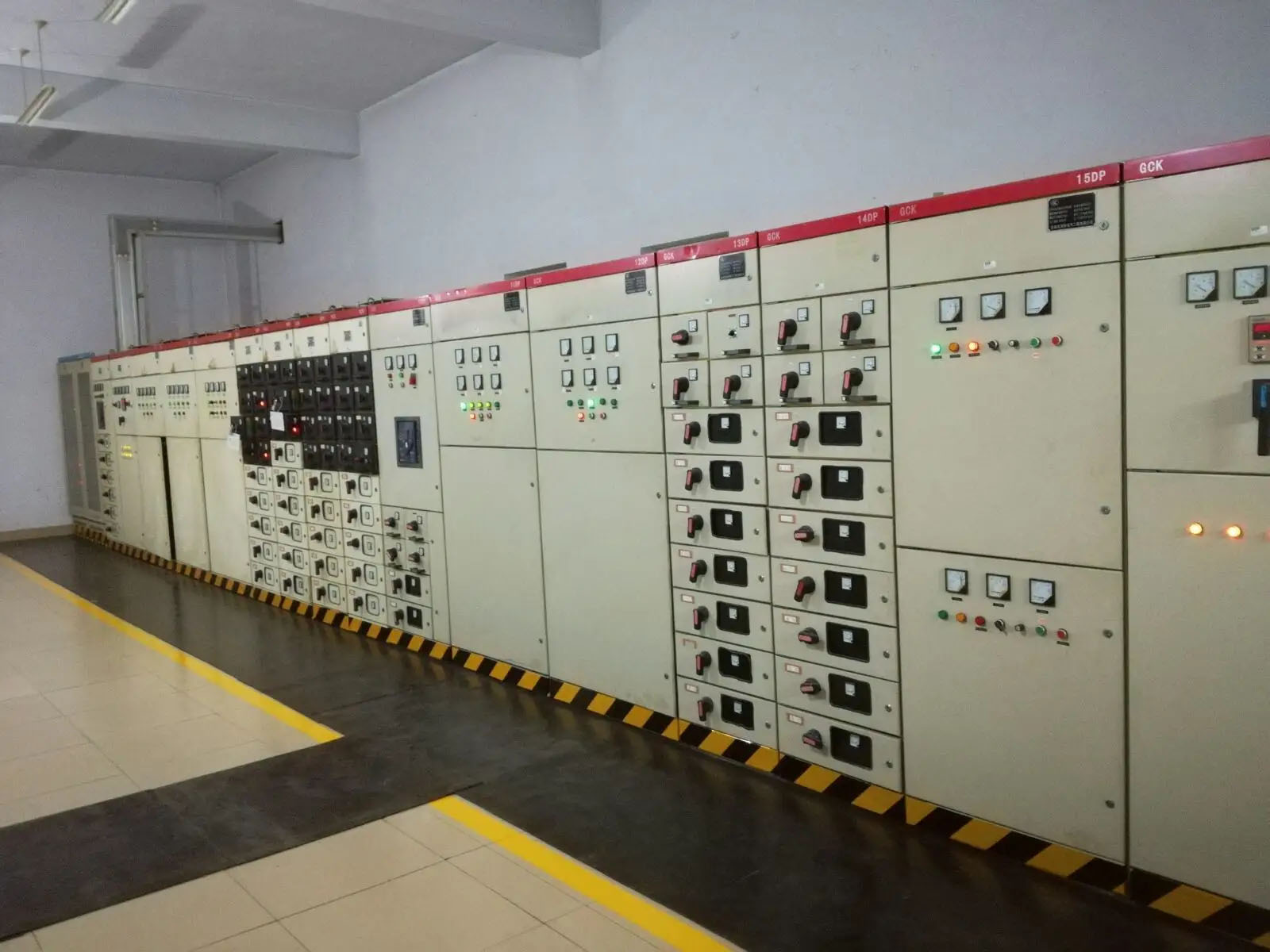
Official Definition: The GGD AC low-voltage distribution cabinet is a standard indoor fixed AC low-voltage complete switchgear designed and manufactured in accordance with national standards for low-voltage complete switchgear. It is applicable to power-frequency low-voltage distribution systems, adopting a fully enclosed floor-standing cabinet and fixed electrical installation structure. It is mainly used for low-voltage power distribution, electric energy metering, line protection, reactive power compensation and circuit control. It is the most mature and widely applied standardized basic low-voltage power distribution device in the fields of industrial production, building construction, municipal supporting and new energy power distribution in China.
As the core equipment at the terminal of power transmission and distribution systems, low-voltage switchgears directly determine the safety, stability and power supply quality of the entire distribution system. With mature mechanical structure, stable operating performance, strong environmental adaptability and outstanding engineering cost performance, GGD fixed low-voltage switchgear has long been the mainstream basic cabinet type for new construction, renovation and expansion of power distribution projects. This paper systematically elaborates the full set of core knowledge of GGD switchgear from the dimensions of model interpretation, structural technology, design principle, functional cabinet types, circuit composition, model selection differences, scenario adaptation, installation, operation and maintenance, and common faults. With popular wording and strong practicality, it can be used as a reference for professional learning, equipment selection, on-site construction, equipment acceptance and daily operation and maintenance.
I. Model Interpretation and Product Positioning
The three letters of GGD correspond to the core structural and functional attributes of the equipment, serving as the basic basis for distinguishing cabinet types and judging equipment applications in the low-voltage power distribution industry. Each letter defines the design characteristics and application boundaries of the equipment.
The first letter "G" represents a fully enclosed metal cabinet structure. The equipment adopts an integral closed cabinet design, different from open power distribution supports and simple open distribution boxes. It has complete functions of dust prevention, foreign matter prevention and accidental contact prevention, complying with the safety protection standards of standard power distribution rooms. It is only applicable to standardized indoor power distribution scenarios and not used for temporary simple power distribution.
The second letter "G" represents the fixed installation structure, which is the most distinctive feature of GGD. All primary and secondary electrical components in the cabinet are bolted and fixed on the cabinet load-bearing beams, without any movable mechanical structures such as drawing, plugging, sliding and springs. This structure abandons the convenience of live-line maintenance, in exchange for higher structural rigidity, stronger short-circuit impact resistance and more stable long-term operating state, adapting to the 7×24-hour uninterrupted operation requirements of industrial scenarios.
The letter "D" represents the special power distribution attribute. The equipment is purely oriented to power distribution functions, focusing on the transmission, distribution, metering and protection of low-voltage power-frequency electric energy. It does not support special control functions such as variable frequency speed regulation and automatic program control, serving as a pure power transmission supporting device.
Product Core Positioning Summary: GGD is a standardized low-voltage main distribution cabinet with indoor floor-standing type, fully fixed structure, strong large-current adaptability, stable operation and high universality. It is mainly used as the basic core power supply equipment for industrial, building, municipal and new energy power distribution systems.
II. Cabinet Structure, Manufacturing Technology and Underlying Design Logic
1. Overall Frame Structure and Core Advantages
GGD switchgear adopts an assembled profile frame structure, different from traditional all-welded cabinets. The equipment is assembled by special columns, beams and vertical beams through bolts, effectively avoiding cabinet deformation, uneven stress and frame distortion caused by all-welding technology, featuring high forming precision and good structural consistency. Following the design logic of "frame load-bearing and plate enclosure protection", all loads of busbars, switches and cables are borne by the high-strength profile frame, while the outer plates only undertake closed protection and dust isolation functions. No frame deformation, poor door closing or component offset and loosening will occur during long-term operation, ensuring high structural durability.
2. Practical Functions of Cabinet Material and Surface Technology
The cabinet is made of high-quality cold-rolled steel plates, with thickened core load-bearing frames to improve overall load-bearing capacity and mechanical impact resistance. The cabinet surface adopts industrial electrostatic powder spraying technology, which is not merely for appearance decoration but has multiple practical protective effects: first, insulation protection to block leakage conduction of the metal shell and reduce electric shock risks; second, anti-corrosion and rust prevention to adapt to the complex environment of power distribution rooms with humidity, poor ventilation and dust accumulation and delay cabinet aging; third, arc burning resistance to resist arcs generated by minor circuit short circuits and limit fault expansion. Meanwhile, all metal components including cabinet frames, movable doors and detachable side plates are connected to the unified grounding system through special grounding wires to form a full-range equipotential protection system and eliminate static accumulation and shell induced electricity risks.
3. Core Safety Principle of Internal Four-Zone Physical Isolation
The GGD cabinet adopts a standardized independent four-zone physical partition layout, which is the core safety design of the equipment. It aims to isolate faults, block arcs and realize zoned protection, preventing local faults from causing full-cabinet paralysis.
Top Busbar Room: As the core area with the highest energy in the whole cabinet, it is independently enclosed and arranged with main busbars, neutral wires and protective grounding bars, fully equipped with insulating partitions and sheaths. It can effectively prevent busbar phase-to-phase short circuits caused by lower switch arcing, cable faults and falling foreign matters, confine major electrical faults to the top area, and protect all lower power branches from failure.
Middle Electrical Component Room: It centrally installs core primary electrical components such as circuit breakers, transformers and contactors. The central layout ensures uniform stress, avoiding equipment resonance and offset during large-current operation. The fixed bolting installation eliminates gaps in electrical contacts, greatly reducing the probability of high-frequency faults such as virtual connection, overheating and burning.
Lower Cable Room: An exclusive independent space for laying, crimping and fixing incoming and outgoing cables, realizing physical isolation between cable circuits and high-voltage busbars. It effectively avoids busbar grounding and short-circuit faults caused by cable insulation aging and sheath damage, separates strong and weak current wiring, achieves neat and clear circuits, and facilitates later maintenance and troubleshooting.
Front Door Instrument Operation Area: It only arranges secondary weak-current accessories such as instruments, indicator lights, operation buttons and transfer switches, realizing strict physical isolation between strong and weak currents. Operators do not need to contact high-voltage live circuits during daily inspection, parameter viewing and equipment operation, fundamentally avoiding personal electric shock risks and improving operation safety.
4. Inlet and Outlet Wiring Modes and Scenario Adaptation
Bottom-in and bottom-out: The industry-standard mainstream mode, suitable for most power distribution rooms with trench wiring. Cables enter the cabinet from ground trenches with concealed, neat and safe wiring, applicable to most conventional power distribution scenarios such as factories, buildings and residential communities.
Top-in and top-out: Adapt to power distribution rooms with full top bridge layout, mostly used for high-rise machine rooms and workshops with centralized bridge wiring, featuring less cable bending, low line loss and smooth wiring.
Top-in bottom-out and bottom-in top-out: Special adaptive modes, mainly applied to special working conditions such as old power distribution room renovation, circuit expansion and limited on-site wiring, with high flexibility.
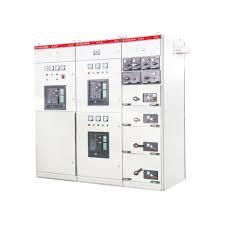
III. Power Distribution Logic and Application Scenarios of Various GGD Functional Cabinets
A complete low-voltage power distribution system is built by combining multiple functional GGD cabinets. All cabinets perform their respective duties and cooperate with each other to form a complete power distribution system integrating power access, load distribution, fault protection, energy efficiency optimization and power metering.
1. Incoming Cabinet (System Main Power Gatew
The incoming cabinet is the main power inlet of the entire low-voltage power distribution system, equipped with a universal main circuit breaker to undertake the functions of system main switching and primary fault protection. Power output from the upper transformer accesses the incoming cabinet, stabilized and protected by the main circuit breaker, then shunts to all rear functional cabinets. The equipment integrates multiple protection functions such as overload, short circuit, undervoltage and phase loss, and can trip instantly to cut off power in case of major system faults to protect rear lines and equipment. A single power supply system is equipped with one incoming cabinet, while a dual-circuit redundant power supply system requires two incoming cabinets matched with a tie cabinet.
2. Outgoing Cabinet (Load Distribution Terminal)
As the branch core equipment of the power distribution system, the outgoing cabinet splits the main power supply into multiple independent branches to adapt to different loads such as power equipment, lighting systems and office facilities. Adopting the independent power distribution logic of one circuit with one protection, the protection of each branch is independent of each other. Only the faulty branch trips in case of overload, short circuit or leakage of a single branch, without affecting the overall system power supply, realizing accurate fault isolation and facilitating rapid fault troubleshooting and power recovery.
3. Reactive Power Compensation Cabinet (System Energy Efficiency Optimization Core)
Industrial scenarios have a high proportion of motors and inductive equipment, which generate a large amount of reactive power loss during operation, leading to low grid power factor, increased line voltage drop, aggravated equipment heating, and power factor penalty charges from power supply bureaus, raising enterprise power consumption costs. The reactive power compensation cabinet automatically switches capacitor banks according to real-time grid load changes to dynamically compensate system reactive power, stabilize grid voltage, reduce line loss and improve power utilization efficiency. For harmonic working conditions with intensive frequency converters and high-frequency equipment, reactors need to be installed to suppress harmonics and prevent compensation equipment burnout.
4. Tie Cabinet (Dual-Power Uninterrupted Power Supply Core)
The tie cabinet is specially applied to high-reliability redundant power supply systems with dual incoming lines and dual busbars. Under normal operating conditions, the two sections of busbars are independently powered by two incoming cabinets, and the tie cabinet remains open. When any incoming power supply fails or trips, the tie cabinet closes automatically or manually, and the normal power supply supplies power to both busbar sections to avoid large-area power outage. It is widely used in key scenarios with high requirements for power supply continuity such as hospitals, large shopping malls, data rooms, industrial production lines and fire power distribution systems.
5. Metering Cabinet (Special Equipment for Power Settlement)
The metering cabinet is a special standardized cabinet under the supervision of power supply departments. Its cabinet structure, component configuration and wiring technology strictly comply with power supply acceptance specifications. The cabinet is specially equipped with metering transformers and smart electric energy meters to accurately collect and count the total power consumption of the system, serving as the legal basis for electricity charge settlement. The cabinet supports lead sealing control, and private wiring and equipment modification are prohibited to ensure compliant, accurate and traceable power metering.
IV. Basic Principles of Primary and Secondary Circuits
1. Primary Main Circuit
The primary main circuit is the strong-current main channel of the system, mainly including main busbars, branch busbars, main contacts of circuit breakers, incoming and outgoing cables and load wiring terminals. Its core function is to transmit and distribute high-power electric energy, directly connecting terminal loads, determining the overall power supply capacity and short-circuit resistance of the cabinet. The fixed structure of GGD ensures firm fastening of conductive components without movable plugging gaps and stable contact resistance. It is not prone to overheating, virtual connection and burning during long-term high-current operation, with excellent arc resistance and short-circuit impact resistance, adapting to long-term steady-state operation of main large-current circuits.
2. Secondary Control Circuit
The secondary control circuit is a low-voltage weak-current auxiliary system supporting the primary circuit. It does not directly transmit high-power electric energy, and its core functions are monitoring, protection, control and early warning. It mainly includes four functions: real-time collection of operating data such as voltage, current and power consumption; feedback of equipment closing, opening and fault states; realization of overload, short circuit, undervoltage and other fault protection; support of local operation and remote control. Indirect strong-current control through weak current greatly improves equipment operation safety and operation and maintenance convenience.
V. Core Advantages and Disadvantages of GGD
1. Main Advantages
First, high operation reliability and low failure rate. The equipment has no vulnerable mechanical structures such as drawers, slideways and springs, fundamentally avoiding faults such as mechanical jamming, poor contact and component failure, adapting to 24-hour uninterrupted operation and reducing later operation and maintenance pressure.
Second, solid structure and strong fault tolerance. With fixed component installation and neat and stable busbar layout, the cabinet structure will not loosen, components will not pop out, and arcs will not spread widely in case of system short-circuit faults, ensuring strong fault controllability.
Third, high universality and compatibility. The equipment has a high standardization degree, compatible with various mainstream low-voltage electrical components with widely used industry accessories and no customized technical barriers, enabling rapid maintenance, renovation and capacity expansion.
Fourth, high renovation flexibility. The cabinet has a spacious interior without redundant structures, allowing the addition of new power distribution circuits, intelligent monitoring modules and reactive power compensation modules according to later operation and maintenance needs, adapting to the upgrading and renovation of old power distribution rooms.
Fifth, prominent cost performance. With mature production technology and low mass production cost, its price is much lower than drawer-type switchgears under the same power distribution capacity, suitable for large-scale power distribution project implementation.
2. Main Disadvantages
First, insufficient operation and maintenance convenience and mandatory power-off maintenance. All components are fixedly installed without independent drawable maintenance units, requiring power-off of the upper power supply for single-circuit fault maintenance and equipment replacement, unable to realize live-line maintenance.
Second, low modularization degree and poor unit interchangeability. There is no unified modular standard, and the internal layout and installation dimensions of cabinets from different manufacturers are different, failing to realize direct interchange of circuit units like drawer cabinets.
Third, limited adaptation to high-end scenarios. Restricted by the power-off maintenance feature, it cannot meet high-standard power supply demands such as frequent maintenance, zero power outage and precision load power supply.
VI. Differences and Selection Logic of GGD, GCK and MNS Cabinet Types
GGD, GCK and MNS are three mainstream cabinet types in China's low-voltage power distribution industry. Their core differences lie in structural form, operation and maintenance mode, reliability level and scenario adaptability rather than appearance.
GGD: Fully fixed structure without movable drawer units, featuring stable structure, strong short-circuit resistance, low cost and excellent large-current performance. Its disadvantage is power-off maintenance required, suitable for system main cabinets, main power distribution and conventional stable load power distribution.
GCK: Semi-drawer structure with independently drawable and replaceable outgoing circuits, enabling live-line maintenance of single circuits. It balances stability and operation convenience, mainly adapted to workshop power loads and working conditions requiring frequent maintenance.
MNS: High-end full-modular drawer cabinet with strong unit interchangeability, high intelligence, high protection level and high operation and maintenance efficiency but high cost, applicable to data centers, precision production, high-end commerce and uninterrupted important load scenarios.
Industry Selection Formula: Select GGD for conventional steady-state power distribution, large-current main circuits and budget-controlled projects; select GCK for workshop power and frequent maintenance working conditions; select MNS for high-end scenarios, zero power outage requirements and precision loads.
VII. Applicable and Inapplicable Scenarios
1. Preferred Applicable Scenarios
Main power distribution rooms of various factories, power distribution rooms of buildings and residential communities, low-voltage grid-connected systems of photovoltaic power stations, temporary main power distribution cabinets for construction sites, main power distribution of factory workshops, municipal conventional power distribution, centralized power distribution of water pump rooms and fan rooms, and other basic power distribution scenarios with stable loads and no frequent maintenance demands.
2. Non-Recommended Scenarios
Core power distribution of data centers, emergency power distribution of hospital operating rooms, power distribution of precision instrument laboratories, core production line power distribution of industrial automation, key loads requiring frequent start-stop and real-time maintenance, and unattended intelligent high-level power stations with high requirements for power supply continuity and operation and maintenance efficiency.
VIII. Installation, Operation, Maintenance and Common Fault Analysis
1. Core Installation Key Points
The cabinet adopts floor-standing wall-mounted fixed installation. Multiple cabinets shall be precisely leveled and closely spliced during arrangement to ensure flat busbar butt joint, uniform cabinet stress and smooth door opening and closing. Cable wiring strictly follows the principle of strong and weak current zoning to avoid electromagnetic interference, ensure stable secondary instrument and protection signals, and achieve neat and firmly fixed overall wiring.
2. Core Requirements of Grounding Safety
Full-range reliable grounding is the core guarantee for safe operation of GGD. All metal components such as cabinet frames, movable doors, side plates, mounting beams and cable trays must be connected to the grounding system. Movable doors are connected with special flexible grounding wires to avoid grounding failure caused by oxidation and corrosion of hinge points, comprehensively preventing electric leakage, static electricity, electric shock and equipment breakdown risks.
3. Daily Operation and Maintenance Specifications
Routine daily inspection does not require cabinet opening; equipment operating conditions can be judged through door-mounted instruments and indicator lights. Internal cabinet maintenance must strictly implement four safety procedures: power off, verify power off, hang warning signs and ground connection. Live cabinet opening is strictly prohibited. Regular maintenance focuses on cabinet dust removal, busbar and terminal fastening, secondary circuit inspection and grounding condition check to eliminate potential hidden dangers in advance.
4. Common Faults and Cause Analysis
Abnormal cabinet overheating: The most frequent equipment fault, mainly caused by loose wiring terminals, loose busbar bolts and insufficient cable crimping, leading to excessive contact resistance and heat generation. It belongs to construction and operation process problems rather than cabinet quality defects.
Frequent branch tripping: Mostly caused by overload of rear loads, line electric leakage and terminal equipment faults, independent of the cabinet itself. Faults can be traced and eliminated by checking the corresponding branch loads.
Abnormal instrument data: Mostly caused by loose secondary circuit wiring, transformer faults or weak-current signal electromagnetic interference. Troubleshooting can be quickly completed by checking the secondary control circuit first.
IX. Development Status and Application Summary
As a standardized and mature low-voltage power distribution equipment verified by decades of engineering practice, GGD fixed low-voltage switchgear is an indispensable basic core device in China's low-voltage power transmission and distribution system. Compared with high-end modular drawer cabinets, GGD lacks high intelligence, rapid iteration and maintenance-free advantages, but it accurately meets the demands of most conventional power distribution working conditions in China. With the core advantages of stable structure, high safety and reliability, strong universality and high cost performance, it has long occupied the mainstream market of civil, industrial, municipal and new energy power distribution. With the continuous standardization and upgrading of power engineering, GGD cabinet technology and safety configuration are continuously optimized and iterated, further consolidating its cornerstone position in low-voltage power distribution and providing a solid guarantee for the safe, stable and long-term operation of various power systems.
X. Frequently Asked Questions (Concise Q&A)
Q1: What are the core definition and characteristics of GGD switchgear? A: GGD is a standard indoor fixed low-voltage complete switchgear. It adopts a fully enclosed floor-standing structure with fixed components, featuring high stability, strong short-circuit resistance, low failure rate and high cost performance for conventional low-voltage power distribution, metering and protection.
Q2: What are the core differences between GGD, GCK and MNS? A: GGD is fully fixed, stable and cost-effective but requires power-off maintenance. GCK is semi-drawable and MNS is fully modular drawable, both support live-line maintenance with higher cost and efficiency.
Q3: Which scenarios prefer GGD and which are not recommended? A: GGD is suitable for factories, buildings, municipal and photovoltaic steady power distribution. It is not applicable for data centers, hospital emergency power supply, precision laboratories and uninterrupted power scenarios requiring frequent live maintenance.
Q4: Why must GGD internal maintenance be conducted with power off? A: All components are fixedly installed without isolated drawable units. Live cabinet opening may cause arc short circuit and electric shock, so power-off maintenance is mandatory.
Q5: What is the most common fault of GGD and its prevention methods? A: The most common fault is overheating caused by loose terminals and poor contact. Regular fastening, dust cleaning and grounding inspection can effectively prevent such faults.
Q6: What cabinet types constitute a complete GGD power distribution system? A: A complete system includes incoming, outgoing, reactive power compensation, tie and metering cabinets to realize full power distribution, protection and metering functions.
Q7: What is the core function of the cabinet four-zone separation design? A: It isolates functional areas and different currents, restrains arc propagation, prevents accidental contact and fault expansion, and improves overall operational safety and stability.
Related News
- Start by Choosing the Right JXF
- SG(B)10-10KV environmentally friendly dry-type transformer: How to deliver safe and green answers under non-encapsulated structure?
- What are the hazards of transformer overload operation? How to carry out real-time load monitoring?
- How can oil immersed transformers achieve future green development in the context of "dual carbon"?
- What does the internal structure of a dry-type transformer look like when disassembled?
- How to choose between power cabinet and lighting distribution box?
Leave me a message