English
- English
- Español
- Português
- русский
- Français
- 日本語
- Deutsch
- tiếng Việt
- Italiano
- Nederlands
- ภาษาไทย
- Polski
- 한국어
- Svenska
- magyar
- Malay
- বাংলা ভাষার
- Dansk
- Suomi
- हिन्दी
- Pilipino
- Türkçe
- Gaeilge
- العربية
- Indonesia
- Norsk
- تمل
- český
- ελληνικά
- український
- Javanese
- فارسی
- தமிழ்
- తెలుగు
- नेपाली
- Burmese
- български
- ລາວ
- Latine
- Қазақша
- Euskal
- Azərbaycan
- Slovenský jazyk
- Македонски
- Lietuvos
- Eesti Keel
- Română
- Slovenski
- मराठी
- Srpski језик

How Do You Choose the Right High Voltage Power Cable?
Choosing the right High Voltage Power Cable requires more than matching the system voltage. Conductor material, insulation performance, cable structure, installation conditions, and applicable international standards all affect long-term operating reliability. In this article, we explain how to evaluate these factors, compare common cable specifications, and select suitable solutions for underground distribution networks, substations, and industrial power systems.
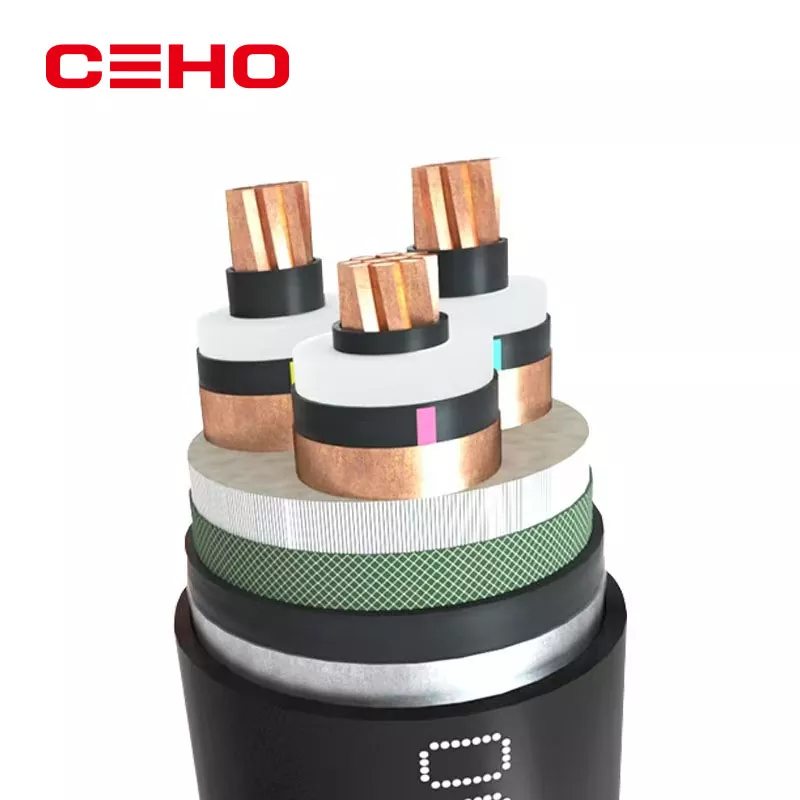
Table of Contents
- 1. Determine the Required Voltage Rating
- 2. Choose Between Copper and Aluminum Conductors
- 3. Understand Cable Structure and Insulation
- 4. Consider the Installation Environment
- 5. Check Applicable Standards and Electrical Tests
- 6. Compare Key Technical Specifications
- 7. How Ceho Power Supports Power Distribution Projects
- 8. Frequently Asked Questions
1. Determine the Required Voltage Rating
We always recommend starting cable selection with the electrical characteristics of the power system. The rated voltage of a cable must match the network's operating voltage and grounding conditions. Choosing a cable based only on its nominal voltage can lead to insulation problems or unnecessary investment.
For medium and high voltage distribution projects, two common voltage designations are 26/45 kV and 38/66 kV. These ratings represent U0/U, where U0 is the rated voltage between the conductor and earth, while U is the rated voltage between conductors.
When reviewing a project specification, we also check the highest system voltage (Um). For example, the cable specifications supplied for our product range include the following ratings:
| Voltage Parameter | 26/45 kV Cable | 38/66 kV Cable |
|---|---|---|
| Rated Voltage (U0/U) | 26/45 kV | 38/66 kV |
| Highest System Voltage (Um) | 52 kV | 72.5 kV |
| AC Test Voltage (5 min) | 65 kV | 90 kV |
The voltage level determines the required insulation design, electrical clearances, accessories, and testing procedures. We advise confirming the complete network voltage data before finalizing a cable specification, especially for substations and industrial power distribution projects.
2. Choose Between Copper and Aluminum Conductors
Conductor material directly affects cable resistance, current-carrying capacity, weight, and overall project cost. Copper and aluminum are the two main options for high voltage power transmission.
We generally consider the following factors when comparing them:
| Comparison | Copper Conductor | Aluminum Conductor |
|---|---|---|
| Electrical Conductivity | Higher | Lower |
| Weight | Heavier | Lighter |
| Material Cost | Generally higher | Generally lower |
| Typical Consideration | Compact cable design and lower conductor resistance | Weight-sensitive and cost-conscious projects |
For the same current-carrying requirement, an aluminum conductor generally needs a larger cross-sectional area than copper. However, its lower weight and material cost can make it a practical choice for long-distance underground power distribution.
Another important detail is conductor construction. According to IEC 60228 Class 2 and VDE 0295 Class 2 requirements, stranded conductors are used in relevant cable designs. We recommend checking conductor resistance and cross-sectional area together rather than comparing cable prices based on conductor material alone.
3. Understand Cable Structure and Insulation
A high voltage cable is a coordinated electrical structure. Each layer performs a specific function, and the performance of the complete cable depends on the compatibility of these layers.
A typical cable construction may include:
- Conductor: Copper or aluminum carries electrical current through the cable.
- Conductor Screen: A semiconductor layer helps create a smooth electrical field around the conductor.
- Insulation Layer: XLPE or another specified insulating material provides electrical isolation.
- Insulation Screen: Controls the electric field outside the main insulation.
- Metallic Screen: Provides an electrical path for fault current and grounding, according to the cable design.
- Inner Sheath and Armor: Protect the cable mechanically and support its installation requirements.
- Outer Sheath: Protects the cable against moisture, abrasion, and environmental exposure.
XLPE (cross-linked polyethylene) is widely used in modern power cables because of its electrical insulation properties and thermal performance. For the cable specifications discussed here, the stated continuous operating temperature is 90°C, with a maximum short-circuit conductor temperature of 250°C for 5 seconds.
We pay particular attention to the semiconductor screens and insulation interface. Poor control of these layers can increase the risk of electrical stress concentration and partial discharge, which may gradually damage insulation during long-term operation.
4. Consider the Installation Environment
The best cable design depends on where and how it will be installed. An underground cable used in an industrial distribution network faces different mechanical and environmental conditions from one installed in a protected indoor substation.
Underground Cable Installation
For direct-buried or duct-installed cables, we consider soil conditions, groundwater exposure, external pressure, and possible mechanical damage. Steel tape or steel wire armor can be specified when additional mechanical protection is required.
Substation and Industrial Applications
In substations, cable routing space, termination positions, bending requirements, and compatibility with switchgear are important. Cable dimensions and accessory arrangements should be confirmed before installation to avoid difficulties during connection.
Temperature and Bending Requirements
Temperature also affects cable installation and operation. The technical data for this product range specifies a laying temperature of no less than -5°C and an operating ambient temperature range of -30°C to 50°C.
The specified minimum bending radius is 15 times the cable outer diameter (15 × D). This value should be checked against the actual cable construction and applicable installation instructions before cable pulling or routing.
5. Check Applicable Standards and Electrical Tests
International standards are an important part of high voltage cable procurement. However, different standards cover different voltage ranges and cable designs. We recommend identifying the required standard in the project specification before requesting quotations.
| Standard | Main Application or Scope |
|---|---|
| IEC 60502-2 | Extruded-insulation power cables rated from 6 kV up to 30 kV |
| IEC 60840 | Extruded-insulation cable systems above 30 kV up to 150 kV |
| IEC 62067 | Extruded-insulation cable systems above 150 kV up to 500 kV |
| ANSI / ICEA S-108-720 | High voltage power cable requirements under the applicable North American specification |
| BS 6622 / BS 7835 | British cable specifications for relevant voltage and cable constructions |
| IS 7098 | Indian standard covering specified XLPE-insulated power cables |
One point worth checking is the voltage range. IEC 60502-2 covers cables rated up to 30 kV, whereas IEC 60840 covers cable systems above 30 kV up to 150 kV. Therefore, a 26/45 kV or 38/66 kV cable should not automatically be assigned to IEC 60502-2 simply because it appears in a general product specification. The applicable standard must be confirmed against the rated voltage, cable construction, and project requirements.
Relevant official standard references:
- IEC 60502-2 – Power Cables with Extruded Insulation
- IEC 60840 – High Voltage Power Cable Systems
- IEC 62067 – Extra-High Voltage Cable Systems
Electrical testing is equally important. For the cable range described in our technical data, the following parameters deserve attention:
- Conductor Resistance Test: Checks whether the conductor meets the specified resistance requirements.
- AC Voltage Test: Evaluates insulation withstand capability under the specified test conditions.
- Partial Discharge Test: Detects localized electrical discharge within the insulation system.
- Short-Circuit Performance: Confirms the cable's ability to withstand specified short-circuit thermal conditions.
For the listed product specifications, the partial discharge level at 2 × U0 is limited to a maximum of 5 pC. Actual acceptance criteria and test procedures should follow the applicable product standard and agreed inspection requirements.
6. Compare Key Technical Specifications
Before confirming an order, we suggest reviewing the main technical parameters in one specification sheet. This makes it easier to identify differences between cable models and reduces misunderstandings during manufacturing and installation.
| Technical Parameter | Specified Value |
|---|---|
| Conductor Resistance | According to IEC 60228 Class 2 and VDE 0295 Class 2 |
| Continuous Operating Temperature | 90°C |
| Short-Circuit Temperature | 250°C for 5 seconds |
| Overload Temperature | 130°C, maximum 100 hours per year |
| Rated Voltage (U0/U) | 26/45 kV and 38/66 kV |
| Maximum Partial Discharge | 5 pC at 2 × U0 |
| Minimum Bending Radius | 15 × Cable Outer Diameter |
| Minimum Laying Temperature | -5°C |
| Ambient Operating Temperature | -30°C to 50°C |
These values provide a useful starting point for technical evaluation. They should not be treated as universal values for every cable model. The final specification needs to match the selected conductor size, insulation system, voltage rating, and applicable standard.
7. How Ceho Power Supports Power Distribution Projects
At Ceho Electric Power Technology Group Co., Ltd. (Ceho Power), we focus on the research, development, manufacturing, and sales of medium and high voltage electrical equipment and components. Our product portfolio includes medium and high voltage circuit breakers, transformers, distribution switchgear, and integrated power solutions such as prefabricated substations.
We understand that cable selection is closely connected to the overall electrical system. A high voltage cable must work with the associated transformers, switchgear, protection equipment, and substation connections. Considering these components together helps avoid mismatched electrical ratings and installation difficulties.
For different project requirements, we can discuss cable specifications covering British, American, and European standards, as well as customized underground cable structures. We also handle projects involving different cable quantities, lengths, and technically demanding structural requirements.
When preparing a cable solution, we recommend providing the following information:
- Rated voltage and highest system voltage
- Copper or aluminum conductor and required cross-sectional area
- Number of cores and cable construction
- XLPE or other specified insulation requirements
- Armor type and outer sheath material
- Installation method and environmental conditions
- Applicable standards, testing requirements, and project quantity
With these details, our technical team can evaluate the required cable structure and discuss a suitable configuration for the project. If you are planning a power distribution network, industrial installation, or substation project, explore our high voltage switchgear solutions or contact Ceho Power to discuss your cable requirements.
8. Frequently Asked Questions
Q1: What is the most important factor when choosing a High Voltage Power Cable?
The rated voltage and highest system voltage should be checked first. After that, conductor size, insulation type, short-circuit requirements, and installation conditions determine the appropriate cable configuration. A cable must satisfy the complete electrical and mechanical requirements of the project.
Q2: Should I choose copper or aluminum conductors for underground power cables?
Both materials can be used in underground power cable designs. Copper offers higher electrical conductivity and lower resistance for a given cross-sectional area, while aluminum is lighter and generally more economical. The final decision should consider current capacity, voltage drop, cable weight, installation conditions, and total project cost.
Q3: What is the difference between 26/45 kV and 38/66 kV cables?
The main difference is their rated voltage level. A 26/45 kV cable has a rated conductor-to-earth voltage of 26 kV and a conductor-to-conductor voltage of 45 kV. A 38/66 kV cable is designed for 38 kV and 66 kV respectively. Their insulation design, accessories, and electrical test requirements must be selected accordingly.
Q4: Why is XLPE commonly used in high voltage cables?
XLPE provides good dielectric properties, thermal stability, and resistance to electrical stress. It supports a continuous conductor operating temperature of 90°C in the cable specification discussed in this article. Its performance makes it suitable for many underground distribution and high voltage transmission applications.
Q5: How do I determine the correct cable bending radius?
The bending radius depends on cable diameter, conductor construction, insulation, and armor structure. The product specifications discussed here indicate a minimum bending radius of 15 times the cable outer diameter. Always confirm the manufacturer's installation instructions before cable pulling and routing.
Q6: Can Ceho Power supply customized underground high voltage cables?
Yes. Ceho Power provides different high voltage cable options, including British, American, and European standard requirements, and can discuss customized underground cable structures. Project details such as voltage rating, conductor material, cable length, insulation, and armor requirements should be provided for technical evaluation.
Conclusion: Choosing the right High Voltage Power Cable involves balancing electrical performance, material selection, cable construction, installation conditions, and compliance with the correct standards. By checking these factors before procurement, project teams can reduce specification errors and improve the reliability of power distribution systems. Ceho Power supports medium and high voltage power projects with cable solutions and related electrical equipment, helping customers evaluate configurations based on their actual application requirements.
Related News
Leave me a message
New Products


News Recommendations