News

Power Transformers in School: The Invisible Heart of Campus Energy

2026-11-19 0 Leave me a message


I. Why Schools Need Dedicated Transformers


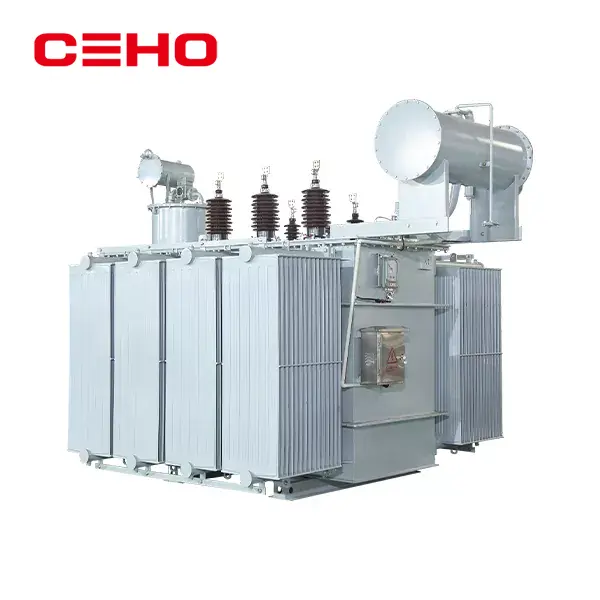
If you walk into any medium-sized or larger school, you'll find a complete power supply and distribution system buried between the teaching buildings, labs, library, cafeteria, dormitories, and sports facilities. The municipal power grid delivers 10kV high-voltage electricity, but the lighting, projectors, air conditioners, and lab equipment in classrooms can only use 380V/220V low-voltage power. The transformer handles this conversion, stepping down the voltage and distributing it to every classroom and device.


School electricity usage has distinct load characteristics: it's concentrated during the day and low at night, high during the semester and low during vacations, and places like labs and cafeterias can have short-term surge loads. Take a university campus as an example—its main supply transformer in the power distribution room is a 10kV dry-type transformer with a rated capacity of 1250kVA, Dyn11 connection, AN/AF cooling, short-circuit impedance of 5.82% (at 120℃), high-voltage side rated at 10kV, low-voltage side at 400V, and a low-voltage rated current of about 1804A. This kind of setup is designed to balance capacity margin and power supply reliability within a limited space.


II. Why Campuses Prefer Dry-Type Transformers


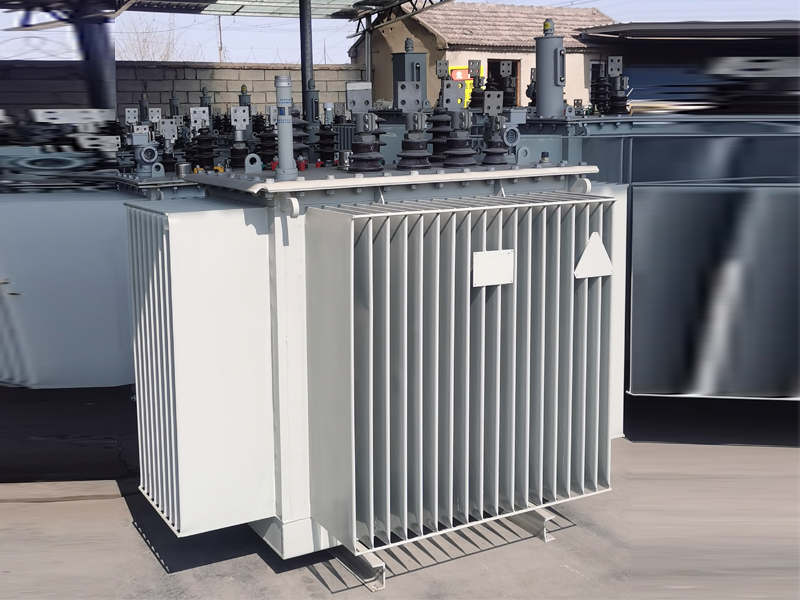
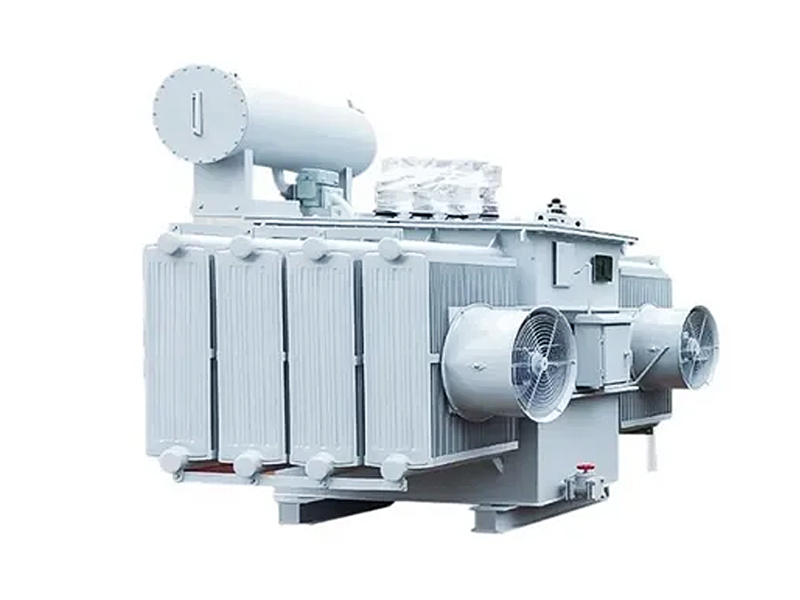
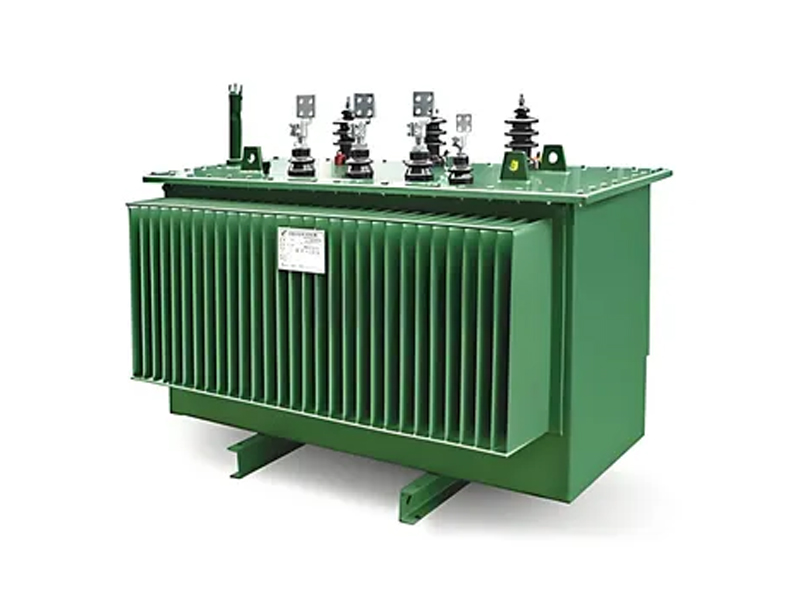
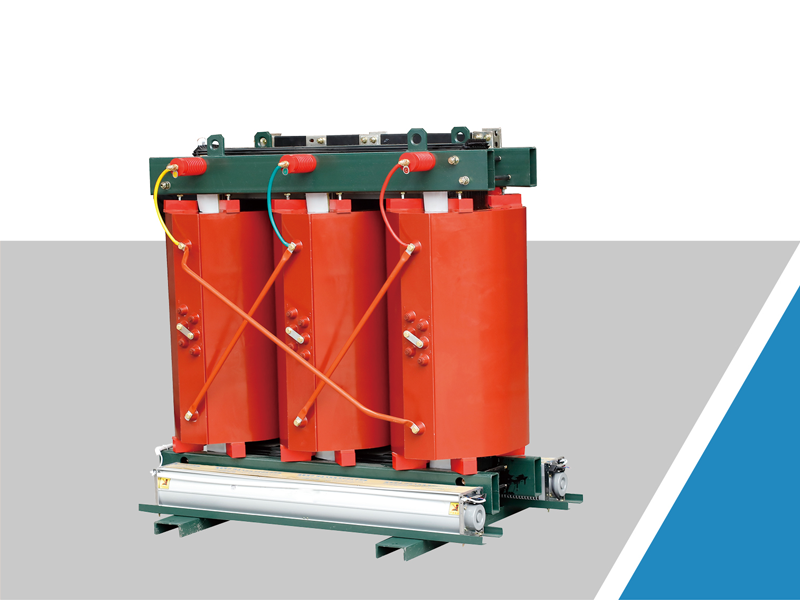
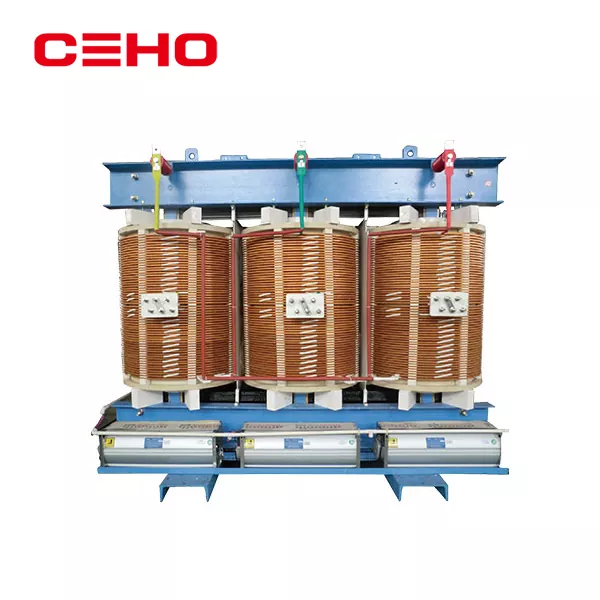
Transformers can be divided into two main types based on insulation and cooling medium: oil-immersed and dry-type. Oil-immersed transformers have high capacity, good heat dissipation, and are cheaper, but the insulating oil is flammable and can cause fires and environmental pollution if a fault occurs. Dry-type transformers use epoxy resin casting or insulated windings as insulation, don’t contain transformer oil, and are fireproof, moisture-proof, and free of oil leakage risk. They’re especially suitable for indoor places with lots of people, like school or lab buildings.

Item
Oil-immersed Transformer
Dry-Type Transformer
Insulation medium
Transformer oil
Epoxy resin casting / insulated winding
Fire performance
Oil is flammable; requires separate fire separation and oil pit
Non-flammable or flame-retardant; can be installed indoors
Noise level
Relatively lower
Can be kept low with low-noise design
Maintenance cost
Periodic oil testing and filtering
Oil-free; mainly temperature control and insulation checks
Typical application
Outdoor substations, large campus main step-down
Teaching buildings, laboratories, underground distribution rooms


It should be noted that dry-type transformers aren't without drawbacks: their cooling isn't as good as oil-immersed ones, their overload capacity is relatively limited, and the cost per unit of capacity is higher. So, when schools choose them, they usually calculate the capacity based on the load with some extra margin and provide mechanical ventilation or air conditioning in the distribution room to keep the winding temperature within an acceptable range.


III. Safety: The First Principle of Campus Transformers


Transformers are one of the highest voltage devices on campus, and their safety protection is directly related to the personal safety of teachers and students. According to electrical installation regulations, distribution equipment must ensure the minimum electrical safety distance between live parts and the human body. For 10kV indoor distribution equipment, the safety distance is usually in the range of hundreds of millimeters, but in actual operation, the required distance between personnel and live parts is much greater. Common measures taken by schools include having separate, locked distribution rooms, hanging “High Voltage Danger” warning signs at the doors, providing insulating mats, gloves, and voltage testers, and strictly prohibiting non-professionals from entering.


In daily management, on-duty staff need to patrol and inspect the equipment in the power distribution room to quickly identify and deal with potential hazards. When high-voltage equipment has a grounding fault, people inside should stay at least 4 meters away from the fault point, and outdoors at least 8 meters. Entering this area requires wearing insulated boots, and insulated gloves must be worn when touching equipment casings or structures. Firefighting equipment in the distribution room should be placed in designated spots and not moved, and it should be equipped with fire extinguishing agents suitable for electrical fires.


IV. Operation and Maintenance: Keeping Equipment Reliable Over the Long Term


Transformers aren't devices you can just install and forget about. Even though dry-type transformers don't require oil management, you still need to regularly check things like winding temperature, the operation of cooling fans, insulation resistance, and whether connections are secure. In practice, maintenance of dry-type transformers usually involves removing the faulty equipment, sending it back to the factory for repairs, reinstalling it, and conducting primary/secondary tests with reports. The final acceptance is based on a passed voltage withstand test report. Units carrying out this kind of work need to have at least a Level 3 'Electric Power Facility Installation (Repair, Test) License'.


At the standard level, the test methods for dry-type power distribution and transformers are specified by the IEEE C57.12.91 series, with the current version being C57.12.91-2020. It lays out systematic requirements for the performance, safety, and testing of dry-type transformers. By bringing these standards into equipment procurement and acceptance, schools can effectively avoid issues like 'cutting corners' and focusing more on construction than on acceptance.


V. Towards the Future: Smarter and Greener Campus Distribution


With the increase of campus solar panels, charging stations, energy storage, and precise lab equipment, the traditional 'one-way power supply' distribution model is changing. Rooftop solar power needs to be stepped up for grid connection, charging stations bring new peak loads, and precision instruments are more sensitive to voltage fluctuations, all of which put higher demands on transformer regulation capabilities, monitoring methods, and harmonic management. More and more schools are starting to deploy integrated automation systems in their power distribution rooms to achieve remote measurement, signaling, control, and adjustment, connecting transformer operation data to the campus energy management platform.


At the same time, energy saving and noise reduction are also important focuses for campus power distribution. Using high-permeability cold-rolled silicon steel cores and optimizing vibration reduction structures can lower transformer no-load losses and operational noise; properly matching capacity and avoiding 'using a big horse to pull a small cart' can improve load rate and operating efficiency. For schools, transformers may take up only a tiny part of the building space, but they determine whether the entire campus can use electricity safely, stably, and economically.


Related News
Leave me a message
X
We use cookies to offer you a better browsing experience, analyze site traffic and personalize content. By using this site, you agree to our use of cookies. Privacy Policy
RejectAccept