News

How to Choose the Right Transformer

2026-11-17 0 Leave me a message


I. Get the Capacity Right: It's About Load Factor, Not Just "Extra Margin"


Capacity (measured in kVA) is not the simple sum of every equipment nameplate. You must calculate the demand load first. This is where most buying mistakes start.

Calculate, Don't Estimate

The core formula:

Required capacity S (kVA) = Total power (kW) × Demand factor × Diversity factor ÷ Power factor (cos φ)

  • Demand factor: close to 1.0 for continuous loads; 0.3–0.5 for intermittent ones.
  • Diversity factor: 0.7–0.9 for motor/power loads; 0.8–1.0 for lighting and heating.
  • Power factor: 0.7–0.8 without reactive power compensation; 0.9–0.95 with compensation.
  • Quick rule of thumb: usable power (kW) ≈ capacity (kVA) × 0.8.


Example: A factory has 800 kW of equipment (including a 500 kW motor), power factor 0.8, diversity factor 0.8. Demand load = 800 × 0.8 ÷ 0.8 = 800 kVA. Round up to the next standard size: 1000 kVA.
Check the Economic Load Factor
After sizing, validate it with the load factor — the healthy operating range for a transformer is 45%–70%:

Load factor Consequence
Below 30% High no-load loss share; energy and capital wasted
Above 85% Excessive heat, shorter life, tripping on peaks
45%–70% (ideal) Best balance of efficiency and service life
How to verify: Calculated demand ÷ transformer capacity = expected load factor. Keep it inside the economic band.
 Adjust for Your Load Profile 

Fluctuating loads (shift work, large day/night commercial swings): size to the average load and rely on short-term overload capability for peaks — don't size to the peak.
Growing loads (planned expansion): phase your investment, or leave 10%–20% headroom. More than 30% oversizing isn't economical.
Seasonal loads (HVAC, heating): handle with load management and parallel operation strategy.
Special corrections: for every 1,000 m of altitude, derate ~5%–10%; above 40 °C ambient, derate ~0.5% per extra degree.

Tip: Capacities follow standard IEC series steps (e.g. 400, 500, 630, 800, 1000 kVA). When your figure falls between two steps, round up rather than down — but check the resulting load factor. If rounding up drops you below 40%, recalculate instead.


II. Choose the Type: Dry-Type or Oil-Immersed? Let the Application Decide

This is the fundamental fork in the road. The real difference lies in the insulation and cooling medium, which drives every other trade-off.


Factor Oil-Immersed Dry-Type (Cast Resin)
Insulation / cooling Mineral insulating oil Air + epoxy resin
Fire safety Leakage and fire risk; fire protection required Oil-free, flame-retardant, self-extinguishing
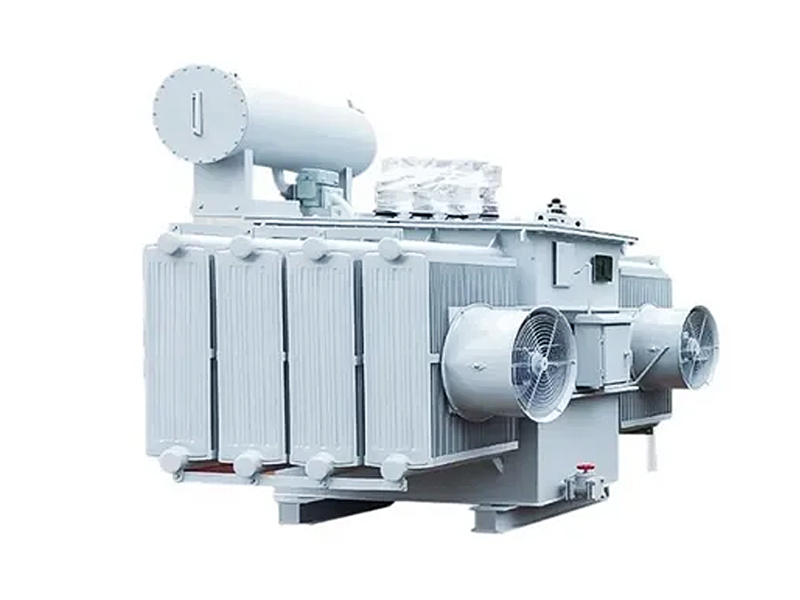
Heat dissipation High (oil has high heat capacity) Moderate; large units need forced-air cooling
Overload capacity Strong short-term overload margin Moderate (natural cooling overheats more easily)
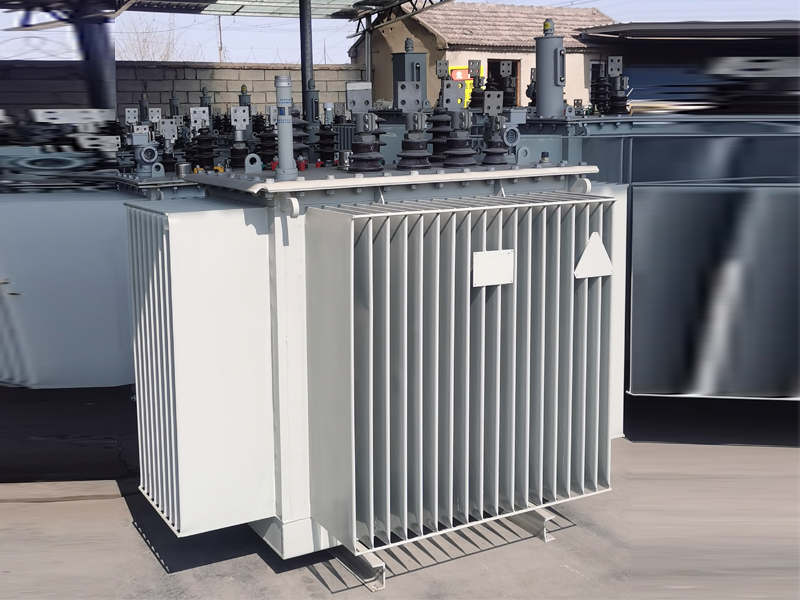
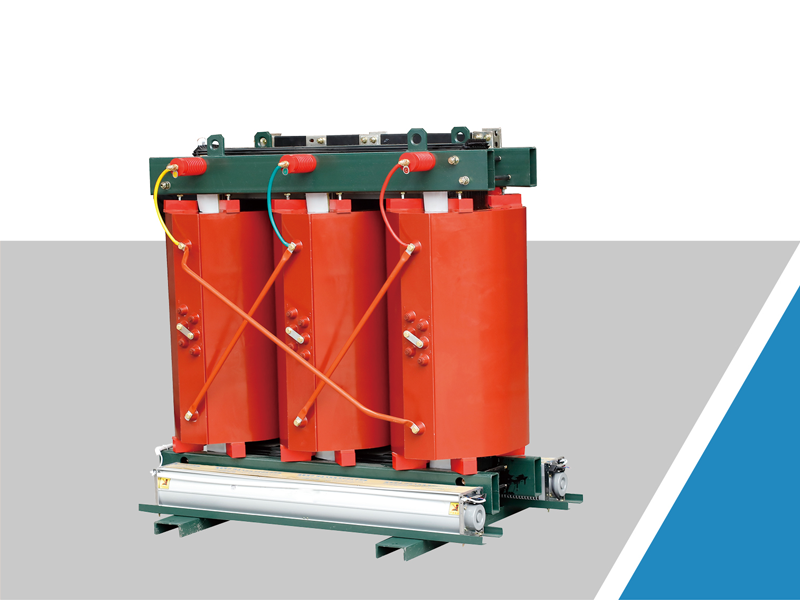
Best environment Outdoor, substations, dedicated rooms Indoor: commercial buildings, metros, hospitals, data centers
Maintenance Periodic oil testing and replacement Nearly maintenance-free (clean dust only)
Initial cost Lower Higher (epoxy resin)
Service life 20–30 years 15–25 years
Typical price gap — 30%–50% more than oil-immersed at same capacity

The One-Line Rule
  • Outdoor, large capacity (>1000 kVA), budget-sensitive → Oil-immersed gives the best value.
  • Indoor, densely populated, basement, or fire-sensitive → Dry-type is usually the only compliant choice.
  • In-between cases (offshore platforms, demanding indoor rooms) → consider synthetic-ester or silicone-fluid transformers, which sit between the two on fire and environmental performance.

III. Lock Down the Key Parameters — Don't Accept a "Vague Quote"

Once capacity and type are set, confirm every item below in writing and ask the supplier to state the data in the technical agreement and provide factory test reports.

Voltage Rating and Ratio

Match the primary (e.g. 10 kV, 33 kV, 11 kV) and secondary (e.g. 0.4 kV, 0.69 kV) voltages to your system's nominal voltage. Distinguish line-to-line from line-to-neutral values. If incoming voltage fluctuates beyond ±5%, confirm the tapping range (typically ±5% or ±2×2.5%) and consider an on-load tap changer.

Vector Group

For most distribution duties, choose Dyn11 — it suppresses third-harmonic currents and allows neutral current up to 100% of phase current, which matters for protection and power quality. Don't use an older Yyn0 arrangement unless you have a specific reason. Warning: paralleling two transformers with different vector groups is effectively a phase-to-phase short circuit.

Impedance Voltage (Uk%)

The most overlooked yet critical parameter — it directly sets short-circuit current and voltage drop:
  • Too low → high fault current, downstream equipment at risk.
  • Too high → large voltage drop, motors may not start.
  • Typical range 4%–6%: ~4% for lighting-type loads, 5%–6% for motor loads.
  • For parallel operation, keep the impedance difference within ±10%, or one unit overloads while the other stays idle.

Cooling Method and Insulation Class
  • Oil-immersed: commonly ONAN (oil natural, air natural). Dry-type: AN (air natural) / AF (air forced); forced-air cooling can raise capacity by 40%–50%, but must not be treated as continuous rated capacity.
  • Hot environments (boiler rooms, workshops): choose Class H insulation (180 °C). Standard environments: Class B (130 °C) is sufficient.

Protection Rating (IP)

Outdoor: IP23 or better (rain and dust). Indoor: IP20 is adequate — don't pay for a higher rating you don't need.


IV. Material and Efficiency: The Hidden Cost Over 10 Years

Windings: Prefer Copper

A copper-wound transformer of the same capacity weighs 30%–40% more and costs about 10%–15% more up front. But copper's conductivity is roughly 1.6 times that of aluminium, and losses are about 40% lower, with 2–3× the service life. Aluminium looks cheap, but the extra annual energy loss often wipes out the savings within a few years.


Efficiency Class: Target the Highest You Can Justify

  • Follow the applicable efficiency standard in your market (for example IEC 60076-20 in Europe / DOE rules in the US).
  • A high-efficiency unit can cut no-load losses by ~25% versus a standard one. On a 1000 kVA unit, that can save close to USD 10,000 a year in energy — the price premium pays back in roughly a year.
  • Use the right metric: equipment price + lifetime energy loss cost = total cost of ownership. The higher your load factor and annual run hours, the faster high efficiency pays off.

Scenario tip: high load factor → prioritize low load loss (e.g. copper windings). Low load factor → prioritize low no-load loss (e.g. amorphous alloy cores, which can cut no-load loss by 60%–80% and suit rural grids or lightly loaded systems).


V. Choose the Manufacturer: Evaluate, Don't Just Compare Prices

The lowest quote usually carries the highest risk. Score suppliers against these five criteria:

1. Certifications and compliance — valid type test reports, CE / UL / KEMA or local authority approvals as required, conformance to IEC 60076. Reject uncertified or non-compliant units.
2. Relevant track record — ask for references at your voltage level, capacity, type, and application, and speak to existing customers about real-world performance.
3. Manufacturing capability — visit the plant if you can. Check core stacking tightness, quality of cold-rolled grain-oriented silicon steel, and overall process control.
4. After-sales service — confirm local coverage, response-time commitment (e.g. 24-hour phone response, 72-hour on-site), warranty period (typically 1–2 years; stronger suppliers offer more), and spare-part availability.
5. Shortlist globally recognized names alongside qualified regional makers — e.g. Siemens, Schneider Electric, ABB / Hitachi Energy, Eaton, and established local manufacturers. Filter in this order: efficiency → application fit → service → reputation.


VI. Pre-Purchase Checklist: Avoid These 6 Common Mistakes

Common Misconceptions The Correct Way
Sized by adding nameplate ratings calculate demand load properly
Oversized "just to be safe" stay inside the 45%–70% load factor band
Skipped reactive-power compensation before sizing define compensation first, then capacity
Compared on purchase price alone calculate 10-year total cost of ownership
Ignored impedance voltage 4% for lighting, 5%–6% for motors; ≤10% difference for parallel units
Bought uncertified or falsely rated units insist on type test reports and compliance certificates


Final Word

Transformer selection is calculated, not copied. Compute the real load, validate it with the load factor, pick dry-type or oil-immersed by application, confirm every key parameter, then make the long-term judgment on material, efficiency, and service. Reliable load data is what keeps the whole specification honest.


Related News
Leave me a message
X
We use cookies to offer you a better browsing experience, analyze site traffic and personalize content. By using this site, you agree to our use of cookies. Privacy Policy
RejectAccept