English
- English
- Español
- Português
- русский
- Français
- 日本語
- Deutsch
- tiếng Việt
- Italiano
- Nederlands
- ภาษาไทย
- Polski
- 한국어
- Svenska
- magyar
- Malay
- বাংলা ভাষার
- Dansk
- Suomi
- हिन्दी
- Pilipino
- Türkçe
- Gaeilge
- العربية
- Indonesia
- Norsk
- تمل
- český
- ελληνικά
- український
- Javanese
- فارسی
- தமிழ்
- తెలుగు
- नेपाली
- Burmese
- български
- ລາວ
- Latine
- Қазақша
- Euskal
- Azərbaycan
- Slovenský jazyk
- Македонски
- Lietuvos
- Eesti Keel
- Română
- Slovenski
- मराठी
- Srpski језик

What Is a Current Instrument Transformer?
This in‑depth article explains what a Current Instrument Transformer is, how it works, why it matters in electrical systems, how it compares with other instrument transformers, how to choose one, and frequently asked questions—all backed by authoritative definitions and industry standards. Current instrument transformers, commonly called current transformers (CTs), enable accurate current measurement, protection, and control of high‑voltage electrical circuits by scaling currents to safer, standard values for instruments and relays.

Table of Contents
- What Is a Current Instrument Transformer?
- How Does a Current Transformer Work?
- Why Use a Current Instrument Transformer?
- Which Types of Current Instrument Transformers Are There?
- How to Select the Right Current Instrument Transformer?
- What Are Common Applications?
- Frequently Asked Questions (FAQ)
What Is a Current Instrument Transformer?
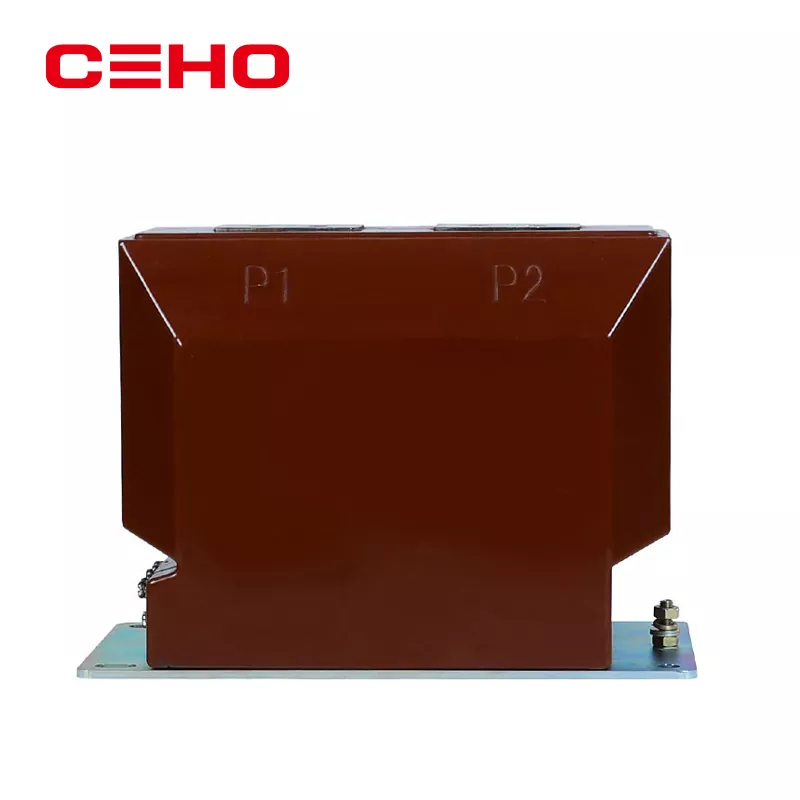
A Current Instrument Transformer (also known as a Current Transformer or CT) is a specific type of instrument transformer designed to scale very high alternating currents (AC) from power systems into a proportional, lower current that can be safely connected to meters, protective relays, and control devices.
| Attribute | Details |
|---|---|
| Purpose | Scale high current to standard measurement current |
| Primary Use | Protection and measurement |
| Secondary Output | Typically 1 A or 5 A |
| Instrumentation Safety | Isolates measurement circuits from high voltage |
The CT’s defining role is to allow safe, accurate current sensing on circuits where direct measurement would be dangerous or impractical due to high current and high voltage.
How Does a Current Transformer Work?
The operating principle of a current transformer is based on magnetic induction: when alternating current flows through the primary conductor, it creates a magnetic field. This magnetic flux induces a proportional current in the CT’s secondary winding via electromagnetic induction.
- Primary winding: usually a single turn (often the conductor itself).
- Secondary winding: many turns of fine wire to produce reduced current.
- Magnetic core: high‑permeability material to guide flux efficiently.
The result is a secondary current that is a fixed ratio of the primary current (e.g., a 1000:5 CT will output 5 A when the primary current is 1000 A), enabling measurement devices to operate safely and with high accuracy.
Why Use a Current Instrument Transformer?
Current transformers are essential for modern electrical systems for several reasons:
- Safety: They isolate devices and personnel from dangerous high‑voltage primary circuits.
- Accuracy: They provide standardized current levels for accurate metering and load monitoring.
- Protective function: They work with relays and protections to detect faults and trigger circuit breakers.
Without CTs, measuring or protecting high‑current networks with conventional instruments would be dangerous, inaccurate, or both.
Which Types of Current Instrument Transformers Are There?
Current transformers come in several forms depending on installation and application:
- Bar‑type CTs: Primary conductor passes through a core with many secondary turns.
- Ring (toroidal) CTs: Ring core with conductor passed through it; ideal for retrofit measurement.
- Window CTs: Designed so the primary conductor can easily be threaded through.
- Split‑core CTs: Clamp‑on type CT for convenient installation without disconnection.
Each type supports different installation needs and accuracy requirements. High‑voltage substations often use robust bar or window types, while maintenance or retrofit scenarios may use split‑core formats.
How to Select the Right Current Instrument Transformer?
Selecting the right CT depends on:
- Primary current rating: Must match maximum expected load current.
- Secondary standard output: Commonly 5 A or 1 A.
- Accuracy class: Precision required for metering vs protective functions.
- Temperature and environment ratings: For installation conditions.
| Selection Factor | Application Need |
|---|---|
| Accuracy class | Higher for billing meters, moderate for protection. |
| Primary rating | Match peak expected current. |
| CT type | Field retrofit vs permanent installation. |
What Are Common Applications?
CTs are used in many electrical engineering areas:
- Metering: measure current for billing and load calculation.
- Protection: detect overcurrent or fault conditions and initiate breaker trip.
- Control systems: feed real‑time data to SCADA or automation systems.
Frequently Asked Questions (FAQ)
What does “instrument transformer” mean?
An instrument transformer is a device that scales high power system quantities (current or voltage) to standardized levels for measurement and protection without loading or disturbing the primary circuit.
How is a current transformer different from a power transformer?
A current transformer focuses on precise scaling for measurement and safety, while a power transformer focuses on transferring power between voltage levels with minimal loss.
Why should a CT never be operated with an open secondary?
Leaving a CT secondary open can cause dangerously high voltages as the transformer tries to maintain current, risking insulation breakdown and safety hazards.
What is the standard secondary current rating?
Standard CT secondary outputs are typically 1 A or 5 A to match common instrument and relay input requirements.
Can current transformers be used for DC measurement?
Standard CTs operate on AC magnetic induction and are not suitable for DC; special sensors (e.g., Hall effect) are used instead.
Related News
- Start by Choosing the Right JXF
- SG(B)10-10KV environmentally friendly dry-type transformer: How to deliver safe and green answers under non-encapsulated structure?
- What are the hazards of transformer overload operation? How to carry out real-time load monitoring?
- How can oil immersed transformers achieve future green development in the context of "dual carbon"?
- What does the internal structure of a dry-type transformer look like when disassembled?
- How to choose between power cabinet and lighting distribution box?
Leave me a message