News

What is GGJ Low-Voltage Reactive Power Compensation Cabinet

2026-06-23 0 Leave me a message

What is GGJ Low-Voltage Reactive Power Compensation Cabinet

Definition

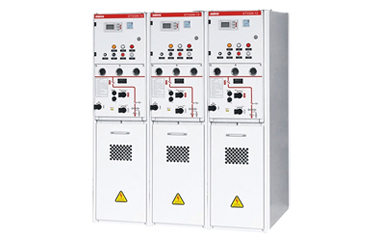
GGJ low-voltage reactive power compensation cabinet is a power factor correction device specially designed for 0.4kV low-voltage power grid. It compensates the reactive power required by the system through automatically switching capacitors, which can raise the power factor above 0.9, so as to reduce the loss of transformers and lines and improve power quality.

It can be used in conjunction with corresponding PGL and GGD type AC low-voltage distribution cabinets, or used independently. The built-in controller automatically controls the switching action of parallel capacitor banks at a certain time interval in a cyclic switching mode according to the amount of inductive reactive power consumed by grid loads, keeping the grid's reactive power consumption in an optimal state. The purposes are to reduce the loss of the entire power transmission and distribution system and transformers, improve power factor, optimize grid voltage quality, and release the effective capacity of power transmission and distribution systems.

GGJ low-voltage reactive power compensation cabinet adopts low-voltage self-healing shunt capacitors, which are equipped with complete protections against short circuit, overvoltage, inrush current, overcurrent and other faults, ensuring safe and reliable operation.

Operating Environmental Conditions of GGJ Low-Voltage Reactive Power Compensation Cabinet

a. The ambient air temperature shall not be higher than +40℃ or lower than -5℃; the average temperature within 24 hours shall not exceed +35℃; b. The relative humidity of ambient air shall not exceed 50% at the maximum temperature of +40℃. Higher relative humidity is allowed at lower temperatures (e.g. 90% at +20℃). The possible occasional condensation caused by humidity changes shall be taken into consideration; c. Altitude shall not exceed 2000m; d. The inclination of the equipment relative to the vertical plane during installation shall not exceed 5°; e. The equipment shall be installed in places without severe vibration and impact, and without corrosive substances that may damage electrical components.

Structural Characteristics of GGJ Low-Voltage Reactive Power Compensation Cabinet

a. The GGJ series low-voltage reactive power compensation cabinet is composed of cabinet body, isolating switch, fuse, capacitor switching contactor, power capacitor and intelligent reactive power compensation controller, with an enclosed cabinet structure. b. Operation mode: Manual / Automatic c. Installation mode: Fixed installation d. Wiring mode: Fixed connection

Technical Parameters

1. Rated voltage: 380V-660V

2. Rated frequency: 50Hz

3. Rated capacity: 1-600kvar

4. Operating voltage range: (0.85-1.1) times the rated voltage

5. Maximum allowable current: 1.3 times the rated current

6. Control loops: 1-16 loops

7. Switching time: 1-150 seconds per switching, adjustable

8. Operating mode: Automatic, continuous operation

Main Features

1. Controlled by an intelligent controller with complete functions and reliable performance, supporting automatic compensation and lifting power factor above 0.9;

2. Real-time display of grid power factor, display range: lagging (0.00-0.99), leading (0.00-0.09);

3. Equipped with multiple comprehensive protection functions including overvoltage, excessive harmonic, over-compensation, system fault, phase loss and overload protection;

4. Capable of storing set parameters without data loss after power failure; the device will automatically enter operating state after grid power is restored, requiring no on-duty personnel;

5. Split-phase compensation or mixed compensation can be adopted according to the balance condition of grid loads;

6. Strong anti-interference capacity, capable of resisting 2000V amplitude interference pulses directly input from the power grid, exceeding national professional standards.

Main Functions

1. Real-time measurement and hourly recording of three-phase voltage, current, active power, reactive power, power factor, active electric energy and reactive electric energy at the low-voltage side of transformers; total distortion rate of voltage and current, as well as the content of the 2nd to 25th harmonics;

2. Equipped with RS-232 and RS-485 interfaces to support data recording via handheld computers, as well as remote communication for wireless meter reading, equipment testing, parameter setting and reading of real-time measured data and recorded data;

3. Data analysis function: process and statistically query operating load data; comprehensively analyze power supply quality, calculate voltage qualification rate, power supply load rate, reliability rate and maximum load rate; query power factor, active power and reactive power by time periods; draw curve graphs of each phase voltage, current, power factor, etc.; print comprehensive analysis and statistical reports.


FAQs

Q1: What is GGJ low voltage reactive compensation cabinet? A: A 0.4kV reactive power compensator boosting power factor over 0.9, used alone or with GGD/PGL cabinets to cut power loss and boost grid capacity.

Q2: Main components? A: Enclosed cabinet, isolating switch, fuse, switching contactor, self-healing capacitor, intelligent controller.

Q3: Operating environment requirements? A: -5℃~40℃, altitude ≤2000m, no corrosion/vibration; cabinet tilt ≤5°, prevent condensation.

Q4: Installation & operation mode? A: Fixed installation & wiring; manual / automatic dual control.

Q5: Core electrical parameters? A: 380~660V, 50Hz, 1~600kvar, 1~16 loops; 1~150s adjustable switching, continuous auto run.

Q6: Protection features? A: Overvoltage, phase loss, overload, harmonic & over-compensation protection; capacitors with short-circuit, inrush and overcurrent protection.

Q7: Data loss after power cut? A: Parameters saved automatically; auto restart after power recovery, unattended operation.

Q8: Compensation & anti-interference performance? A: Split-phase / mixed compensation; withstand 2000V interference pulses, above national standard.

Q9: Real-time monitoring data? A: Power factor, three-phase voltage, current, power, energy and 2~25th harmonic distortion.

Q10: Communication & data analysis? A: RS232/485 ports for on-site & remote data reading; load statistics, operation curves and printable reports.

Related News
Leave me a message
X
We use cookies to offer you a better browsing experience, analyze site traffic and personalize content. By using this site, you agree to our use of cookies. Privacy Policy
RejectAccept