English
- English
- Español
- Português
- русский
- Français
- 日本語
- Deutsch
- tiếng Việt
- Italiano
- Nederlands
- ภาษาไทย
- Polski
- 한국어
- Svenska
- magyar
- Malay
- বাংলা ভাষার
- Dansk
- Suomi
- हिन्दी
- Pilipino
- Türkçe
- Gaeilge
- العربية
- Indonesia
- Norsk
- تمل
- český
- ελληνικά
- український
- Javanese
- فارسی
- தமிழ்
- తెలుగు
- नेपाली
- Burmese
- български
- ລາວ
- Latine
- Қазақша
- Euskal
- Azərbaycan
- Slovenský jazyk
- Македонски
- Lietuvos
- Eesti Keel
- Română
- Slovenski
- मराठी
- Srpski језик

What is the reason for the poor stability of the transformer?
As one of the core equipment of the power system, transformer undertakes the key functions of voltage conversion, power transmission and distribution. Its operational stability directly affects the safety and reliability of the entire power system. In modern power networks, transformers achieve efficient transmission and reasonable distribution of power by changing voltage levels, thereby meeting the needs of different users for electrical energy. In addition, transformers also play an important regulatory role in the stable operation of the power system, such as maintaining the voltage level by adjusting the tap position, or improving the system power factor through reactive power compensation. However, in actual operation, many transformers will experience problems such as large voltage fluctuations, uneven load distribution, and reduced overload capabilities. These phenomena usually point to the "poor stability performance" of the transformer. So, what are the root causes of poor stability performance of transformers?
I. Unreasonable design and selection
1. Improper impedance voltage matching
The impedance voltage of the transformer determines the uniformity of load distribution when it is operated in parallel. If the impedance voltage deviation is too large when multiple transformers are operated in parallel, the transformer with smaller impedance will bear too much load and be in an overload state for a long time, thus affecting the stability of the overall system.
2. Insufficient capacity margin
If the rated capacity of the transformer does not match the actual load demand, especially in scenarios with large load fluctuations (such as industrial production line startup, new energy grid connection), the transformer frequently operates close to or exceeds the rated capacity, making it difficult to maintain stable output voltage.
3. The adjustment range of the tap changer is limited
The number of gears and adjustment accuracy of the on-load voltage regulating tap-changer are insufficient and cannot effectively cope with large fluctuations in grid voltage, causing the secondary side voltage to deviate from the normal range.
II. Manufacturing process and material quality issues
1. Poor selection of iron core material
As the core component of the transformer, the choice of iron core material directly affects the magnetic properties, no-load loss and operating stability of the transformer. Currently, the commonly used iron core materials mainly include silicon steel sheets and amorphous alloys. There are significant differences between the two in terms of magnetic permeability, saturation magnetic induction intensity and iron loss. Silicon steel sheets are widely used in traditional transformers due to their high magnetic permeability and low cost. However, the iron loss of silicon steel sheets is relatively high, especially under high-frequency conditions, which will lead to an increase in the no-load loss of the transformer, accompanied by an increase in noise and other problems, thus affecting its stability and economy. Amorphous alloy materials have gradually become the preferred material for new transformers due to their extremely low iron loss and excellent magnetic properties. However, the mechanical strength and processing performance of amorphous alloys are relatively poor. If these factors are not fully considered during the design process, it may cause problems such as deformation and cracking of the core during manufacturing or operation, further affecting the magnetic circuit performance and operational stability of the transformer. Therefore, when selecting iron core materials, its magnetic properties, economy and applicability must be comprehensively considered to achieve the best design effect.
2. Defects in core structure design and stacking process
The rationality of the core structure design and stacking process has an important impact on the magnetic circuit performance, no-load current and operating stability of the transformer. First of all, unreasonable iron core structural design, such as excessive joints or poor insulation between sheets, will lead to uneven distribution of magnetic flux in the magnetic circuit, thereby increasing no-load current and iron loss. This phenomenon will not only reduce the operating efficiency of the transformer, but may also cause local overheating problems, and even cause core failure in severe cases. Secondly, irregular stacking process is also an important factor affecting core performance. During the stacking process, if the pieces are misaligned or the insulation is damaged, the continuity of the magnetic circuit will be destroyed, resulting in increased hysteresis loss and eddy current loss. In addition, insufficient or unevenly distributed pressing force during stacking may also cause the core to loosen during operation, affecting its mechanical stability and noise level. Therefore, during the core design and manufacturing process, the accuracy of the stacking process must be strictly controlled to ensure that the geometric dimensions and magnetic properties of the core meet the design requirements, thereby providing reliable guarantee for the stable operation of the transformer.
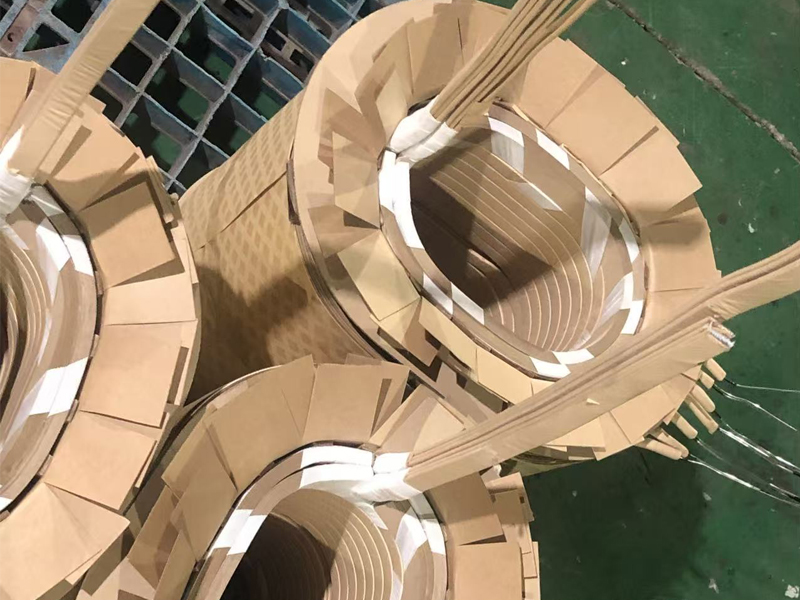
3. Improper winding structure and insulation
The choice of winding structure has an important impact on the heat dissipation performance, mechanical strength and stability of the transformer. Currently, common winding structures include cylindrical type and pie type. Each structure has unique characteristics and applicable scenarios. Cylindrical windings are widely used in small and medium-sized transformers due to their simple structure and mature manufacturing technology. However, the application of this structure in large transformers may have problems with poor heat dissipation, especially under high load conditions, which can easily lead to local overheating, thus affecting the stable operation of the transformer. In contrast, pie-type windings improve heat dissipation efficiency and enhance mechanical strength through segmented design, making them more suitable for large-capacity, high-voltage transformers. However, if the structure is improperly selected, for example, blindly selecting a certain structure without fully considering the load characteristics and operating environment, it may cause problems such as mechanical stress concentration and insulation damage during operation of the transformer, thereby affecting its stable performance.
Short circuit between winding turns, aging of interlayer insulation or inadequate impregnation process will cause partial discharge or even breakdown between turns, resulting in abnormal electromagnetic field distribution inside the transformer and deterioration of output characteristics.
Therefore, in the winding structure design, it is necessary to comprehensively evaluate the advantages and disadvantages of various structures based on specific application scenarios to select the optimal solution.
4. Unreasonable design of winding turns
The number of winding turns is one of the core parameters in transformer design, and its rationality directly affects the voltage ratio, current distribution and overall stability performance of the transformer. When the number of winding turns is designed too much, the voltage ratio between the primary side and the secondary side of the transformer will deviate from the rated value, thus causing voltage deviation problems. This deviation will not only affect the power supply quality of the power system, but may also cause damage to the load equipment. In addition, too many turns will increase the winding resistance, resulting in increased copper losses, thereby reducing the operating efficiency of the transformer. On the contrary, if the number of winding turns is designed to be too few, the transformer will bear excessive current under the rated load, exacerbating the winding heating phenomenon, and may even cause the insulation layer to age or breakdown, seriously affecting the stability and service life of the transformer. Therefore, in actual design, it is necessary to accurately calculate and determine the reasonable number of winding turns based on factors such as the rated capacity, voltage level, and operating environment of the transformer to ensure that the transformer maintains stable performance in long-term operation.
5. Poor wire quality
Wires are the basic constituent materials of transformer windings, and their quality directly affects the resistance value, electrical strength and overall stability of the windings. If the resistivity of the wire is too high, it will cause the winding resistance to increase, causing additional copper losses and temperature rise problems. This temperature rise will not only accelerate the aging of the insulation material, but may also reduce the electrical strength of the winding and increase the risk of short-circuit failure. In addition, the quality of the wire insulation layer also has an important impact on the stable performance of the transformer. If the insulation layer has problems such as uneven thickness and insufficient voltage resistance, it will easily lead to inter-turn short circuits or winding ground faults, which will affect the normal operation of the transformer. Especially under high load conditions, the problem of poor conductor quality will be further amplified, which may cause the transformer to fail due to overheating or electrical breakdown. Therefore, during the transformer manufacturing process, wire materials must be strictly screened to ensure that their resistivity and insulation properties meet design requirements to ensure the stable operation of the transformer.
6. Poor performance of insulation materials
Insulating materials play an important role in isolating components with different potentials in transformers, and their performance directly affects the reliability and overall stability of the transformer insulation system. If the insulation material has a low heat resistance level, its mechanical strength and electrical properties may decline rapidly under high load or overload conditions, resulting in insulation breakdown or partial discharge. In addition, the corona resistance of the insulating material is also a key factor affecting the stability of the transformer. When the insulating material is exposed to a strong electric field environment, if its corona resistance is insufficient, it will easily cause corona discharge, leading to corrosion and deterioration of the insulation surface, ultimately shortening the service life of the transformer. Research shows that poor performance of insulation materials will not only increase the failure rate of the transformer, but may also have a negative impact on its economic operation, such as increased maintenance costs and power outage losses. Therefore, during the transformer manufacturing process, high-performance insulation materials should be given priority and undergo rigorous testing and verification to ensure that they can maintain stable performance under various operating conditions.
III. Harsh Operating Environment
1. Excessive Temperature or Poor Heat Dissipation
When transformers operate in high-temperature environments for extended periods (such as being exposed to direct sunlight outdoors in summer or in poorly ventilated substations), the insulation material ages more rapidly, the dielectric properties of the oil-paper insulation deteriorate, leading to increased internal partial discharges, drift in electrical parameters, and reduced stability.
2. High Humidity and Severe Contamination
High humidity, along with contaminants like salt spray and dust, adhering to the surfaces of bushings and insulators, can lower the external insulation level, trigger creepage flashover, cause instantaneous grounding or short circuits, and result in severe voltage fluctuations.
3. Harmonic and Impact Load Interference
A large amount of harmonics generated by nonlinear loads (such as frequency converters, rectifiers, and arc furnaces) when injected into transformers increases copper and iron losses, causing additional heating. At the same time, harmonic currents can also distort the magnetic flux in the core, affecting the stability of the output voltage waveform and amplitude.
IV. Inadequate operation and maintenance management
1. Lack of regular inspections and preventive testing: Preventive tests such as insulation resistance testing, dielectric loss measurement, and oil chromatography analysis were not conducted on time, making it impossible to promptly identify internal latent faults (such as localized overheating, discharge, or moisture ingress). This led to the failure to detect issues early, allowing them to escalate and severely impact stability.
2. Neglected cooling system maintenance: Failures in cooling devices such as fans, oil pumps, and radiators were not repaired promptly, or the radiators became severely clogged with dust, reducing the transformer's heat dissipation efficiency and increasing oil temperature. This accelerated insulation aging and deterioration of electrical performance.
3. Improper operation of tap changers: During manual or automatic voltage regulation, issues such as stuck tap changer mechanisms, burned contacts, or mechanical failures could occur, resulting in failed voltage regulation or incorrect tap positions, which could lead to uncontrolled output voltages.
V. External Power Grid Factors
1. System voltage fluctuates frequently
The voltage of the upstream power grid suddenly rises or drops due to large-scale load switching, fault tripping, etc. When the voltage regulation capacity of the transformer is exceeded, the transformer cannot maintain the stability of the secondary side voltage.
2. Three-phase imbalance is serious
The single-phase high-power load on the low-voltage side is unevenly distributed, resulting in a serious imbalance in the three-phase current and a shift in the neutral point. This not only causes an increase in zero-sequence current and additional losses, but also makes the three-phase output voltage asymmetrical, affecting the normal operation of electrical equipment.
VI. Summary and Improvement Suggestions
Poor transformer stability performance is often the result of the superposition of multiple factors, and a single cause can rarely lead to serious consequences independently. In response to the above problems, it is recommended to improve from the following aspects:
- Optimize the early design: Reasonably select the transformer capacity, impedance voltage and voltage regulation method according to the actual load characteristics, and use an on-load voltage regulation transformer when necessary.
- Strictly control manufacturing quality: select high-quality silicon steel sheets and high-grade insulation materials, and strengthen factory testing to ensure process consistency.
- Improve the operating environment: keep the transformer room well ventilated, install temperature control and dehumidification devices, and clean up dirt regularly.
- Strengthen operation and maintenance management: Establish a scientific inspection system, conduct oil sample analysis and electrical tests regularly, and replace aging parts in a timely manner.
- Improve the quality of the power grid: install filtering and reactive power compensation devices, optimize three-phase load distribution, and reduce the impact of harmonics and imbalance on the transformer.
Only by controlling the entire chain from the design source to daily operation and maintenance can the stable performance of the transformer be effectively improved and the safe and reliable operation of the power system ensured.
Related News
- Start by Choosing the Right JXF
- SG(B)10-10KV environmentally friendly dry-type transformer: How to deliver safe and green answers under non-encapsulated structure?
- What are the hazards of transformer overload operation? How to carry out real-time load monitoring?
- How can oil immersed transformers achieve future green development in the context of "dual carbon"?
- What does the internal structure of a dry-type transformer look like when disassembled?
- How to choose between power cabinet and lighting distribution box?
Leave me a message
New Products