English
- English
- Español
- Português
- русский
- Français
- 日本語
- Deutsch
- tiếng Việt
- Italiano
- Nederlands
- ภาษาไทย
- Polski
- 한국어
- Svenska
- magyar
- Malay
- বাংলা ভাষার
- Dansk
- Suomi
- हिन्दी
- Pilipino
- Türkçe
- Gaeilge
- العربية
- Indonesia
- Norsk
- تمل
- český
- ελληνικά
- український
- Javanese
- فارسی
- தமிழ்
- తెలుగు
- नेपाली
- Burmese
- български
- ລາວ
- Latine
- Қазақша
- Euskal
- Azərbaycan
- Slovenský jazyk
- Македонски
- Lietuvos
- Eesti Keel
- Română
- Slovenski
- मराठी
- Srpski језик

Oil-Immersed vs. Dry-Type? A Quick Guide to Understanding the Two Major Transformer Factions
In the vast network of power systems, transformers are indispensable "energy conversion hubs." Among the many types of transformers, oil-immersed and dry-type transformers are undoubtedly the two most widely used mainstream options. Each has its own merits and plays a crucial role in different application scenarios. Today, we will unveil the mysteries behind these two major factions, combining real-world cases to help you easily grasp their core differences and selection logic.
I. Insulation & Cooling: The Two Sects Have Different "Inner Strength and Mental Methods"
To distinguish between these two types of transformers, we must first look at their "internal strength" - that is, their insulation and cooling methods.
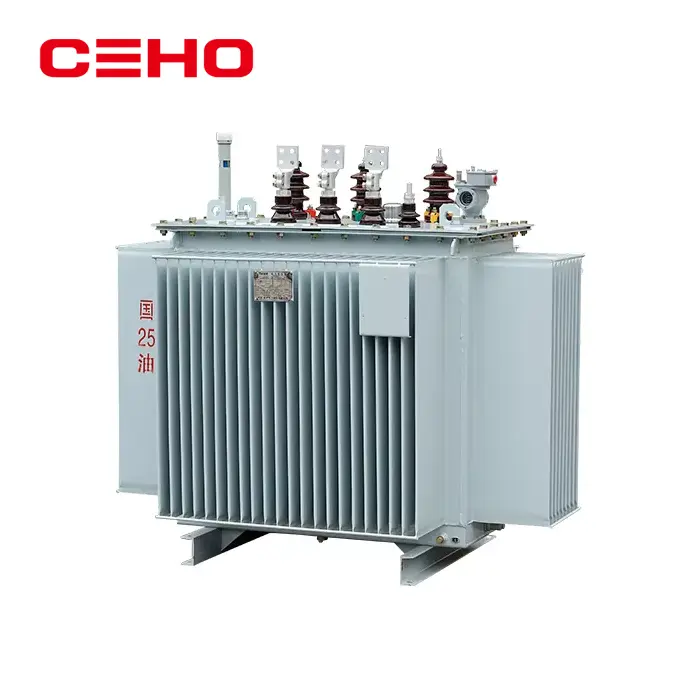
- Oil-Immersed Transformers: As the name suggests, their core components (the iron core and windings) are completely submerged in insulating oil. This mineral oil serves not only as an excellent electrical insulator but also as a highly efficient heat dissipation medium. When the equipment generates heat during operation, the oil carries it away through convection and dissipates it into the air via external radiators.
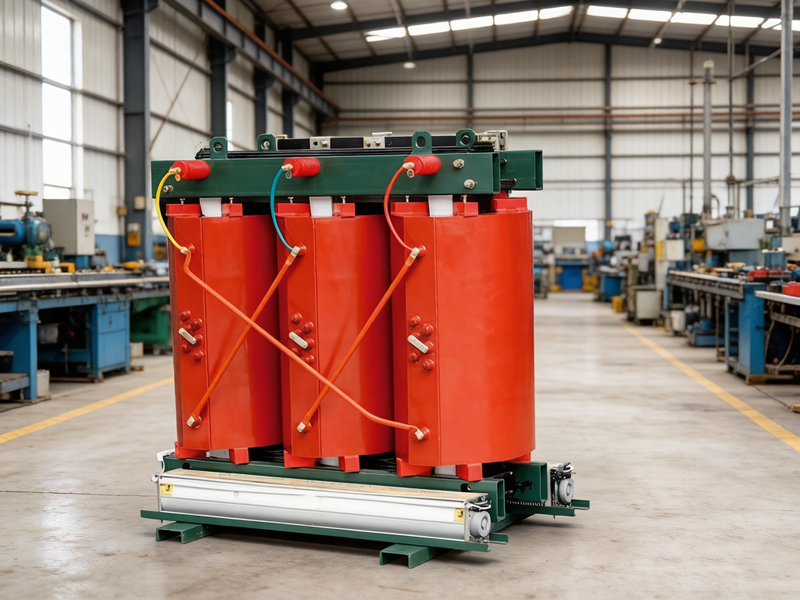
- Dry-Type Transformers: These completely abandon liquid media. They rely on natural air convection for cooling, or add fans for forced air cooling. The winding insulation primarily depends on solid insulating materials such as epoxy resin casting or NOMEX paper, achieving true "oil-free" operation.
II. Safety & Environmental Protection: Who Comes Out on Top?
Safety is often the primary consideration in project site selection. In this regard, the two factions have completely different performances.
- Fire & Explosion Prevention: Relying on flame-retardant and self-extinguishing solid insulation properties, dry-type transformers inherently possess extremely high fire safety ratings with virtually no risk of explosion. Conversely, because oil-immersed transformers contain flammable insulating oil, malfunctions or leaks can pose risks of fire or even explosion. Therefore, in densely populated areas, dry-type transformers are the absolute top choice for safety.
- Green Environmental Protection: Dry-type transformers are pollution-free, leak-proof, and easy to recycle after disposal, perfectly aligning with modern green building standards. In contrast, oil-immersed transformers face the risk of oil leaks contaminating soil, and waste insulating oil is classified as hazardous waste requiring specialized, compliant disposal processes.
III. Performance & Cost: A Comprehensive Strength Game
In actual engineering applications, in addition to safety and environmental protection, performance and economic benefits are also key to decision-making.
- Overload Capacity & Lifespan: Thanks to the superior thermal conductivity of oil, oil-immersed transformers boast excellent heat dissipation efficiency and short-term overload capacity, making them ideal for heavy industrial scenarios with large load fluctuations. With proper maintenance, they can achieve a lifespan of 30-40 years. Although dry-type transformers traditionally had relatively weaker overload capacities, recent advancements like open-type three-dimensional wound cores have significantly improved their long-term overload capabilities and energy-saving effects.
- Initial Investment & Maintenance: Due to mature manufacturing processes, oil-immersed transformers have lower initial procurement costs. However, they require frequent oil quality testing, oil filtering, and seal replacements later on, making maintenance labor-intensive. Dry-type transformers usually cost 20%-40% more upfront, but thanks to their robust structure, daily maintenance merely involves simple dust cleaning and terminal tightening, making their total lifecycle cost highly competitive.
To provide a more intuitive comparison of their differences, we have compiled the following core parameter table:
|
Comparison Dimension |
Oil-Immersed Transformer |
Dry-Type Transformer |
|
Insulation & Cooling Medium |
Mineral oil or synthetic esters (provides both insulation and cooling) |
Air or solid insulation materials like epoxy resin |
|
Installation Environment Requirements |
Suitable for outdoor open spaces or dedicated substations (requires good ventilation) |
Preferably installed indoors (requires clean, dry, and temperature/humidity-appropriate environments) |
|
Safety & Fire Protection Rating |
Risk of oil leaks and fire; requires oil containment pits and explosion-proof devices |
Flame-retardant, self-extinguishing, explosion-proof, and smokeless; meets stringent fire codes |
| Overload & Heat Dissipation Capacity |
Excellent heat dissipation, strong overload capacity (up to ~150%), long lifespan |
Heat dissipation limited by air, general overload capacity, compact size |
|
Initial Procurement Cost |
Relatively low (high cost-performance ratio) |
Higher (typically 20%-40% more expensive than oil-immersed) |
|
Post-Maintenance Difficulty |
Cumbersome (requires regular oil testing, adsorbent replacement, and major overhauls) |
Minimal (no oil testing needed; only requires periodic dust cleaning) |
IV. Practical Application: Classic Real-World Cases
Combining theory with practice is the best way to master selection. Let’s take a look at the highlight moments of these two factions in the real world.
1. The Home Court Advantage of Dry-Type Transformers: Safeguarding the Grand Egyptian Museum & AI Data Centers
In the field of cultural heritage protection, the stability of power supply is directly related to the safety of fragile cultural relics. As one of the world's most ambitious cultural landmarks, the Grand Egyptian Museum faces severe electrical challenges. In order to protect the collections that have weathered for thousands of years, the exhibition hall must maintain extremely strict temperature and humidity conditions. To this end, the project selected 28 dry-type transformers provided by Hitachi Energy. With its oil-free design and excellent fire safety performance, dry-type transformers not only reduce the risk of fire, but also ensure minimal voltage fluctuations, perfectly protecting the safety of cultural relics and tourist experience.
Additionally, in a large-scale domestic data center project, facing massive server clusters and exorbitant downtime costs, operators decisively adopted open-type three-dimensional wound core dry-type transformers for energy-saving retrofits. These transformers resolved indoor fire hazards while saving 70,000 kWh annually, drastically reducing operational costs.
2. The Tough Battles of Oil-Immersed Transformers: Extreme Pressure in Steel Plants & New Energy Going Global
In the heavy industry sector, oil-immersed transformers demonstrate irreplaceable dominance. Take a major steel plant as an example: the workshop houses numerous high-load motors, frequently subjecting the grid to severe load shocks. Benefiting from the powerful heat dissipation and buffering capacity of insulating oil, the oil-immersed transformer steadily withstands short-term extreme loads up to three times its rated capacity. Furthermore, it saved the factory approximately 40% in initial equipment costs, becoming the premier cost-effective choice for heavy industry.
On the frontlines of global new energy expansion, oil-immersed transformers continue to break new ground. At the Zhejiang Yuhuan Huaneng Phase II Offshore Wind Farm Project, a 66kV oil-immersed transformer independently developed by CRRC Zhuzhou Electric was successfully launched and connected to the grid. Designed specifically for deep-sea environments, this equipment features anti-low-frequency-vibration design and uses synthetic ester oil with a high biodegradation rate. It satisfies the weather resistance required for harsh offshore conditions while protecting marine ecology, showcasing the immense strength of Chinese manufacturing.
V. Future Development Trends: Heading Green and Smart
Driven by the global energy transition and carbon neutrality goals, both oil-immersed and dry-type transformers are undergoing a quiet technological revolution, with future development highlighting three core trends:
- Comprehensive Adoption of Ultimate Energy Efficiency & Eco-Friendly Materials: Against the backdrop of energy conservation and carbon reduction, novel core materials are disrupting traditional designs. Amorphous alloys (metallic glass), known for ultra-low losses, are being massively deployed in next-generation dry-type transformers. Meanwhile, oil-immersed transformers are rapidly phasing out traditional mineral oils in favor of high flash-point, biodegradable eco-friendly insulating oils like natural esters and soybean oil, fundamentally eliminating fire hazards and environmental pollution.
- "Smart Assets" Empowered by IoT: Transformers are evolving from mere hardware into "smart power assets." By embedding fiber-optic temperature sensors and partial discharge monitoring probes internally, combined with AI algorithms, modern transformers now feature digital twins and predictive maintenance capabilities. Systems can detect micro-anomalies in real-time and proactively issue warnings before failures occur, greatly enhancing grid resilience.
- Compact Design & Customized Expansion: As urban space becomes increasingly constrained and emerging scenarios like data centers and EV charging stations explode, demand surges for compact, high-capacity equipment. By optimizing 3D wound core structures and thermal management technologies, future transformers will further shrink in size while maintaining high performance, enabling flexible deployment with higher power density.
VI. Selection Guide: How to Choose the Right Fit?
Having understood their respective pros and cons, real-world cases, and future trends, how should we choose for actual projects?
- Prioritize Dry-Type Transformers: If your project is located within commercial complexes, hospitals, data centers, subway stations, or high-rise buildings—where fire protection requirements are extremely strict and space is too tight to build independent fire-isolation rooms—dry-type transformers are the ultimate choice.
- Prioritize Oil-Immersed Transformers: If the equipment is installed outdoors, on utility poles, or in large industrial enterprises and renewable energy power stations with relatively harsh environments, heavy loads, and ample space—and if budget sensitivity is high—oil-immersed transformers remain the irreplaceable mainstay due to their outstanding cost-effectiveness and robust environmental adaptability.
Ultimately, there is no absolutely perfect transformer; there is only the transformer that best suits the project. Whether pursuing ultimate safety with dry-type or focusing on economical durability with oil-immersed, precisely matching the application scenario's needs will unlock maximum value.
FAQ:
Q1: What is the core difference between oil-immersed and dry-type transformers?
A: The fundamental difference lies in their insulation and cooling media. Oil-immersed transformers have their iron cores and windings submerged in insulating oil, relying on oil convection for heat dissipation. In contrast, dry-type transformers completely abandon liquid media; they use solid materials like epoxy resin for insulation and rely on natural air convection or forced fan cooling for heat dissipation.
Q2: Which type of transformer should be chosen for crowded indoor environments (e.g., malls, hospitals), and why?
A: Dry-type transformers are strongly recommended. Because they contain no flammable insulating oil, they feature flame-retardant, explosion-proof, and smoke-free properties, offering an extremely high fire safety rating. Furthermore, there is zero risk of oil leakage and environmental contamination, making them perfectly suited for the stringent fire protection and environmental requirements of high-rise buildings and public spaces.
Q3: Which transformer is more suitable for large heavy-industry plants or outdoor substations?
A: Oil-immersed transformers are generally preferred. They offer excellent heat dissipation efficiency and can withstand extreme short-term overloads (up to 150% or higher), making them ideal for heavy industrial scenarios with severe load fluctuations and harsh environments. Additionally, their lower initial procurement costs provide outstanding cost-effectiveness.
Q4: Does the higher upfront cost of a dry-type transformer mean it's not cost-effective?
A: Not necessarily. Although the initial purchase price of a dry-type transformer is typically 20%-40% higher than that of an equivalent oil-immersed one, it essentially eliminates cumbersome post-maintenance tasks such as regular oil quality testing and filtering. Daily maintenance merely requires simple dust cleaning. Over its entire lifecycle, its comprehensive operating costs are highly competitive.
Q5: How do these two types differ in terms of lifespan and maintenance difficulty?
A: With proper maintenance, oil-immersed transformers can achieve a lifespan of 30-40 years, but their upkeep is labor-intensive, requiring periodic oil testing and adsorbent replacement. Dry-type transformers boast a robust structure and minimal daily maintenance needs—mainly just periodic dust cleaning and terminal tightening—which significantly reduces downtime and labor costs.
Q6: What are the future development trends for transformers?
A: Future development will primarily focus on three major trends: First, the widespread adoption of ultimate energy efficiency and eco-friendly materials (such as amorphous alloy cores and natural ester-based insulating oils). Second, evolution into "smart assets" empowered by IoT, utilizing embedded sensors to enable predictive maintenance. Third, compact design optimization to meet the deployment needs for high power-density equipment in constrained urban spaces and emerging scenarios like data centers.
Related News
- Start by Choosing the Right JXF
- SG(B)10-10KV environmentally friendly dry-type transformer: How to deliver safe and green answers under non-encapsulated structure?
- What are the hazards of transformer overload operation? How to carry out real-time load monitoring?
- How can oil immersed transformers achieve future green development in the context of "dual carbon"?
- What does the internal structure of a dry-type transformer look like when disassembled?
- How to choose between power cabinet and lighting distribution box?
Leave me a message
New Products