English
- English
- Español
- Português
- русский
- Français
- 日本語
- Deutsch
- tiếng Việt
- Italiano
- Nederlands
- ภาษาไทย
- Polski
- 한국어
- Svenska
- magyar
- Malay
- বাংলা ভাষার
- Dansk
- Suomi
- हिन्दी
- Pilipino
- Türkçe
- Gaeilge
- العربية
- Indonesia
- Norsk
- تمل
- český
- ελληνικά
- український
- Javanese
- فارسی
- தமிழ்
- తెలుగు
- नेपाली
- Burmese
- български
- ລາວ
- Latine
- Қазақша
- Euskal
- Azərbaycan
- Slovenský jazyk
- Македонски
- Lietuvos
- Eesti Keel
- Română
- Slovenski
- मराठी
- Srpski језик

What is High-Voltage Switchgear?
What is High-Voltage Switchgear?
I. Core Definition (Concise Version)
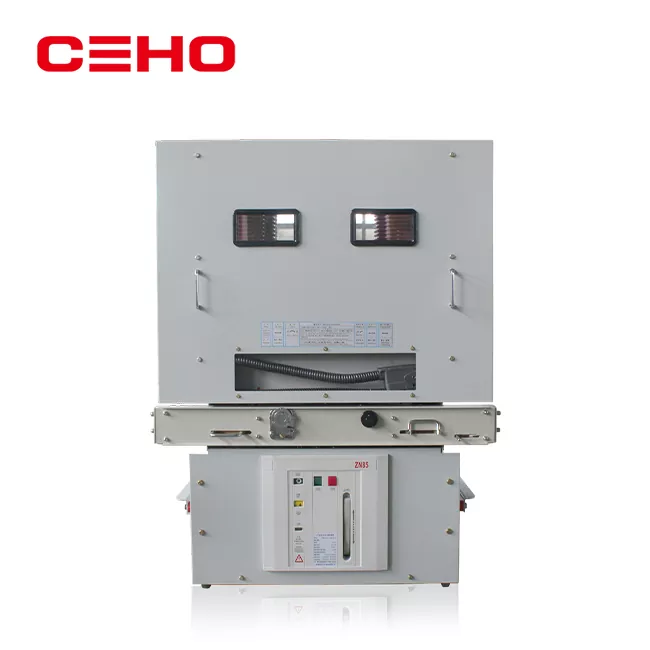
High-Voltage Switchgear: A metal-enclosed armored complete set of power distribution switchgear with a rated voltage of 3.6kV~40.5kV, integrating circuit breakers, isolating switches, earthing switches, transformers, protection and secondary control components. It is the core primary complete set of equipment in medium and high-voltage power distribution systems.
Core Functions: Used in power systems for power reception, distribution, switching control, short-circuit and overload fault protection, electrical isolation, safety interlocking and operation monitoring, widely applicable to various medium and high-voltage power distribution scenarios.
Core Features: 1. Fully metal-enclosed with independent isolation of multiple compartments, arc-proof and electric shock-proof; 2. Equipped with standard five-prevention mechanical + electrical interlocking to eliminate misoperation; 3. Taking vacuum circuit breaker as the core switching and protection executive component; 4. Complying with GB 3906, IEC 62271 high-voltage switchgear standards.
II. Scope of Application and Implementation Standards
Common voltage levels: 10kV (12kV), 35kV (40.5kV). It is an essential equipment for industrial and mining enterprises, substations, photovoltaic energy storage, factory power distribution and box-type substation supporting.
Implementation standards: GB 3906, IEC 62271, ANSI/IEEE C37 series standards, ensuring the safety, reliability and universality of equipment operation.
III. Core Classification (Full Dimensions)
1. By Cabinet Structure Type
1. Draw-out Type (Middle-mounted Cabinet): Representative models KYN28A-12 (10kV), KYN61-40.5 (35kV). The circuit breaker is a withdrawable truck type; it can be drawn out and divided into working position, test position and isolation position. Maintenance does not require power outage of the entire cabinet, with the highest safety level, and it is the mainstream model in industry and substations.
2. Fixed Type Switchgear: Representative models XGN2-12, GG1A. The circuit breaker is fixed in the cabinet and cannot be drawn out; it has a simple structure and low cost. Maintenance requires power outage of the entire line, mostly used in old factory areas and low-end power distribution scenarios.
3. Ring Main Unit: Representative models HXGN15-12, SF6 ring main unit. It has a small volume and occupies less land, mostly used in community power distribution, municipal ring network and inside box-type substations; it is mostly a combination of load switch + fuse, suitable for terminal power distribution needs.
4. Gas-insulated Cabinet (C-GIS): Fully sealed with SF₆/environmentally friendly gas insulation, the cabinet is miniaturized, moisture-resistant and corrosion-resistant, suitable for harsh environments such as coastal areas, coal mines, high altitudes and outdoor box-type substations.
2. By Insulation Method
- Air Insulation (AIS): Using air + insulator as the insulation medium, low price, convenient maintenance, large volume, suitable for conventional indoor power distribution scenarios.
- Gas Insulation (GIS/C-GIS): Adopting a closed gas-filled structure, with excellent insulation and arc-extinguishing performance, small volume, maintenance-free and high cost, suitable for high-end and compact power distribution scenarios.
3. By Circuit Breaker Type
- Vacuum Circuit Breaker: The mainstream model for 10kV/35kV, mainly VS1 and ZN63 series. It has no oil pollution, strong arc-extinguishing ability, long service life and maintenance-free, suitable for most medium and high-voltage power distribution scenarios.
- SF₆ Circuit Breaker: Mostly used in voltage levels of 35kV and above, high current and high breaking conditions, with more outstanding insulation and arc-extinguishing performance.
- Load Switch: A common component in ring main units, which can only switch normal load current, cannot cut off short-circuit current, and needs to be combined with fuses to achieve fault protection.
4. By Cabinet Function and Purpose
|
Cabinet Type |
Core Function |
|
Incoming Line Cabinet |
Introduce power from transformers and buses, which is the "entrance" of the power distribution system |
|
Outgoing Line Cabinet |
Deliver electric energy to workshops, buildings and various loads, which is the "exit" of the power distribution system |
|
Bus Tie Cabinet |
Connect two sections of buses to realize mutual backup and improve power distribution reliability |
|
PT Cabinet/Metering Cabinet |
Used for voltage measurement, electric energy metering and providing power supply for protection devices |
|
Capacitor Compensation Cabinet |
Perform reactive power compensation, improve power grid power factor and reduce energy consumption |
|
Isolation Cabinet |
Realize pure electrical isolation without switch components to ensure maintenance safety |
IV. Internal Five-Compartment Structure of the Cabinet (Taking KYN28A-12 as an Example)
The entire cabinet adopts a fully metal-enclosed design, and each compartment is isolated from each other without arc flashover. Fault arcs can be directed to release pressure, maximizing the safety of personnel and equipment. The specific structure is as follows:
1. Bus Compartment (Topmost): Arrange main bus bars and branch bus bars; equipped with a pressure release channel. When a short circuit occurs inside, the arc can be directed upward to release pressure, avoiding injury to personnel and equipment in other compartments.
2. Circuit Breaker Compartment (Central Core): Place the vacuum circuit breaker truck; equipped with a valve interlocking device. When the truck is pulled out, the high-voltage static contacts will automatically close to prevent personnel from accidentally touching live parts. The truck can be flexibly switched between three positions: working position, test position and isolation/maintenance position to adapt to different working conditions.
3. Cable Compartment (Lower Part): It is the wiring position for incoming and outgoing cables; built-in current transformers (CT), earthing switches, arresters, zero-sequence transformers and other components, responsible for cable connection and line protection.
4. Instrument Secondary Compartment (Upper Front of the Cabinet): Place microcomputer integrated protection devices, measurement and control devices, indicator lights, buttons, live displays, temperature and humidity controllers, secondary terminal blocks and other secondary equipment, responsible for equipment monitoring, control and signal transmission.
5. Low-Voltage Control Room/Mechanism Room: Place circuit breaker operating mechanism, energy storage motor, secondary circuit power supply and interlocking mechanical structure, which is the core area for equipment operation and energy storage.
V. Detailed Explanation of Five Core Electrical Components
The core performance of high-voltage switchgear is determined by internal components. The five core components perform their respective duties and work together to ensure the normal operation of the equipment:
1. Vacuum Circuit Breaker (Heart of the Equipment): The core function is switching operation under normal working conditions, and automatic tripping in case of faults to cut off fault current. Key parameters include rated voltage, rated current, rated short-circuit breaking current (commonly 20kA/25kA/31.5kA/40kA) and rated thermal stability current, which directly determine the protection capacity and applicable scenarios of the equipment.
2. Isolating Switch: No arc-extinguishing capacity, and load switching operation is strictly prohibited; the core function is to form an obvious break point during maintenance, and confirm the equipment power outage through visual inspection to ensure the personal safety of maintenance personnel.
3. Earthing Switch: Used for forced earthing during equipment power outage maintenance to release residual voltage inside the equipment and prevent electric shock accidents caused by accidental power transmission; equipped with mechanical interlocking with circuit breakers and isolating switches to ensure compliance with operation sequence.
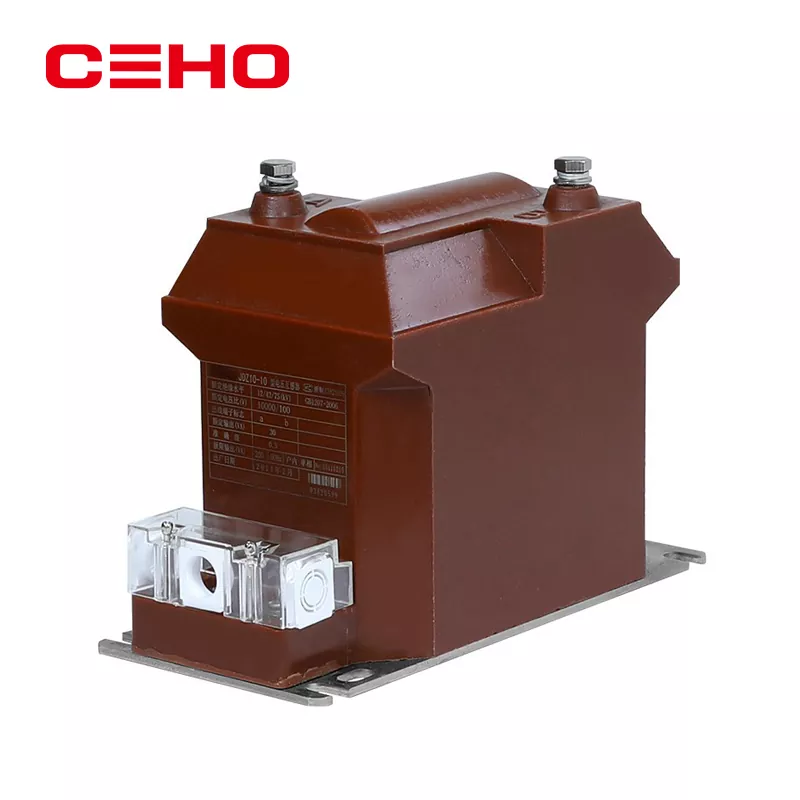
4. Transformers (CT/PT): Divided into current transformers (CT) and voltage transformers (PT). CT is mainly used to collect line current and provide signals for electric energy metering and overcurrent/short-circuit protection; PT is mainly used to collect bus voltage and provide signals for voltage measurement, metering, undervoltage/overvoltage protection and synchronizing operation.
5. Arrester: The core function is to suppress lightning overvoltage and operating overvoltage, avoid insulation layer breakdown of switchgear and subsequent transformers, cables and other equipment caused by overvoltage, and protect the safety of the entire power distribution system.
VI. "Five-Prevention" Interlocking of High-Voltage Switchgear (Top Priority)
All high-voltage switchgears are compulsorily equipped with double five-prevention interlocking devices (mechanical + electrical), which cannot be forced to operate illegally manually, fundamentally eliminating misoperation accidents, including:
1. Prevent accidental opening and closing of circuit breakers to avoid unintended line switching;
2. Prevent switching on and off isolating switches with load to avoid arc burns and equipment damage;
3. Prevent closing earthing switches with electricity to avoid earth short-circuit accidents;
4. Prevent closing and supplying power with earthing wire to avoid line short-circuit and equipment damage;
5. Prevent entering live compartments to avoid personal electric shock accidents.
VII. Main Technical Parameters (Industry General Standards)
Taking the commonly used KYN28A-12 10kV switchgear (mainstream model) as an example, the core technical parameters are as follows:
- Rated Voltage: 12kV
- Rated Frequency: 50Hz
- Rated Current: 630A, 1250A, 1600A, 2000A, 2500A, 3150A, 4000A (can be selected according to needs)
- Rated Short-Circuit Breaking Current: 20kA, 25kA, 31.5kA, 40kA
- Rated Thermal Stability Current (4s): Corresponding to the rated short-circuit breaking current level
- Protection Level: Cabinet IP4X, Compartment IP2X, effectively dust-proof and foreign object intrusion-proof
- Insulation Level: Power frequency withstand voltage and lightning impulse withstand voltage both meet the requirements of GB 3906 national standard
Core parameters of 35kV KYN61-40.5 model: Rated voltage 40.5kV, rated current 1250A~3150A, rated short-circuit breaking current mainly 25kA and 31.5kA, suitable for 35kV substations and large-scale industrial power distribution scenarios.
VIII. Working Operation Logic
The operation of high-voltage switchgear follows strict operating procedures to ensure safety and reliability, mainly divided into three core working conditions:
1. Normal Power Supply Process: Earthing switch opening → Circuit breaker truck pushed into working position → Isolating switch closing → Circuit breaker closing → Bus energized, electric energy delivered to various loads.
2. Fault Protection Process: Short circuit, overload, earthing and other faults occur in the line → Current transformer (CT) collects abnormal signals → Microcomputer protection device acts quickly → Circuit breaker trips instantly → Isolate the fault line to ensure the normal operation of other circuits and avoid fault expansion.
3. Power Outage Maintenance Process: Circuit breaker opening → Truck shaken to test/isolation position → Isolating switch opening → Closing earthing switch → After confirming that the equipment is de-energized, the cover can be opened for maintenance operation.
IX. Application Scenarios
As the core equipment of medium and high-voltage power distribution, high-voltage switchgear covers multiple fields such as industry, people's livelihood and new energy, mainly including:
- Main power distribution systems of power plants and 35kV/10kV substations, responsible for power reception, distribution and protection;
- Large factories, chemical industry, mines, metallurgy and other industrial workshops, providing stable high-voltage power distribution for high-power equipment;
- Commercial complexes, hospitals, data centers, rail transit and other places with high requirements for power supply reliability;
- Photovoltaic power stations, energy storage power stations and wind power booster stations, adapting to the high-voltage power distribution needs of new energy power generation;
- High-voltage power distribution unit inside the box-type substation (box substation), realizing miniaturized and integrated power distribution.
X. Daily Maintenance and Common Faults
1. Daily Inspection Points
Regular inspection can extend the service life of the equipment and find potential faults in time. Focus on checking: whether the cabinet has abnormal noise, heating and condensation; whether the indicator lights and live displays are normal; whether the operating mechanism energy storage is sufficient; whether the secondary circuit wiring is loose or aging; whether the five-prevention interlocking device is flexible and reliable.
2. Common Faults and Brief Handling Directions
- Circuit breaker cannot store energy or switch on/off: Check the energy storage motor and operating mechanism, and troubleshoot the secondary circuit power supply or mechanical jamming;
- Secondary circuit disconnection and protection misoperation: Check the secondary terminal blocks and cables, and troubleshoot the protection device parameter settings or component faults;
- Condensation in the cabinet and insulation drop: Check the temperature and humidity controller and dehumidification device, strengthen the cabinet sealing, and avoid the impact of humid environment;
- Truck pushing and pulling jamming and interlocking failure: Check the truck guide rail and interlocking mechanical structure, clean up debris and perform lubrication maintenance;
- Transformer heating and terminal block ablation: Check the wiring tightness and troubleshoot transformer overload or poor contact.
XI. Advantages of High-Voltage Switchgear
1. High Safety: Fully metal-enclosed structure, effective arc-proof and electric shock-proof, multi-compartment isolation design reduces the risk of fault diffusion;
2. Safe Operation: Complete five-prevention interlocking device, eliminating manual misoperation from mechanical and electrical levels, ensuring the safety of personnel and equipment;
3. Strong Reliability: Adopting vacuum arc-extinguishing technology, no oil pollution, low noise, long service life and long maintenance-free period;
4. High Flexibility: Modular design, convenient installation, maintenance and component replacement, and can be flexibly selected according to scene needs;
5. Intelligent Upgrade: Can be equipped with intelligent integrated protection, online temperature measurement, partial discharge monitoring and other modules to realize intelligent monitoring and control of the power distribution system, adapting to the needs of modern smart grids.
Summary
High-voltage switchgear (3.6kV~40.5kV) is a core metal-enclosed power distribution equipment, integrating components for power control, protection and monitoring, widely used in various medium and high-voltage scenarios.
FAQs
1. What is a high-voltage switchgear?
A metal-enclosed armored power distribution switchgear (3.6kV~40.5kV), integrating core components, is the core primary equipment for medium and high-voltage power distribution.
2. What are its core functions?
Power reception, distribution, switching control, fault protection, electrical isolation, safety interlocking and operation monitoring.
3. What are the main cabinet types?
Draw-out type (middle-mounted), fixed type, ring main unit and gas-insulated cabinet (C-GIS).
4. What are the common insulation methods?
Air insulation (AIS) and gas insulation (GIS/C-GIS).
5. What are the core electrical components?
Vacuum circuit breaker, isolating switch, earthing switch, CT/PT transformers and arrester.
What is the "five-prevention" interlocking?
Prevent misoperation of circuit breakers, load switching of isolating switches, live closing of earthing switches, closing with earthing wires and entering live compartments.
6. What are the common models and parameters?
KYN28A-12 (10kV, 630A~4000A); KYN61-40.5 (35kV, 1250A~3150A).
7. What are the main application scenarios?
Power plants, substations, industrial workshops, commercial complexes, photovoltaic/energy storage stations and box-type substations.
8. What are common faults?
Circuit breaker failure, secondary circuit disconnection, cabinet condensation, truck jamming and transformer heating.
9. What are its advantages?
High safety, safe operation, strong reliability, high flexibility and support for intelligent upgrade.
Related News
- Start by Choosing the Right JXF
- SG(B)10-10KV environmentally friendly dry-type transformer: How to deliver safe and green answers under non-encapsulated structure?
- What are the hazards of transformer overload operation? How to carry out real-time load monitoring?
- How can oil immersed transformers achieve future green development in the context of "dual carbon"?
- What does the internal structure of a dry-type transformer look like when disassembled?
- How to choose between power cabinet and lighting distribution box?
Leave me a message
New Products