English
- English
- Español
- Português
- русский
- Français
- 日本語
- Deutsch
- tiếng Việt
- Italiano
- Nederlands
- ภาษาไทย
- Polski
- 한국어
- Svenska
- magyar
- Malay
- বাংলা ভাষার
- Dansk
- Suomi
- हिन्दी
- Pilipino
- Türkçe
- Gaeilge
- العربية
- Indonesia
- Norsk
- تمل
- český
- ελληνικά
- український
- Javanese
- فارسی
- தமிழ்
- తెలుగు
- नेपाली
- Burmese
- български
- ລາວ
- Latine
- Қазақша
- Euskal
- Azərbaycan
- Slovenský jazyk
- Македонски
- Lietuvos
- Eesti Keel
- Română
- Slovenski
- मराठी
- Srpski језик

What is Low-Voltage Complete Set Equipment?
Low-Voltage Complete Set Equipment
1.Basic Definition
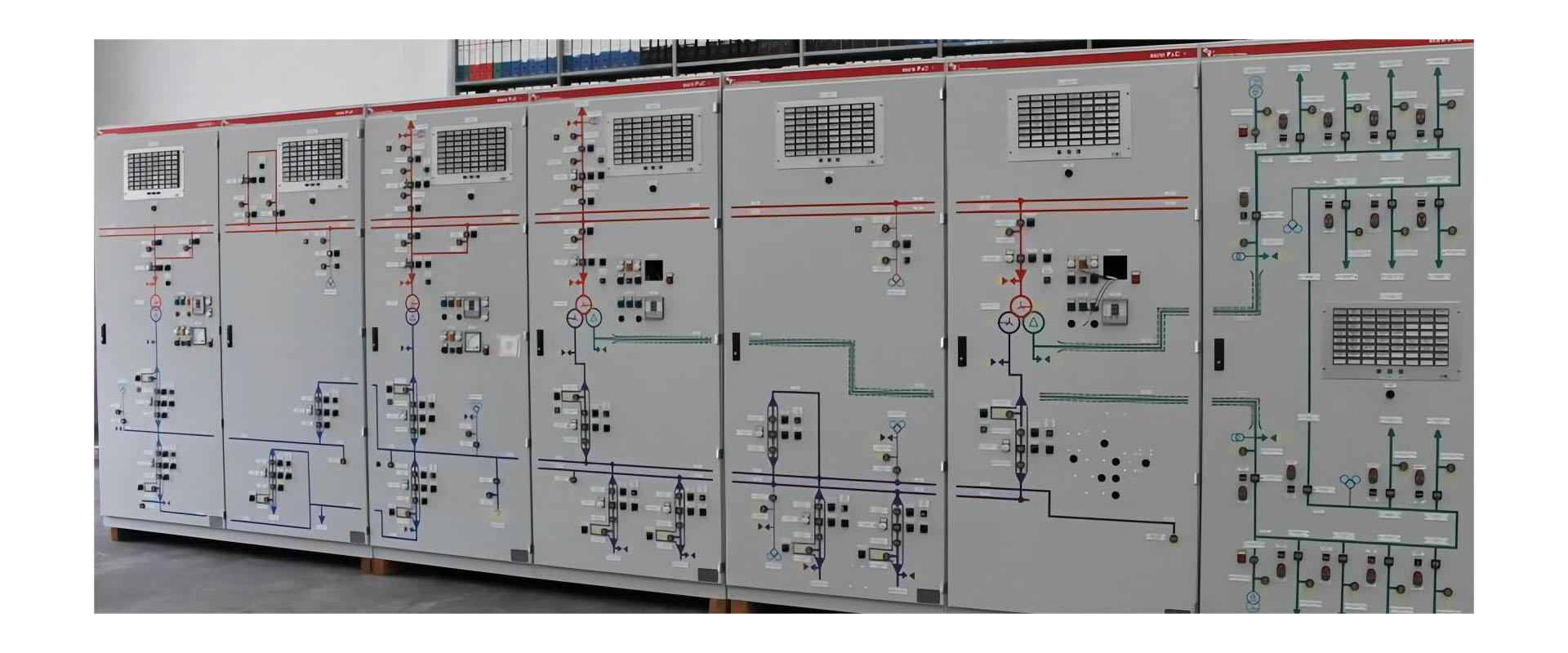
Low-voltage complete set equipment is a complete set of electrical devices used for power distribution, control and protection in scenarios where AC voltage is ≤ 1000V and DC voltage is ≤ 1500V. It mainly includes low-voltage complete set switchgear, low-voltage switch cabinets, low-voltage distribution boxes and other categories. As the core equipment for low-voltage power transmission in power systems, it is widely used in factories, buildings, new energy and other fields.
The design, production and operation of such equipment must strictly comply with the GB/T 7251 series of national standards, and must pass the China Compulsory Product Certification (CCC). At present, low-voltage complete set equipment is upgrading towards intelligence and digitalization. The international standard Additional Requirements for Intelligent Complete Set Equipment (IEC TS 63290), led and formulated by China, has been officially released, providing an international basis for industrial development. The new generation of intelligent equipment is generally equipped with digital gateways and wireless sensors, which can realize real-time monitoring of operating status, predictive maintenance of faults and remote control. For example, ABB MNS® 3.0 Digital low-voltage switchgear and the domestic Class 1E low-voltage complete set switchgear for Hualong One are typical representatives in the industry.
2. Equipment Composition
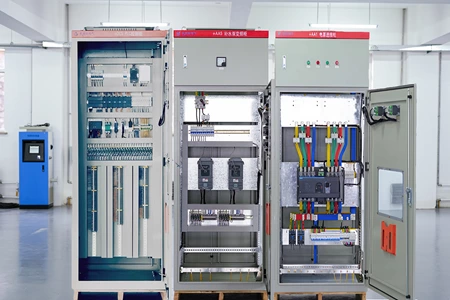
The core functions of low-voltage complete set equipment are: receiving and reasonably distributing power transmitted by transformers; protecting circuits against overload and short-circuit faults; realizing switching control and operation monitoring of internal switching appliances.
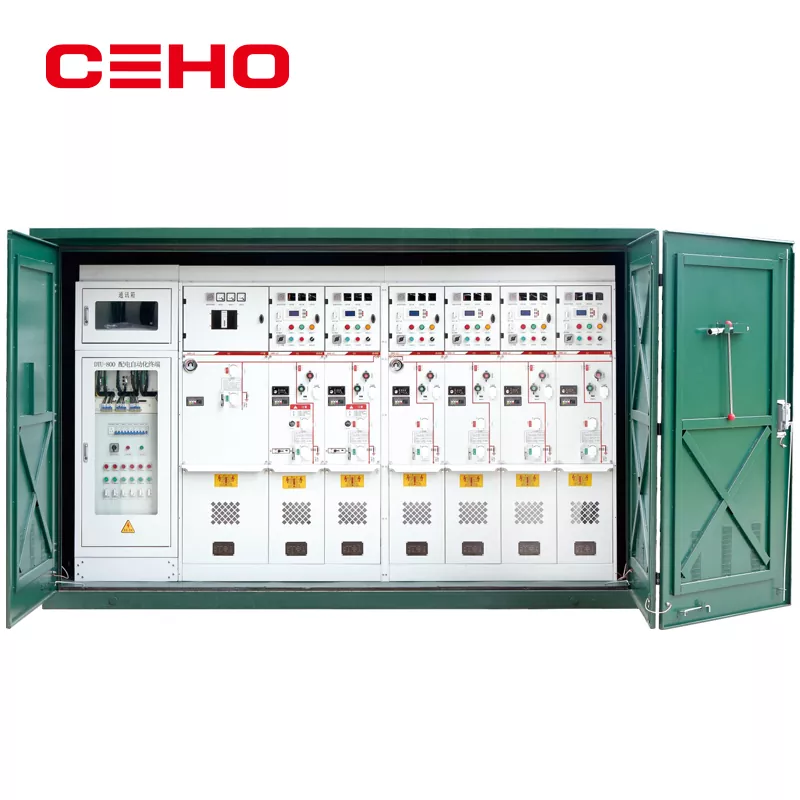
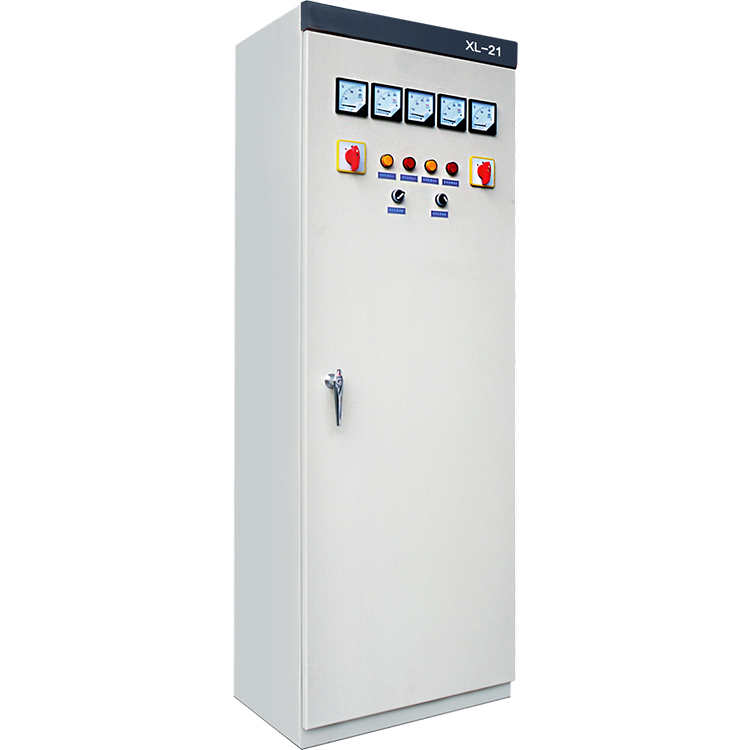
From the perspective of category division, it covers low-voltage switch cabinets, distribution boards, control boxes, switch boxes and other equipment. According to functions, it can be divided into distribution-type PCC cabinets (Power Control Center) and motor-type MCC cabinets (Motor Control Center). Common cabinet types in low-voltage power distribution systems include incoming cabinets, capacitor compensation cabinets, coupling cabinets, outgoing cabinets and so on. The mainstream draw-out type switch cabinets such as MNS, GCS and GCK on the market are assembled with standard modules, suitable for power supply and distribution systems with rated voltage ≤ 690V and rated current within 6300A.
From the perspective of electrical structure, the equipment is divided into main circuit (primary circuit) and auxiliary circuit (secondary circuit). The main circuit is responsible for power transmission, and its core components include circuit breakers, fuses, contactors, thermal relays, current transformers, etc. The auxiliary circuit is responsible for control and signal transmission, and its core components include meters, control buttons, relays, monitoring and control units, etc.
From the perspective of physical structure, a standard cabinet includes a cabinet body for support and protection, main busbars and branch busbars for power transmission as well as busbar chambers, an installation area for electrical equipment and components, and a cable connection chamber for installing and connecting feeder cables. For draw-out type low-voltage complete set switchgear, its components are installed in extractable drawer units.
3. Operating Principle
A. Basic ProcessThe core tasks of low-voltage complete set switchgear are: receiving power from transformers, distributing to each feeder circuit through busbars, and supplying power to downstream equipment; protecting circuits against overload and short-circuit faults; precisely controlling the switching and monitoring of internal switching appliances.
B.Dual Power Automatic TransferThe two incoming circuit breakers and the bus coupler circuit breaker are electrically/mechanically interlocked. When one circuit fails, the backup power supply is automatically switched on to improve power supply reliability.
C.Intelligent Working ModeField bus + PLC/SCADA system realizes remote control, data collection, status monitoring, intelligent diagnosis and predictive maintenance.
4. Main Types and Products
4.1 Draw-out Type Switch Cabinets
A.Representative: MNS, GCS, GCK
B.Standards: IEC 60439-1, GB/T 7251
C.Application: 50Hz, ≤690V, ≤6300A power supply and distribution systems
4.2 Fixed Separated Type Switchgear
A.Representative: GCD
B.Composition: Power Center (PC) cabinet + Motor Control Center (MCC) cabinet
4.3 Intelligent Digital Complete Set Equipment
A.Standard configuration: Gateway, sensors, wireless temperature measurement, communication modules
B.Capabilities: Remote monitoring, early warning, operation and maintenance management
5. Technical Parameters and Standards
5.1 Core Technical Parameters
· AC: ≤ 1000V, frequency ≤ 1000Hz
· DC: ≤ 1500V
· Industrial common use: ≤ 690V, maximum current 6300A
5.2 National Standards
· GB/T 7251.1-2023: General rules for low-voltage switchgear and controlgear assemblies
· GB/T 7251.2-2023: Power switchgear and controlgear assemblies (replaces old version GB/T 7251.12-2013)
· GB/T 7251.3: Particular requirements for distribution boards
· GB/T 7251.4: Particular requirements for assemblies for construction sites
· GB/T 15576: Low-voltage complete set reactive power compensation equipment
5.3 International Standards
· IEC TS 63290: Additional Requirements for Intelligent Complete Set Equipment (led and formulated by China)
5.4 Certification and Supervision
· Mandatory: CCC Certification (based on GB/T 7251.2-2023)
· Voluntary: CQC 3177-2025 Energy-saving Certification Technical Specification
· Sampling inspection items: Marking, component configuration, internal circuits and connections, external conductor terminals, wiring, operational performance and functions, dielectric properties, electric shock protection and integrity of protective circuits, clearance and creepage distance, etc.
6. Application Fields
A.Traditional Industry and Energy: Power plants, substations, industrial and mining enterprises, petroleum, chemical industry, metallurgy, used for power supply and distribution systems as power distribution, motor control and lighting power conversion and control.
B.Municipal and Construction: Municipal construction, buildings, shopping mall properties, large enterprises, hospitals, schools, commercial complexes and other places of power distribution systems.
C.Emerging and Critical Infrastructure: Especially suitable for critical power application scenarios with high requirements for power supply reliability and intelligence, such as data centers, new energy, rail transit.
D.Core purposes: Power distribution, conversion, control and reactive power compensation to ensure stable and safe power supply.
7. Safety Operation Requirements
7.1 Key Points of Operation Inspection
· Clear and correct labels and numbers of electrical components on the power distribution panel and the panel; firm fixation, accurate position and flexible operation of all operating handles, buttons and keys on the panel, consistent with the actual site conditions.
· Correct indication of closing/tripping signal lights and other signals on the power distribution panel.
· Firm contacts of disconnectors, circuit breakers, fuses, transformers, etc., no overheating or discoloration.
· No damage or aging of the insulation of secondary circuit wires.
· When there is an operation mimic board on the power distribution panel, the mimic board is consistent with the operating status of on-site electrical equipment.
· Firm meters or glass covers, accurate meter indications.
· Good lighting lamps in the power distribution room, bright and uniform illumination, no glare when observing meters.
· Handle problems found in the inspection in a timely manner and keep records.
7.2 Safety Specifications for Low-Voltage Live Working
· Live working must be supervised by a special person, use tools with insulated handles, stand on dry insulating materials, wear insulated gloves, safety helmets and long-sleeve work clothes. It is strictly prohibited to use files, metal rulers, brushes and dusters with metal objects.
· When working on low-voltage live lines erected on the same pole as high and low voltage, first check the distance from high-voltage lines and take measures to prevent accidental contact with high-voltage live equipment.
· Before low-voltage live conductors are insulated, workers shall not cross them.
· When working on live low-voltage power distribution devices, ensure good insulation or corresponding safe distance between human body and the earth, human body and surrounding grounded metal, human body and other conductors. Isolation measures shall be taken to prevent phase-to-phase short circuit and single-phase grounding.
· Distinguish phase and neutral wires before climbing poles and select a good working position.
· When disconnecting wires, disconnect phase wires first and then neutral wires; the sequence is reversed when connecting wires.
· Due to the small phase-to-phase distance of low voltage, care shall be taken to prevent human body from touching two wire ends at the same time during maintenance.
Related News
- Start by Choosing the Right JXF
- SG(B)10-10KV environmentally friendly dry-type transformer: How to deliver safe and green answers under non-encapsulated structure?
- What are the hazards of transformer overload operation? How to carry out real-time load monitoring?
- How can oil immersed transformers achieve future green development in the context of "dual carbon"?
- What does the internal structure of a dry-type transformer look like when disassembled?
- How to choose between power cabinet and lighting distribution box?
Leave me a message