English
- English
- Español
- Português
- русский
- Français
- 日本語
- Deutsch
- tiếng Việt
- Italiano
- Nederlands
- ภาษาไทย
- Polski
- 한국어
- Svenska
- magyar
- Malay
- বাংলা ভাষার
- Dansk
- Suomi
- हिन्दी
- Pilipino
- Türkçe
- Gaeilge
- العربية
- Indonesia
- Norsk
- تمل
- český
- ελληνικά
- український
- Javanese
- فارسی
- தமிழ்
- తెలుగు
- नेपाली
- Burmese
- български
- ລາວ
- Latine
- Қазақша
- Euskal
- Azərbaycan
- Slovenský jazyk
- Македонски
- Lietuvos
- Eesti Keel
- Română
- Slovenski
- मराठी
- Srpski језик

The Three Steps of Transformer Manufacturing: The Story Behind Winding, Assembly, and Testing
In the grand scheme of modern power systems, transformers are known as the "heart" of the power grid. It stands silently in substations, industrial parks or city corners, but it undertakes the core missions of voltage conversion, power transmission and electrical isolation. It is the invisible lifeblood that maintains the operation of modern society. However, few people know that the birth process of this heavy "heart" from scratch is not a simple industrial assembly line operation, but a long journey that combines precision physics, material science and extreme handcraftsmanship. On this invisible production line, the emergence of each transformer embodies the wisdom of countless engineers and the sweat of craftsmen. From the repeated consideration of design drawings to the final acceptance of finished product delivery, the entire manufacturing process can be highly summarized into three interlocking core movements - "winding, installation, and testing." Behind these seemingly simple three words lies the ultimate pursuit of millimeter precision and a decades-long silent commitment to power safety.
Part One: Winding - the birth of the "nerve" of the transformer
If the transformer is compared to the human body, then the windings are its "neural network". This step is the soul of the entire manufacturing process and determines the future performance and life of the transformer.
In the purification workshop with constant temperature and humidity, technical workers are operating huge winding machines. The raw materials in their hands are not ordinary copper wires, but flat copper wires or foil tapes that have been specially insulated. Each layer of winding requires placing high-strength insulating paper or insulating film between the wires, which is like putting on layers of strong "protective clothing" for the "nerves."
Winding: Precision braiding of electromagnetic conversion
The core secret of the winding process is "tight, even and accurate":
- "Tight": Each turn of the coil must fit tightly without leaving any gaps, which directly affects future power conversion efficiency
- "Even": The distribution of insulating materials must be absolutely uniform. Any weakness may become a hidden danger of future breakdown.
- "Accurate": The geometric size and number of turns of the winding must be accurate to millimeters and tenths of turns
The coil winding of the transformer is the absolute core of electromagnetic energy conversion and the "soul" that determines the performance of the equipment. The quality of the winding process directly determines the electrical performance, short-circuit resistance, and long-term operation reliability and life of the transformer. This is by no means a simple "winding" action, but an in-depth game with electromagnetic physical properties. It is a double test of the craftsman's patience and skills.
Walking into the spacious winding workshop, the huge winding machine slowly rotates amidst the low humming sound. High-purity copper wires are stacked layer by layer on the precise insulating skeleton in an orderly manner. For high-frequency or special transformers, the process requirements are more stringent. In order to overcome the "skin effect" and "proximity effect" under high-frequency current (that is, the current flows toward the surface of the conductor, resulting in increased resistance and heating), craftsmen often need to use Litz wire twisted by multiple strands of filaments, or strictly control the physical thickness of the conductor. During the winding process, tension control is a top priority: if the tension is too high, it will thin the wire and even destroy the insulating paint film on its surface; if the tension is too small, the coil will become loose and deformed, which will not only affect the thermal conductivity efficiency, but also lead to a decrease in mechanical strength under the impact of electromagnetic force.
In order to reduce leakage inductance and achieve better magnetic coupling efficiency, modern transformers often use the "interleaved winding method" or "sandwich winding method", that is, the primary winding is divided into two, and the secondary winding is cleverly sandwiched in the middle. In addition, in order to suppress the interference of high-frequency common mode noise to peripheral equipment, a copper foil shielding layer is sometimes added between the primary and secondary sides to safely lead the interference current back to the ground wire. After each layer is wound, it is necessary to lay high-temperature-resistant polyimide tape or DMD composite insulating paper, which is not only a physical isolation between layers, but also a key line of defense for electrical insulation. Just like the great craftsman Zhang Guoyun, when faced with thousands of precision solder joints and tens of thousands of meters of wires in the UHV converter transformer, he must rely on a pair of skillful hands and a special leather hammer to accurately control the geometric tolerance of the coil weighing tens of tons within plus or minus 1 mm. This is not only an extreme challenge to physical strength, but also the ultimate interpretation of the word "ingenuity".
Part Two: Assembly - Building the "Body and Bones" of the Transformer
If the winding gives the transformer its "nerves", then assembly is to create its "body and bones". This process assembles the core, windings and other components into an organic whole.
- Core assembly: The core of the transformer is made up of stacked silicon steel sheets as thin as paper. The surface of these silicon steel sheets is covered with a special insulating coating to reduce eddy current losses. Workers stack thousands of silicon steel sheets precisely like a jigsaw puzzle. Each piece must be in the correct direction and have tight joints. After completion, a huge hydraulic device is used to exert tens of tons of pressure to ensure that the iron core is tight and has no gaps.
- Winding assembly: carefully place the wound coil on the iron core column. This process requires precise lifting techniques and extensive experience because the winding insulation is extremely fragile and any scratches may cause short circuits in future operations.
- Oil tank and accessories installation: For oil-immersed transformers, the next step is to weld and assemble the oil tank. The oil tank is not only a container, but also the "radiator" of the transformer. Modern transformer oil tanks are designed with complex oil passages inside, which can guide the transformer oil to circulate efficiently and dissipate heat. Finally, install various accessories such as bushings, oil conservator, cooling device, and protective relays.
After assembly is completed, the transformer will undergo a crucial "baptism" - insulation treatment. Whether it is epoxy resin vacuum casting for dry-type transformers or vacuum pressure impregnation (VPI) for oil-immersed transformers, the core purpose is to completely remove moisture and air bubbles inside the coils. In a high vacuum environment, insulating paint or transformer oil can penetrate into every tiny gap and form a strong and dense protective layer after curing. This not only greatly enhances the thermal conductivity of the equipment and efficiently conducts internal heat to the surface, but also effectively isolates moisture and oxygen from the outside, prevents the aging and degradation of insulation materials during long-term operation, and ensures that the transformer is rock solid during its decades of service.
The director of the assembly workshop told us: "The assembly process is a test of both physical strength and mental strength. The body of a medium-sized transformer weighs dozens of tons, but our operating precision requirements reach millimeter levels. Especially when the windings are inserted into the iron core, it is difficult for laymen to understand the feeling that requires both strength and precision."
Part Three: Testing – Issuing a “Certificate of Health” to the Transformer
After the first two steps, a transformer has begun to take shape, but whether it is "healthy and qualified" and capable of stable operation for decades to come must be verified through rigorous testing. This stage can be regarded as a comprehensive physical examination of the transformer and the issuance of a "health certificate".
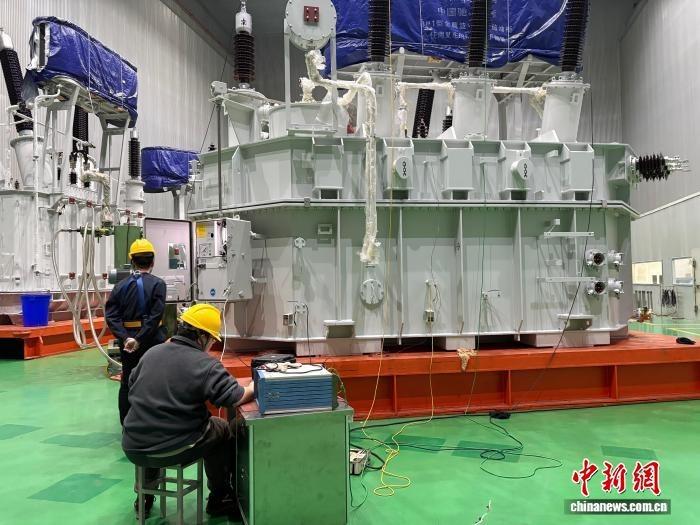
When the transformer finally comes off the assembly line and its appearance begins to take shape, it's not really "finished." Before it is delivered to users and connected to the power grid, it must go through a series of almost cruel simulation tests. This is the final chapter of the "three steps" of manufacturing - testing. This link is the last hurdle for product quality and the most direct verification of design theory.
Routine testing is a basic physical examination:
- Transformation ratio and polarity test: verify whether the transformer can "change" the correct voltage
- DC resistance test: Check whether there are any "hidden defects" such as broken wires and poor contacts inside the winding.
- Insulation resistance testing: Assessing the health of the transformer’s “insulation system”
- No-load and load tests: measure the "energy consumption level" and "working efficiency" of the transformer
Special tests are depth CT scans:
+ Induction withstand voltage and partial discharge testing: This is one of the most critical tests. Under the condition of several times higher than the rated voltage, it lasts for tens of minutes, and at the same time, a sensitive sensor is used to "monitor" whether there is a "sizzling" sound of partial discharge inside the transformer. Any abnormal discharge signal means there is a hidden danger in the insulation system
+ Lightning impact and operating impact test: simulate the impact of natural lightning strikes and power grid faults on the transformer to test its "pressure resistance"
+ Temperature rise test: Let the transformer run under rated load for a long time and measure the temperature of each part to ensure that it will not "overheat" under the most severe conditions.
The common language behind the three steps: lean and ingenuity
Throughout the entire process of "winding, assembling, and testing" is the lean management of modern industry and the ingenuity of traditional manufacturing.
In today's transformer factory, every process has a standard operating instruction, and every key parameter is recorded in real time and uploaded to the MES (Manufacturing Execution System), achieving full process traceability. By scanning the QR code on the transformer, you can see its "full life cycle profile" - whose silicon steel sheets were used, who wound the coils, and every data point during testing.
But at the same time, the experience and judgment of old masters are still irreplaceable. The feel during winding, the spatial judgment during assembly, and the analysis of causes of test anomalies. These "tacit knowledges" that cannot be completely codified are still the key to manufacturing high-quality transformers.
From the workshop to the grid
Transformers that have completed the three steps of "winding, installation, and testing" and passed all tests will be carefully cleaned, painted, and packaged, ready to be shipped to all parts of the country and even overseas. They will settle in the substation, connect to the power grid, and begin to guard silently for decades.
When we enjoy stable and reliable electricity, few people would think that the smooth "journey" of every kilowatt-hour of electricity begins with those precise and rigorous processes in the transformer manufacturing workshop. Winding, installation and testing - behind these three simple words is the accumulation of countless process details, the combination of precision manufacturing and rigorous testing, and the persistence of quality by generations of transformer manufacturers.
In this era of increasing reliance on electricity, the "three-step process" of transformer manufacturing will continue to evolve, incorporating more intelligent and green new elements, but the core pursuit of precision, reliability, and safety will never change. Because each transformer carries not only current and voltage, but also the light and power of modern society.
Related News
- Start by Choosing the Right JXF
- SG(B)10-10KV environmentally friendly dry-type transformer: How to deliver safe and green answers under non-encapsulated structure?
- What are the hazards of transformer overload operation? How to carry out real-time load monitoring?
- How can oil immersed transformers achieve future green development in the context of "dual carbon"?
- What does the internal structure of a dry-type transformer look like when disassembled?
- How to choose between power cabinet and lighting distribution box?
Leave me a message
New Products