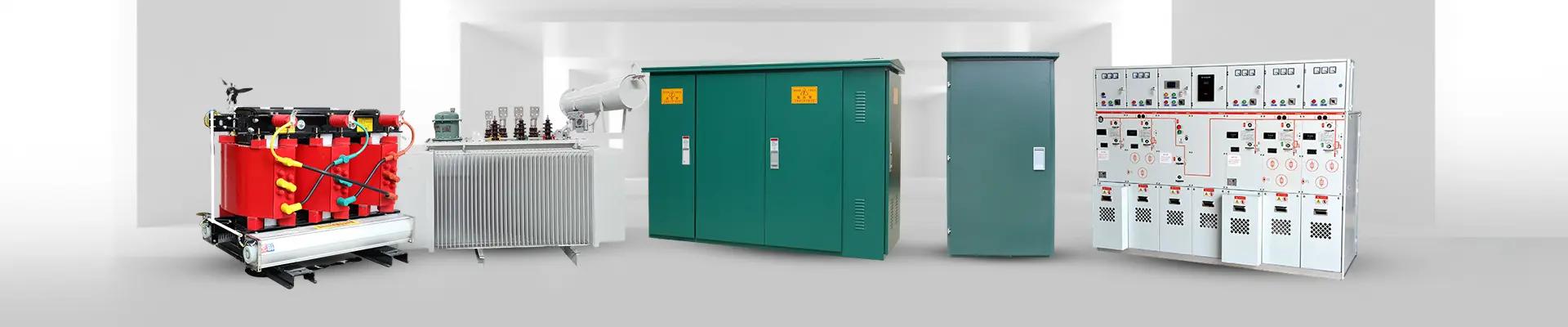
In the complex outdoor power distribution environment of industrial and mining plants, power equipment not only has to withstand high-load continuous operation, but also faces the test of harsh natural conditions such as wind, rain, dust, and temperature differences. As the core hub of power transmission and distribution, the stability and durability of transformers are directly related to the safety and efficiency of the entire factory production. S13-M fully sealed oil-immersed transformer, with its excellent energy-saving performance, maintenance-free fully sealed structure and strong environmental adaptability, is becoming an ideal choice for outdoor power distribution in industrial and mining areas.
I. Why S13-M is preferred in industrial and mining outdoor scenes?
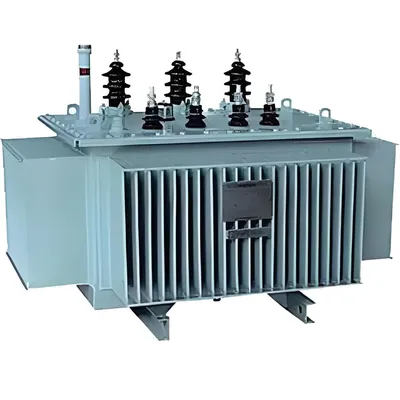
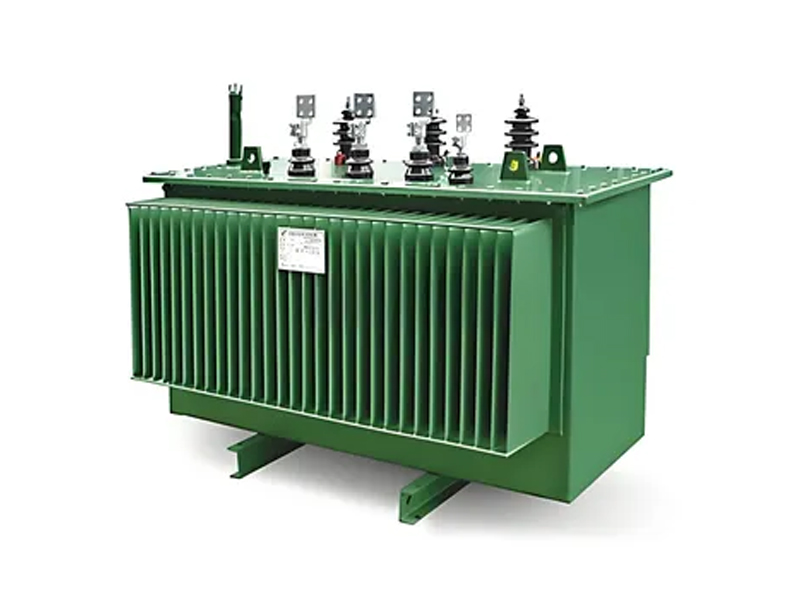
The picture of electricity consumption in industrial and mining plants is very typical: large load fluctuations, long light load periods, coexistence of heavy loads and shocks, and tight operation and maintenance manpower. Traditional oil-immersed transformers with oil conservator (with breather) are prone to problems such as failure of silica gel due to moisture, moisture absorption and oxidation of insulating oil, and abnormal oil level when operating outdoors for a long time. Later inspections require frequent silica gel replacement and oil replenishment. The "M" of S13-M stands for Hermetically Sealed. A corrugated oil tank is used instead of an oil conservator. The corrugated sheet elastically expands and contracts to compensate for oil volume changes. The insulating oil in the oil tank does not come into contact with the outside air, structurally cutting off the main channel for moisture and dust to enter.
The direct benefits of this change are:
II. Core structure and performance highlights
1. Iron core and energy consumption: more economical than S11
S13-M adopts high magnetic permeability oriented cold-rolled silicon steel sheets, 45° full oblique joint lamination, multi-level circular cross-section of the core column, and no through-core screws for tie plate fastening. Compared with S11-M products of the same capacity, the no-load loss is reduced by approximately 25%, and the no-load current is smaller. Industrial and mining plant areas often have peak and valley differences between light load at night and full load during the day. The reduction in no-load loss will continue to be realized as electricity bill savings throughout the year, in line with GB 20052-2020 energy efficiency requirements.
2. Winding and short-circuit resistance: able to withstand motor impact
Direct starting of high-power motors on the low-voltage side, frequency converter harmonics, and occasional short circuits are daily tests for industrial and mining transformer windings. S13-M windings mostly use oxygen-free copper wires, low-voltage multi-layer cylindrical type, high-voltage segmented cylindrical type, reasonable oil passages between layers, strengthened fastening structure, combined with Dyn11 connection group to suppress third harmonics, and the ability to withstand short-circuit impact and overload is significantly better than ordinary distribution transformers.
3. Corrugated fully sealed fuel tank: strong outdoor weather resistance
The corrugated walls act as both heat sinks and compensators. When the ambient temperature rises, the corrugated sheets expand when the oil expands and retract when cooled, eliminating the need for an oil conservator. With the pressure release valve, gas relay (or signal contact), oil level gauge, and temperature measurement interface, it can be connected to the factory power distribution monitoring system to achieve over-temperature and over-pressure early warning.
4. Wide capacity coverage, suitable for factory-level power distribution
Conventional 10/0.4kV level covers 30-2500kVA (common 100, 200, 400, 630, 1000kVA, etc.), short-circuit impedance 4.0%-4.5%, high-voltage tapping ±5% or ±2×2.5%, meeting the layout of secondary power transformation after total power reduction in the factory area, workshop power transformation, air compressor station/water pump room special transformation and other layouts.
III. How to use it in typical industrial and mining scenarios
IV. Key points to avoid pitfalls in model selection and acceptance
Industrial and mining procurement cannot just compare unit prices. It is recommended to focus on four lines:
1. Look at the actual measured loss value: require the manufacturer to issue a type test report to check whether the no-load/load loss is better than the GB/T 6451 limit, and be wary of false standards in samples;
2. Look at the winding material: full copper is preferred for long-term continuous operation. Aluminum core is cheap at the beginning but suffers from loss and lifespan;
3. Check the sealing process: corrugated fuel tank weld seam air tightness test, standard pressure relief valve, and whether there is a core hanging record;
4. Look at the customized items: coastal salt spray, dust in mining areas, altitude >1000m, winter below -25℃, anti-corrosion, insulation margin, and low-temperature oil formula must be specified when ordering.
Before putting into operation, the handover test (insulation resistance, transformation ratio, direct resistance, withstand voltage, oil sample) is carried out in accordance with GB 1094. Subsequently, only regular infrared temperature measurement, appearance leak detection, and oil sample sampling are required. Basically, bid farewell to the old model of "hanging the core every year".
V. Conclusion
For outdoor power distribution in industrial and mining areas, we don’t care about fancy parameters, but about “not losing power when it’s windy or rainy, not burning money at light load in the middle of the night, not tripping when the motor starts, and not having to go to war for three years.” The S13-M oil-immersed transformer is not the latest concept product, but it is this combination of fully sealed structure + low-loss iron core + mature oil-immersed heat dissipation that allows it to stand firmly on outdoor benches in new and old industrial parks, mines, and manufacturing plants. Stable, durable, and cost-effective, it is the real high-end in engineering selection.