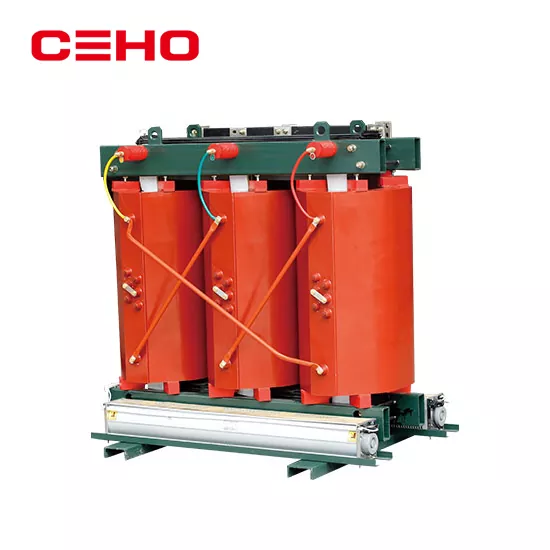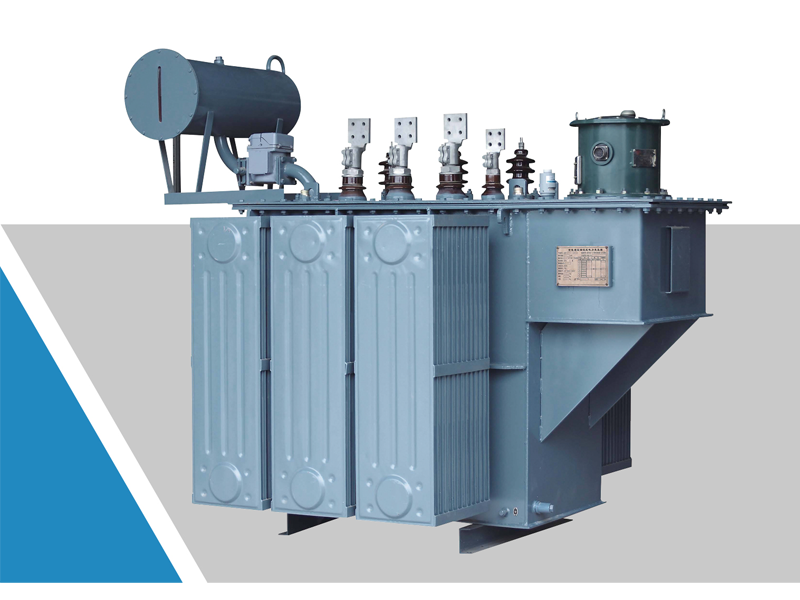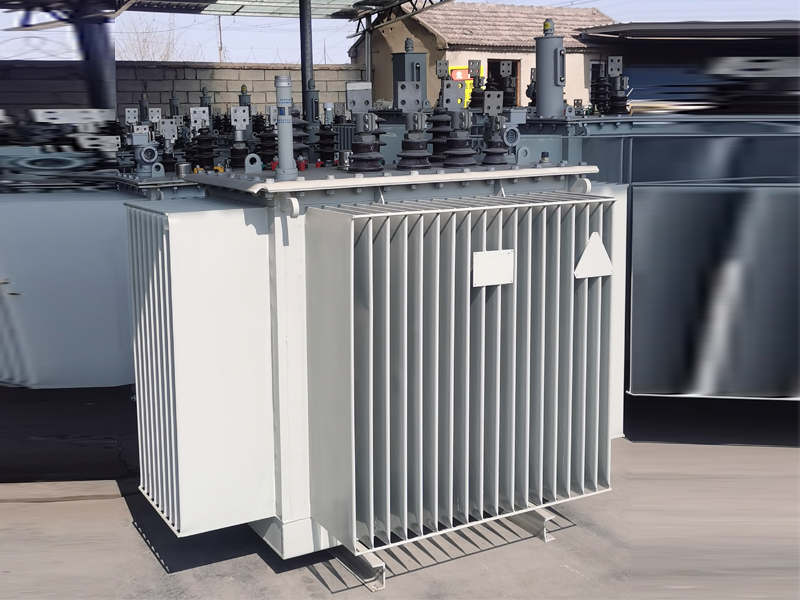
As the core apparatus and central equipment within the power industry, the iron core of a power transformer constitutes a vital functional and structural component for ensuring unimpeded magnetic circuit flow, energy conversion, and electrical safety. From the perspectives of power equipment and electrical safety, faults in transformer iron cores cannot be overlooked.
Commencing with a description of the operational state of transformer iron cores, this paper elucidates the principle of single-point grounding for transformer iron cores, analyses the causes of grounding faults in transformer iron cores, and provides methods for fault handling and detection.
1 Description of Power Transformer Core Operating Conditions
The core constitutes the structural heart of a power transformer, providing essential support for magnetic flux and energy conversion. During normal operation, the core generates an extremely strong alternating magnetic field due to high voltage and large currents, resulting in a significant potential difference to earth. This potential difference can cause discharge phenomena between the core and the oil tank. Severe discharges may directly damage the transformer core, windings, and casing, potentially leading to transformer accidents and operational hazards.
2 Principle of Single-Point Grounding for Power Transformer Cores
Single-point grounding for power transformer cores involves securing the laminations to form a unified potential plane. This is achieved by connecting a section of the core to a core clamping plate fixed to the inner tank wall via clamping wires or bolts. This ensures potential uniformity both within the core and between the core and tank. Should the core exhibit unevenness, warping, or bending, it readily facilitates electrical grounding through the laminations. Within an alternating electromagnetic field, this induces alternating currents within the core, potentially forming localised circuits. Consequently, localized, transient heat release occurs within the core, leading to excessive internal temperatures, significant release of harmful gases, activation of gas protection systems, and transformer shutdown. These issues impair the transformer's functionality within power systems and networks.
3 Primary Causes of Power Transformer Core Grounding Faults
(1) Presence of Foreign Objects within the Power Transformer
Chronologically, the existence of foreign objects manifests in several stages:
Firstly, during manufacturing, inadequate precision in core fabrication and insufficient cleaning of internal areas and core components may leave residual debris, compromising core grounding effectiveness.
Secondly, during installation, mechanical external forces may cause core deformation and casing distortion, dislodging materials and creating multiple grounding points. This leads to short circuits, closed loops, and overheating.
Thirdly, during oil filling, substandard oil quality may introduce metallic contaminants that adhere near the core, disrupting grounding point control and forming multiple grounding points.
Fourthly, during maintenance and operation, wear, corrosion, and vibration within the transformer generate granular metallic debris and powdered contaminants. These particles infiltrate the core, disrupting its normal functioning and creating operational faults and latent hazards.
(2) Insufficient Clearance in Power Transformer Core
Excessively close proximity between core clamps and central pins may result in inadequate grounding clearance or poor fixation during core grounding. Operational displacement can then trigger discharge phenomena. Loosening of core spacers may cause core-to-enclosure contact, inducing short circuits.
(3) Water ingress within the power transformer
During installation or maintenance in wet weather, failure to implement waterproofing or isolation measures may damage the core insulation. Moisture-saturated paper laminations, when subjected to high voltage, readily cause core-to-ground short circuits and discharge faults.
4 Fundamental Causes of Power Transformer Core Overheating
(1) Substandard Manufacturing Standards. The more modern and automated the power transformer, the greater the demand for advanced manufacturing techniques. Certain transformer production units lack the necessary qualifications for new structures, materials, and specifications, resulting in practical issues such as insufficient precision, incomplete cleaning, and non-compliant techniques. This leads to core overheating, compromising overall stability.
(2) Substandard installation techniques. During installation, failure to adhere to the single-point grounding principle for the core leads to inadequate screw tightening, insufficient grounding wire length, or incorrect grounding location. This causes the core to contact the casing, ultimately resulting in a core ground fault and triggering overheating during operation.
5. Methods for Addressing Power Transformer Core Ground Faults
The primary methods for addressing core grounding faults in power transformers comprise: handling intermittent multi-point grounding faults, managing multi-point grounding faults with measurable insulation resistance values, and resolving multi-point grounding faults without insulation resistance values (also termed dead grounding). This section primarily illustrates the approach for intermittent multi-point grounding faults.
6 Detection of Power Transformer Core Ground Faults
(1) Standardise inspection procedures. During installation, ensure positioning pins are either reversed or removed. Meticulously verify that all components are correctly sized, appropriately lengthened, and feature only one connecting plate where required. Additionally, confirm that all screws and nuts are securely fastened and inspect whether the manufacturing process of silicon steel laminations meets optimal standards. Fundamentally eliminate the possibility of multiple grounding points.
(2) Thorough cleaning procedures. Following manufacturing, installation, or major modifications to power transformers, conduct comprehensive cleaning of internal components. Ensure no surplus metal wires or even minute metal particles remain within the transformer, which could predispose the silicon steel laminations to multiple grounding points.
(3) Maintain tank cleanliness. Conduct routine inspections of coolers and oil pumps during transformer operation to prevent localised core overheating and premature failure. This prevents metal particles generated by friction from entering the tank via the oil. Accumulation of excessive particles over time inevitably leads to multiple grounding points.
(4) Enhance operational monitoring. This enables prompt remedial action upon detecting core grounding faults in power transformers, or initiating investigations when suspicious factors arise. Such vigilance ensures core grounding faults are prevented before they occur.