English
- English
- Español
- Português
- русский
- Français
- 日本語
- Deutsch
- tiếng Việt
- Italiano
- Nederlands
- ภาษาไทย
- Polski
- 한국어
- Svenska
- magyar
- Malay
- বাংলা ভাষার
- Dansk
- Suomi
- हिन्दी
- Pilipino
- Türkçe
- Gaeilge
- العربية
- Indonesia
- Norsk
- تمل
- český
- ελληνικά
- український
- Javanese
- فارسی
- தமிழ்
- తెలుగు
- नेपाली
- Burmese
- български
- ລາວ
- Latine
- Қазақша
- Euskal
- Azərbaycan
- Slovenský jazyk
- Македонски
- Lietuvos
- Eesti Keel
- Română
- Slovenski
- मराठी
- Srpski језик

What Are the Core Technologies and Application Essentials of Low-Voltage Switchgear?
Understand at a Glance: What Are the Core Technologies and Application Essentials of Low-Voltage Switchgear?
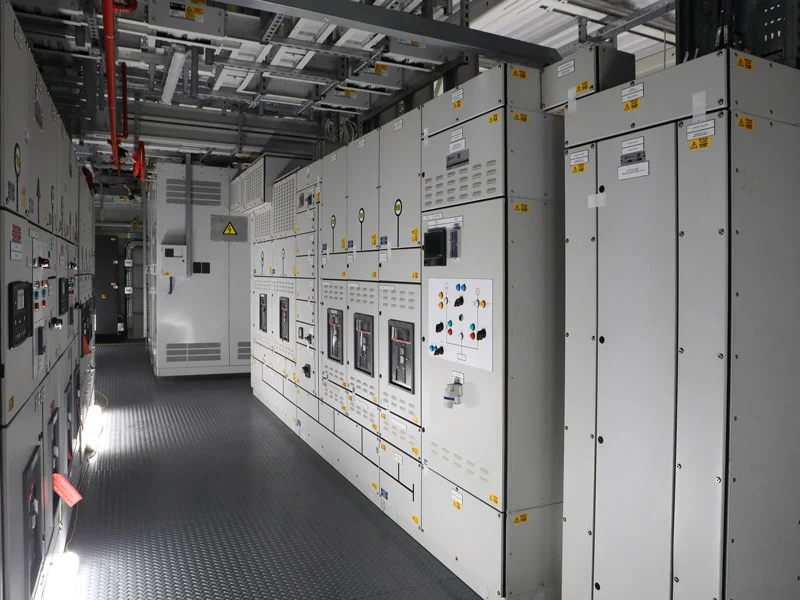
Low-voltage switchgear is the core equipment in modern power supply and distribution systems, mainly used for power distribution, circuit control, overload protection, short-circuit protection, earth leakage protection and power monitoring. It is widely applied in factories, buildings, data centers, hospitals, shopping malls, municipal engineering and other fields. Featuring compact structure, high safety and reliability, convenient maintenance and high intelligence, it is the key equipment to ensure stable operation of power systems. This article fully introduces the core technical points of low-voltage switchgear in terms of structure, parameters, performance, selection and application.
1. Main Components of Low-Voltage Switchgear
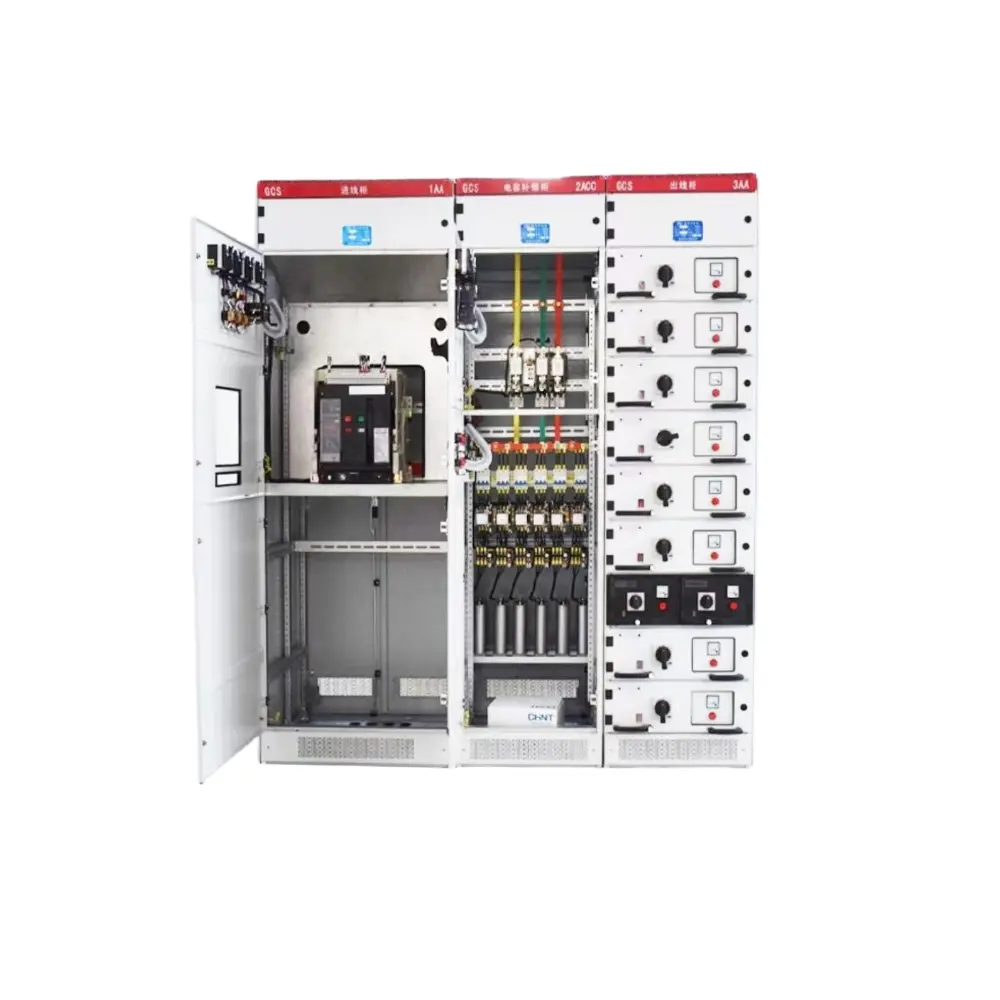
Typical low-voltage switchgear adopts a three-compartment independent isolation structure for higher safety, reliability and maintainability:
A.Breaker Compartment: Vertically arranged, capable of holding multiple circuit breakers; each circuit is independently separated without interference.
B.Bus Compartment: Located behind the breaker compartment and isolated by insulating partitions to effectively prevent fault spread.
C.Cable Compartment: Located at the rear or front of the cabinet, convenient for cable connection and maintenance, with spacious space and standardized wiring.
By operation and maintenance style:
D.Rear-accessible: Traditional standard structure with large maintenance space.
E.Front-accessible: Wall-mountable, smaller depth, space-saving.
The independent compartment design avoids accidental contact with live parts during maintenance, limits the arc fault range, and greatly improves equipment and personnel safety.
2. Key Rated Parameters
|
Item |
Specification |
|
Rated voltage |
≤660V (commonly 380V/400V) |
|
Rated frequency |
50Hz / 60Hz |
|
Rated current |
400A~6300A |
|
Rated short-circuit breaking current |
20kA~100kA |
|
Short-time withstand current |
10kA~100kA/1s, 30 cycles |
|
Ingress protection rating |
IP30, IP40, IP54 (indoor/outdoor optional) |
3. Core Electrical Performance Indexes
a. Short-Circuit Withstand Current Rating (SCCR)
The maximum short-circuit current that the switchgear can safely withstand in a short time during a fault, which determines the short-circuit resistance of the equipment and is an important guarantee for safe operation.
b. Short-Time Withstand Current Rating
The short-circuit current that the switchgear can bear without deformation or damage within a specified time (usually 1 second or 0.5 second), ensuring the system does not collapse under fault conditions.
c. Interrupt Rating
The maximum fault current that a circuit breaker can safely interrupt. It must be greater than the expected short-circuit current of the system, otherwise it will cause explosion or fire.
d. Ingress Protection Rating (IP Rating)
· IP30: Prevents finger contact with live parts
· IP40: Prevents entry of foreign objects ≥1mm in diameter
· IP54: Dust-tight and splash-proof, suitable for humid and dusty environments
e. Temperature Rise Limit
According to national standards, the temperature rise of the switchgear under long-term operation at rated current shall not exceed the limit, ensuring insulation stability and prolonged service life.
4. Core Technical Key Points of Low-Voltage Switchgear
(1).Cabinet Structure and Compartmentalization Technology
Adopts three independent isolated compartments: breaker compartment, bus compartment, and cable compartment, effectively preventing arc spread and improving operation and maintenance safety.
(2)Short-Circuit Withstand & Short-Time Withstand Technology
Equipped with strong short-circuit resistance, strictly matching SCCR and short-time withstand current to ensure no deformation, bus displacement or system collapse under faults.
(3)Circuit Breaker Interruption & Selective Coordination Technology
The breaking capacity meets the maximum system fault current. Regional selectivity is realized through short-time delay and instantaneous protection coordination, limiting outages to the faulted circuit only.
(4)Busbar System Design & Temperature Rise Control
Low-impedance, low-loss, high-heat-dissipation busbar layout to strictly control long-term operating temperature rise, ensuring current capacity, insulation life and equipment stability.
(5)Integrated Protection & Measurement Technology
Integrates overload, short-circuit, earth leakage, overvoltage, undervoltage, phase loss and arc protection, with intelligent meters and sensors for all-round safety.
(6)Intelligent & Digital Technology
Supports on-line monitoring, remote control, fault pre-alarm, energy statistics and communication networking, upgrading to unattended and intelligent cloud-based operation.
(7)Ingress Protection & Environmental Adaptability
Meets IP30–IP54 protection grades, adapting to humidity, dust, corrosion, high and low temperature environments for improved versatility and durability.
(8)Modular & Standardized Design
Modular units, standardized interfaces and flexible expansion shorten production, installation and commissioning time and reduce overall costs.
5. Protection Functions
Low-voltage switchgear is equipped with multiple protections to ensure system safety:
l Overload protection
l Short-circuit instantaneous protection
l Short-circuit short-time delay protection
l Ground fault / earth leakage protection
l Overvoltage and undervoltage protection
l Phase loss and phase sequence protection
l Arc fault detection (AFD)
l Advanced intelligent switchgear also provides:
l On-line temperature monitoring
l Partial discharge monitoring
l Power quality analysis
l Remote fault alarm
6. Common Structural Types
Fixed Type Switchgear
Simple structure, low cost, high reliability, suitable for general power distribution scenarios.
Drawer Type Switchgear
Each circuit is an independent drawer; maintenance can be performed by drawing out a single drawer without power outage, without affecting other circuits. Ideal for hospitals, data centers and production lines requiring high reliability.
Withdrawable Type Switchgear
The main circuit breaker can be fully withdrawn for safer and faster maintenance.
7. Differences Between Low-Voltage Switchgear and Switchboards
Switchgear: Fully enclosed, compartment-isolated, withdrawable circuit breakers, 30-cycle short-time withstand, supportive of selective coordination, higher safety.
Switchboard: Open structure, fixed circuit breakers, only 3-cycle short-time withstand, lower cost.
Switchgear is more suitable for main incoming, coupling and important loads; switchboards are used for terminal power distribution.
8. Intelligent Low-Voltage Switchgear
Intelligent switchgear integrates:
① Intelligent circuit breakers
② Current / voltage / temperature sensors
③ Microprocessor-based protection devices
④ Power management instruments
⑤ 4G / WiFi / Ethernet communication
It supports:
① Remote monitoring and control
② Energy consumption statistics and analysis
③ Fault pre-alarm and automatic recording
④ Linkage with intelligent power distribution systems
It is a standard configuration for smart factories, intelligent buildings and data centers.
9. Typical Application Cases
l Large Automobile Manufacturing Plants
Provides main power distribution and motor control for stamping, welding, painting and assembly workshops. Drawer-type intelligent switchgear enables non-stop maintenance and accurate fault location, ensuring 24/7 production continuity.
l Large Data Centers (Tier IV)
Adopts dual-bus redundant power distribution, supporting high-density cabinet power supply with millisecond-level switching. System availability reaches 99.999%, ideal for 7×24 uninterrupted operation.
l Large Commercial Complexes & Shopping Malls
Distributes power for lighting, HVAC, elevators, fire fighting and shop circuits. Intelligent loop monitoring and energy consumption statistics optimize power management and reduce operation costs.
l Urban Water Plants & Sewage Treatment Plants
Powers pumps, fans, grids and dosing systems in humid and dusty environments. Complete protection ensures stable operation of municipal water supply and sewage treatment.
l Grade A Hospitals & Medical Centers
Supplies highly reliable dual-power distribution for operating rooms, ICUs, laboratories and imaging centers. Zero-interruption switching guarantees medical safety.
l PV & Wind Power Stations
Used for inverter confluence, grid-connected control and energy storage power distribution, suitable for harsh outdoor environments with complete safety protection.
l Airports & Rail Transit Hubs
Ensures highly reliable power for terminals, security systems, ticketing and lighting. Dual-power automatic switching guarantees uninterrupted transportation hub operation.
l High-Rise Residential & Smart Communities
Used for building power distribution, public lighting, fire fighting, elevators and charging piles. Compact structure and complete protection improve community power quality.
10. Market Size & Development Trends
Market Size
Global market: Around USD 54–56 billion in 2025, projected to exceed USD 83 billion by 2032, with a CAGR of 6%–7%.
China market: Approximately RMB 169 billion in 2025, growing at 7.8% YoY; China is the world’s largest single market, accounting for over 21% of global share.
Key drivers: New power systems, data centers, new energy, intelligent manufacturing, urban infrastructure, and EV charging.
Development Trends
Intelligence becomes standard
Smart breakers, sensors, IoT, cloud monitoring, fault pre-alarm, and remote O&M are widely adopted, shifting from “passive protection” to “active prediction”.
Higher reliability & safety upgrade
Arc protection, partial discharge monitoring, temperature rise monitoring, and selective coordination become essential; higher IP rating and stronger short-circuit resistance.
Green & energy-saving
Low-loss, high-efficiency buses and components, low-carbon materials and eco-friendly processes, matching carbon neutrality goals.
Higher share of drawer/withdrawable types
Rapid growth in industry, data centers, hospitals, etc., supporting non-stop maintenance and ensuring continuous power supply.
Deep adaptation to new energy
Special solutions for PV, wind power, energy storage, and EV charging, with anti-back-charging, overvoltage protection, and grid-connected control.
Modular, standardized, compact
Faster installation, smaller footprint, flexible expansion for high-density power supply and rapid delivery.
Conclusion
As the core equipment of low-voltage power distribution systems, the structural design, protection configuration and manufacturing process of low-voltage switchgear directly affect power supply reliability, equipment safety and personnel safety. Driven by the trends of intelligence, greenization, high reliability, and modularization, the industry will keep steady growth. High-end, branded, and globalized capabilities will become key competitiveness. Choosing high-quality and reliable switchgear can effectively improve the stability of power distribution systems, reduce fault risks, and provide solid support for safe and stable power
FAQS
1. Where is low-voltage switchgear mainly used?
It is used in factories, residential areas, shopping malls, hospitals, data centers, and municipal projects for power distribution, control and protection.
2.What are the main structural types?
Fixed type, drawer type, and withdrawable type, selected based on reliability requirements.
3.What does IP rating mean?
IP30/IP40 for normal indoor environments; IP54 is dustproof and splash-proof, suitable for humid and dusty sites.
4.What is selective coordination?Only the breaker nearest to the fault trips, avoiding large-scale power outages and improving supply reliability.
5.What are the advantages of intelligent switchgear?
Remote monitoring, fault pre-alarm, energy statistics, automatic recording, unattended and smart operation.
6. Can the switchgear be customized?
Yes, we support customization of current, voltage, circuits, functions, size and protection level.
7. What is the delivery time?
7–15 days for standard products; 15–30 days for customized projects.
Related News
- Start by Choosing the Right JXF
- SG(B)10-10KV environmentally friendly dry-type transformer: How to deliver safe and green answers under non-encapsulated structure?
- What are the hazards of transformer overload operation? How to carry out real-time load monitoring?
- How can oil immersed transformers achieve future green development in the context of "dual carbon"?
- What does the internal structure of a dry-type transformer look like when disassembled?
- How to choose between power cabinet and lighting distribution box?
Leave me a message