English
- English
- Español
- Português
- русский
- Français
- 日本語
- Deutsch
- tiếng Việt
- Italiano
- Nederlands
- ภาษาไทย
- Polski
- 한국어
- Svenska
- magyar
- Malay
- বাংলা ভাষার
- Dansk
- Suomi
- हिन्दी
- Pilipino
- Türkçe
- Gaeilge
- العربية
- Indonesia
- Norsk
- تمل
- český
- ελληνικά
- український
- Javanese
- فارسی
- தமிழ்
- తెలుగు
- नेपाली
- Burmese
- български
- ລາວ
- Latine
- Қазақша
- Euskal
- Azərbaycan
- Slovenský jazyk
- Македонски
- Lietuvos
- Eesti Keel
- Română
- Slovenski
- मराठी
- Srpski језик

A Quick Guide: Key Differences and Selection Guide for Dry-Type vs. Oil-Immersed Transformers
A Quick Guide: Key Differences and Selection Guide for Dry-Type vs. Oil-Immersed Transformers
As the development of new power systems accelerates, distribution transformers—as critical equipment for energy conversion—play a vital role in determining safety, energy efficiency, and operational and maintenance costs. The current market is dominated by two main categories: dry-type transformers and oil-immersed transformers. These two types differ significantly in terms of insulation and cooling, safety and environmental performance, applicable scenarios, and cost-efficiency. In accordance with the mandatory energy efficiency standard GB 20052-2024, this article provides a comprehensive analysis of the differences between these two types of equipment, offering an authoritative reference for engineering selection.
I. Core Fundamental Differences: Differences in Insulation and Cooling Methods
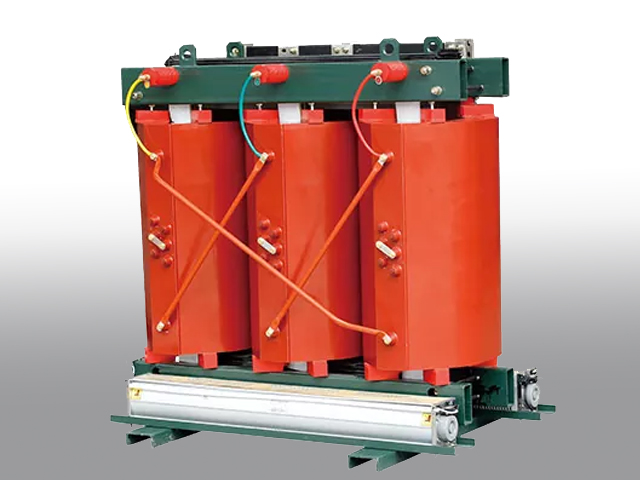
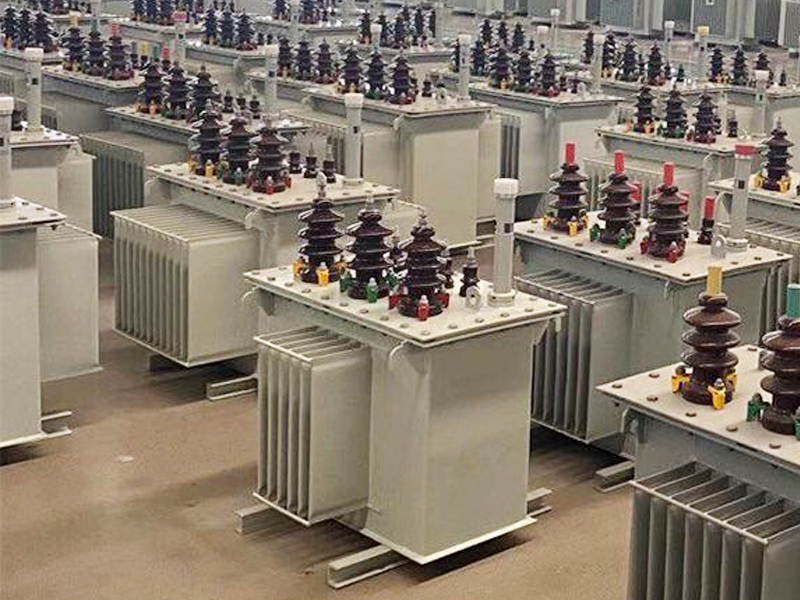
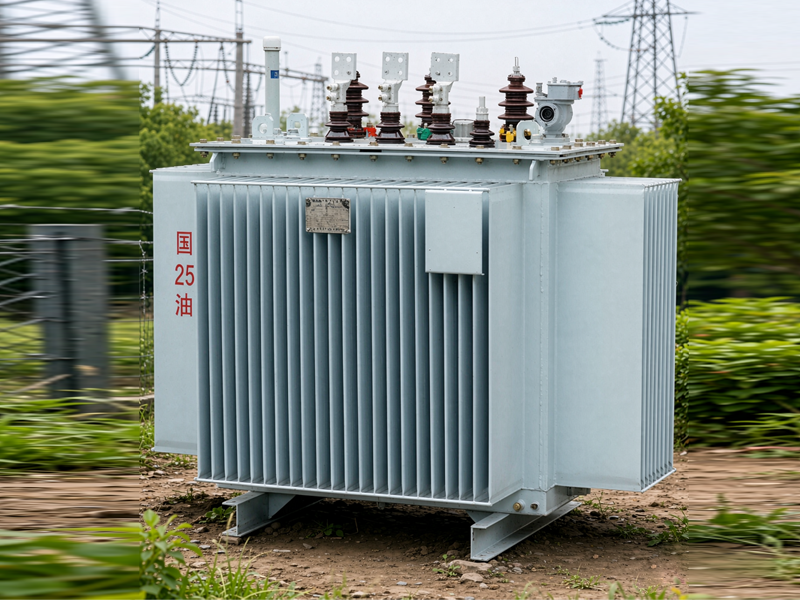
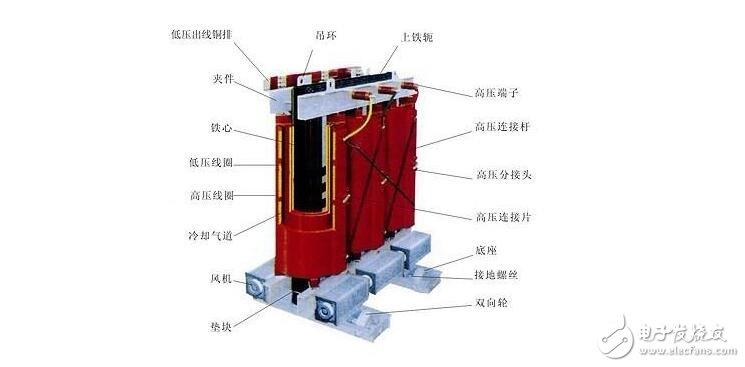
Dry-type transformers use air as the cooling medium. The windings are insulated using epoxy resin vacuum casting or Nomex paper impregnation, eliminating the need for liquid media. They feature a simple structure and pose no risk of leakage. Oil-immersed transformers use insulating oil as both the cooling and insulating medium. The core and windings are submerged in the oil tank, relying on oil circulation for heat dissipation. This technology is mature and offers a wider range of capacities. This fundamental design difference determines the comprehensive divergence between the two in terms of safety, environmental impact, and operation and maintenance.
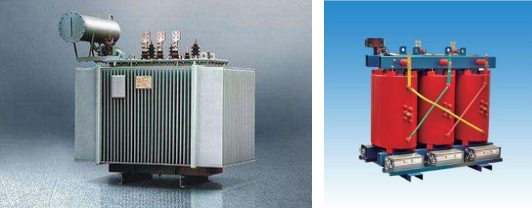
II. Comparison Across Six Key Dimensions
|
Comparison Item |
Dry-Type Transformer |
Oil-Immersed Transformer |
|
1. Safety & Environmental Protection |
Fireproof, explosion-proof, and pollution-free. Meets Class F/H insulation standards. No risk of oil leakage or combustion. Complies with GB50016 fire code. Ideal for densely populated areas and underground spaces. |
Risk of oil leakage and fire. Requires oil sumps and fire-fighting facilities. Mineral oil leakage may contaminate soil and water sources, subject to stricter environmental regulations. |
|
2. Application Scenarios |
Preferred for indoor high-fire-safety locations such as commercial complexes, data centers, hospitals, schools, subways, and high-rise building basements. Single unit capacity is mainly below 2500kVA. |
Mainly used in outdoor substations, industrial parks, wind & solar booster stations, and high-capacity centralized power supply. Can cover ultra-high power requirements. |
|
3. Installation & Maintenance |
Small size, flexible installation, maintenance-free or low-maintenance. Only requires regular dust removal and temperature control checks. Short power-off maintenance time without disrupting production. |
Requires regular oil sample testing, oil replenishment, and leakage handling. Heavy maintenance workload; oil change required every 5-8 years. High maintenance cost per unit. |
|
4. Cost & Economy |
Initial purchase cost is 15%-20% higher, but lower life-cycle maintenance cost, offering superior long-term cost performance. |
Initial investment is 30%-50% lower, with outstanding economy in large-capacity scenarios, but higher operation and compliance costs. |
|
5. Energy Efficiency & Loss |
Meets GB 20052-2024 Level 1/2 energy efficiency. Lower no-load loss, more energy-saving under light-load conditions. |
Meets GB 20052-2024 Level 1/2 energy efficiency. Better load loss performance, more suitable for heavy-duty continuous operation. |
|
6. Environmental Adaptability |
Weak resistance to moisture and dust; requires enhanced protection in high-humidity and corrosive environments. |
Stable sealed structure, stronger adaptability to harsh outdoor environments, with excellent weather resistance. |
III. Implementation of New Regulations: Equipment Selection Must Comply with Standards
GB 20052-2024, a mandatory national standard for power transformers effective February 2025, specifies energy efficiency grades and phase-out schedules. The selection of low-efficiency models is strictly prohibited in new construction projects, and existing high-energy-consumption equipment must be phased out gradually. For indoor power distribution in civil buildings, in accordance with the mandatory provisions of GB 51348-2019, dry-type or non-flammable liquid-insulated transformers must be selected.
IV. Selection Recommendations: Precise Matching Based on Application Scenarios
Choose dry-type: Indoor environments, high-occupancy areas, stringent fire safety requirements, limited space, light-load fluctuations, and a focus on environmental protection and low maintenance.
Choose oil-immersed: For outdoor use, large-capacity concentrated loads, continuous heavy loads, harsh environments, and situations prioritizing low initial costs.
V. Industry Trends
Driven by safety and low-carbon goals, the penetration rate of dry-type transformers continues to rise in urban distribution networks, data centers, and new infrastructure sectors; oil-immersed transformers, leveraging their large capacity and cost-effectiveness, remain dominant in outdoor power transmission and transformation as well as industrial energy applications. These two types of equipment are not mutually exclusive; rather, they complement each other in different scenarios and work together to support the safe and efficient operation of modern power grids.
Power equipment manufacturers advise that selection should balance safety, energy efficiency, operation and maintenance, and regulatory compliance. Decisions should be made comprehensively, taking into account load characteristics, installation environments, and budget cycles, to avoid increased costs, safety hazards, and compliance risks resulting from incorrect selection.
Related News
- Start by Choosing the Right JXF
- SG(B)10-10KV environmentally friendly dry-type transformer: How to deliver safe and green answers under non-encapsulated structure?
- What are the hazards of transformer overload operation? How to carry out real-time load monitoring?
- How can oil immersed transformers achieve future green development in the context of "dual carbon"?
- What does the internal structure of a dry-type transformer look like when disassembled?
- How to choose between power cabinet and lighting distribution box?
Leave me a message