I. What is an epoxy resin cast dry-type transformer?
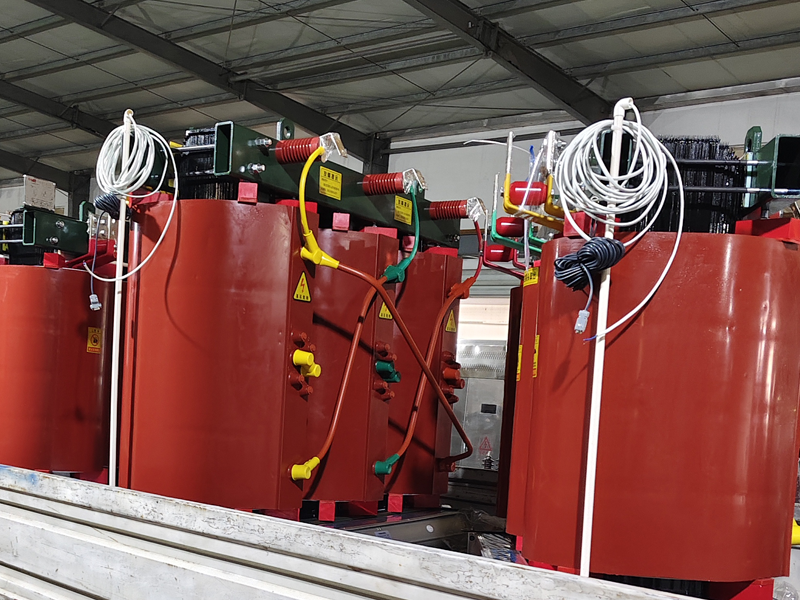
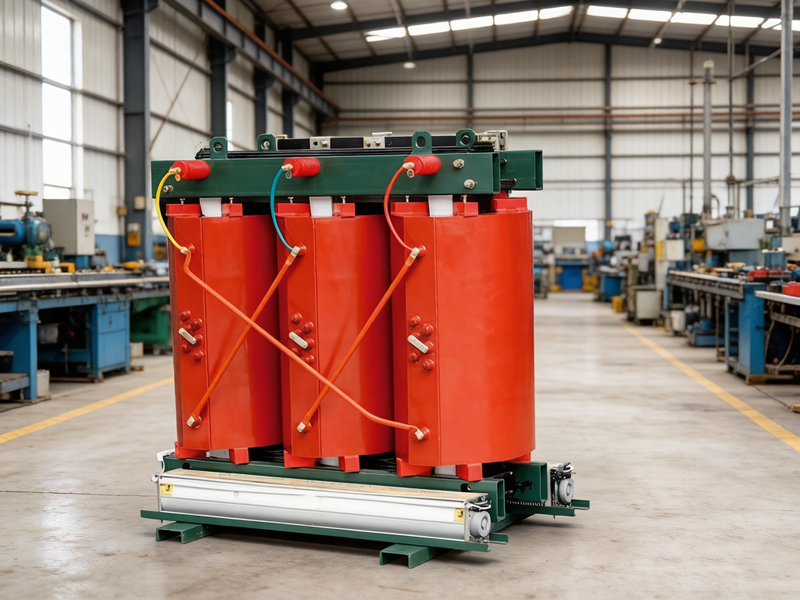
Simply put, it is a transformer in which the core and windings are not immersed in insulating oil, but are integrally cast and solidified using epoxy resin material.
For a better understanding, we can break it down into three keywords:
1. Transformer: A static electrical appliance that uses the principle of electromagnetic induction to convert AC power of one voltage level into power of another voltage level of the same frequency.
2. Dry type: relative to "oil-immersed type". It does not use transformer oil as an insulation and cooling medium, but relies on air convection for cooling.
3. Epoxy resin casting: This is the core technical feature of this product. Its high- and low-voltage windings are placed in a mold, cast with an epoxy resin mixture under vacuum, and cured by heating to form a solid whole.
This structure makes the windings of the transformer not only have excellent electrical insulation properties, but also have very high mechanical strength, as if they are wearing a layer of solid "glass fiber reinforced plastic armor".
II. How does it work? (Structure and Principle)
Epoxy resin cast dry-type transformer mainly consists of the following parts:
• Iron core: usually made of high-quality cold-rolled grain-oriented silicon steel sheets stacked together, it is the main channel of the magnetic circuit, with low loss and low noise.
• Winding (coil): This is the core component.
◦ Low-voltage winding: mostly adopt foil or wire-wound structure.
◦ High-voltage winding: adopt segmented layer or continuous structure.
◦ Key process: After the winding is completed, it is put into the mold and vacuum casted in the vacuum casting equipment. This process eliminates air bubbles and ensures that the resin completely fills the gaps and forms a dense protective layer after curing.
• Insulation system: Epoxy resin itself is a high-performance insulating material, and with fiberglass reinforcement, it forms the main insulation system.
• Cooling system: relies on natural air cooling (AN) or forced air cooling (AF). Usually, an axial flow fan is installed at the bottom of the transformer. When the load is too high, the fan will automatically start to accelerate the air flow and take away the heat.
Its working principle is the same as that of an ordinary transformer: when AC voltage is applied to the primary winding, alternating magnetic flux is generated, and the magnetic flux induces an electromotive force in the secondary winding, thereby realizing voltage conversion.
III. Why choose it? ——Analysis of core advantages
Compared with traditional oil-immersed transformers, epoxy resin cast dry-type transformers have the following significant advantages:
1. Extremely safe (fire and explosion-proof)
Since there is no flammable transformer oil, it fundamentally eliminates the risk of oil leakage, combustion and explosion. Even in the event of a short circuit or overload under extreme circumstances, epoxy resin is self-extinguishing and will not contribute to combustion. This makes it the first choice for underground locations, densely populated areas and high-rise buildings.
2. Strong environmental adaptability
When cured, epoxy resin forms a dense barrier that effectively resists moisture, dust, dirt and corrosive gases. Therefore, it is very suitable to operate in harsh environments such as basements, coastal salt spray areas, mines and chemical plants.
3. Easy maintenance and long service life
"Maintenance-free" is one of its major selling points. In daily operation, only the surface dust needs to be cleaned regularly. There is no need to regularly test the oil quality, replace the sealing gasket or perform oil filtering like an oil-immersed transformer. The design life is usually more than 30 years.
4. Environmentally friendly and pollution-free
After scrapping, the epoxy resin material can be recycled and processed. There is no problem of waste oil polluting the environment, which is in line with the modern green environmental protection concept.
5. High mechanical strength
The cast-molded windings have strong resistance to sudden short circuits and can withstand vibrations during transportation and electric power impacts during operation.
IV. Main application areas
Thanks to the above advantages, epoxy resin cast dry-type transformers are used in all walks of life:
• Civil buildings: high-rise residences, commercial centers, five-star hotels, office buildings (usually installed in underground power distribution rooms).
• Infrastructure: subways, airports, train stations, bridges and tunnels.
• Medical education: hospitals (especially operating rooms and ICU), university laboratories.
• Industrial production: Power supply to workshops of metallurgical, petrochemical, textile, manufacturing plants.
• New energy field: wind power generation (in the engine room), photovoltaic power station boosting.
• Special places: Nuclear power plants, ships, offshore platforms and other places with strict safety requirements.
V. Precautions for model selection and use
Although epoxy resin cast dry-type transformers have many advantages, you still need to pay attention to the following points when using them:
1. Temperature monitoring: It must be equipped with a complete temperature control system (Pt100 sensor) to monitor the winding temperature in real time and have over-temperature alarm and trip functions.
2. Ventilation and heat dissipation: Despite forced air cooling, the installation site must still maintain good ventilation conditions to ensure that heat can be effectively dissipated.
3. Anti-cracking: Although epoxy resin has good weather resistance, if it is operated for a long time in extremely cold areas (below -40°C), if the temperature difference changes drastically, there is a risk of resin cracking, so a special low-temperature resistant formula needs to be selected.
4. Capacity selection: Since its heat dissipation is not as fast as the oil-immersed type, the load rate needs to be carefully calculated in large-capacity (such as 2500kVA and above) applications, and forced air cooling is used when necessary.
VI. Conclusion
From a technical perspective, the epoxy resin cast dry-type transformer is a model of the combination of material science and electrical engineering; from a social perspective, it is an indispensable "safety guard" in the process of modern urbanization.
With the development of smart grids, today's dry-type transformers also integrate intelligent terminals, which can realize remote monitoring and data upload, moving towards more intelligence, miniaturization and efficiency. In the future power system, epoxy resin cast dry-type transformers will continue to protect the lights of thousands of homes with their excellent safety and reliability.