English
- English
- Español
- Português
- русский
- Français
- 日本語
- Deutsch
- tiếng Việt
- Italiano
- Nederlands
- ภาษาไทย
- Polski
- 한국어
- Svenska
- magyar
- Malay
- বাংলা ভাষার
- Dansk
- Suomi
- हिन्दी
- Pilipino
- Türkçe
- Gaeilge
- العربية
- Indonesia
- Norsk
- تمل
- český
- ελληνικά
- український
- Javanese
- فارسی
- தமிழ்
- తెలుగు
- नेपाली
- Burmese
- български
- ລາວ
- Latine
- Қазақша
- Euskal
- Azərbaycan
- Slovenský jazyk
- Македонски
- Lietuvos
- Eesti Keel
- Română
- Slovenski
- मराठी
- Srpski језик

How Does High-Voltage Switchgear Ensure the Safe and Stable Operation of Power Systems?
How Does High-Voltage Switchgear Ensure the Safe and Stable Operation of Power Systems?
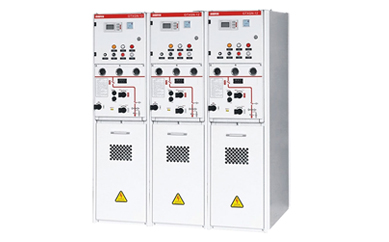
I. Core Definition and Industry Positioning of High-Voltage Switchgear
High-voltage switchgear is a core complete set of power distribution equipment in the power transmission and distribution system. According to general power industry standards, it specifically refers to enclosed switchgear with a rated operating voltage greater than 36kV, which can realize the connection, disconnection, monitoring, protection and control of high-voltage power circuits. Different from ordinary low-voltage power distribution equipment, high-voltage switchgear is in a charged standby state for a long time, remains in the closed position for most of the time, and only performs opening and tripping operations during equipment maintenance, line faults and power grid dispatching, with extremely low equipment fault tolerance and extremely high reliability requirements.
As a key hub of power grids, power plants, industrial and mining enterprises, and large-scale building power distribution systems, high-voltage switchgear directly determines the stability, safety and continuity of power supply. It can not only accurately cut off fault currents such as overload, short circuit and lightning overvoltage, but also realize the reasonable distribution of electric energy, line isolation and equipment protection, making it an indispensable core equipment in the high and low voltage power distribution system. In the past 15 years, with the upgrading of power intelligence and greenization, the technology of high-voltage circuit breakers has iterated rapidly. Minimum oil circuit breakers and air blast circuit breakers have been gradually upgraded, and sulfur hexafluoride (SF6) circuit breakers have become the mainstream core configuration of current high-voltage switchgear due to their excellent insulation and arc extinguishing performance.
II. Full Category Division of Switchgear Voltage Levels
According to the rated operating voltage, the power industry divides switchgear into three categories: low-voltage, medium-voltage and high-voltage. The three types of equipment have significant differences in application scenarios, structural configuration and safety standards, adapting to the needs of different power distribution scenarios:
1. Low-Voltage Switchgear (LV)
With a rated operating voltage ≤ 1kV, it is mainly installed on the low-voltage side of power distribution transformers, and is widely used in terminal power distribution scenarios such as industrial workshops, commercial buildings and residential communities. It is responsible for the distribution of terminal electric energy and basic circuit protection, with simple structure, convenient operation and low maintenance cost.
2. Medium-Voltage Switchgear (MV)
The rated operating voltage range is 1kV ~ 75kV. It is a common equipment in industrial production and small and medium-sized substations. It is mainly adapted to generators, feeder circuits, large motors, regional transmission and distribution lines and other equipment, taking into account power distribution efficiency and fault protection capabilities, and adapting to mid-end power transmission scenarios.
3. High-Voltage Switchgear (HV)
With a rated operating voltage ≥ 75kV, it is a special equipment for high-voltage power transmission and distribution. Designed for high-voltage, large-current and high-load working conditions, it is equipped with a complete set of enhanced safety protection devices and precision monitoring components. It is mainly used in high-risk and high-load power scenarios such as large substations, power plants, cross-provincial transmission lines, petrochemical industry and metallurgical heavy industry, and is the core guarantee for the stable operation of high-voltage power grids.
III. Detailed Explanation of Complete Core Components and Functions of High-Voltage Switchgear
High-voltage switchgear has a modular enclosed cabinet structure, which is divided into indoor and outdoor installation forms. The whole is composed of three modules: primary main circuit equipment, secondary control and monitoring equipment, and safety protection equipment. All components work together to build a complete power distribution, protection and monitoring system. The functions of core components are as follows:
1. High-Voltage Circuit Breaker (Core Executive Component)
Known as the "heart" of high-voltage switchgear, it is the only core component that can switch on and off circuits with load and cut off short-circuit fault currents. The equipment response speed can reach milliseconds. When overload, short circuit, leakage and other faults occur in the line, it can instantly cut off the fault circuit, prevent the fault from spreading, and protect the back-end equipment and the entire transmission line. At present, the mainstream type is SF6 circuit breaker, which has the advantages of strong arc extinguishing ability, good insulation performance, low failure rate and long service life, adapting to long-term uninterrupted operation conditions.
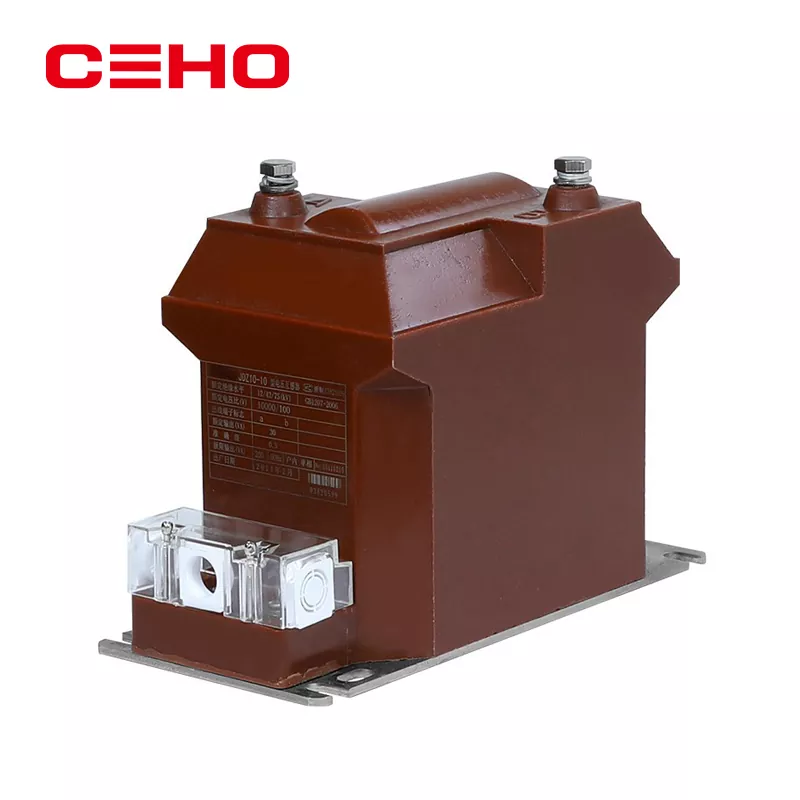
2. Instrument Transformers (Core of Monitoring and Measurement)
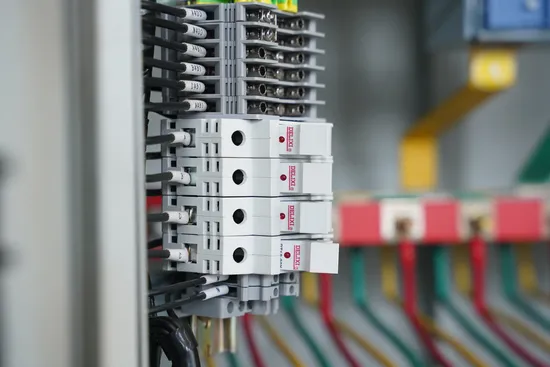
Divided into Current Transformers (CT) and Voltage Transformers (VT), they are the "sensory organs" of switchgear. The core function is to convert high voltage and large current into standard low-voltage and small-current signals. On the one hand, it provides accurate data for instrument measurement and power data monitoring; on the other hand, it provides trigger signals for protective relays, realizing automatic fault early warning and tripping, and ensuring the visualized and controllable operation of the power system.
3. Earthing Switch (Core of Safety Protection)
It is a mandatory safety component, mainly used in equipment maintenance conditions. After the circuit breaker and disconnector are opened and powered off, the earthing switch can quickly establish an earthing circuit, completely release the induced charges and residual voltage remaining in the line and equipment, eliminate the hidden danger of live operation, and fully ensure the personal safety of maintenance personnel and equipment safety.
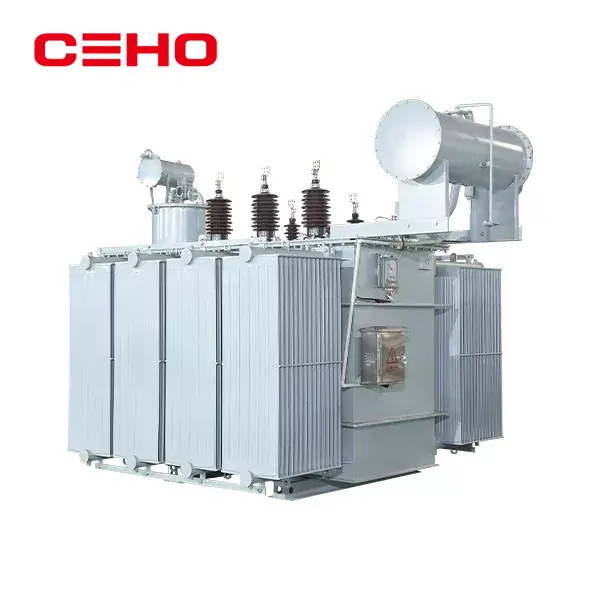
4. Step-Up/Step-Down Transformer
It is the largest and most expensive power conversion equipment in the switchgear. Step-up transformers are mainly used at the transmission end to reduce transmission current by increasing voltage and reduce power loss in long-distance transmission; step-down transformers are used at the power distribution terminal to convert high-voltage electric energy into low-voltage electric energy suitable for industrial and civil equipment, realizing efficient transmission and reasonable adaptation of electric energy.
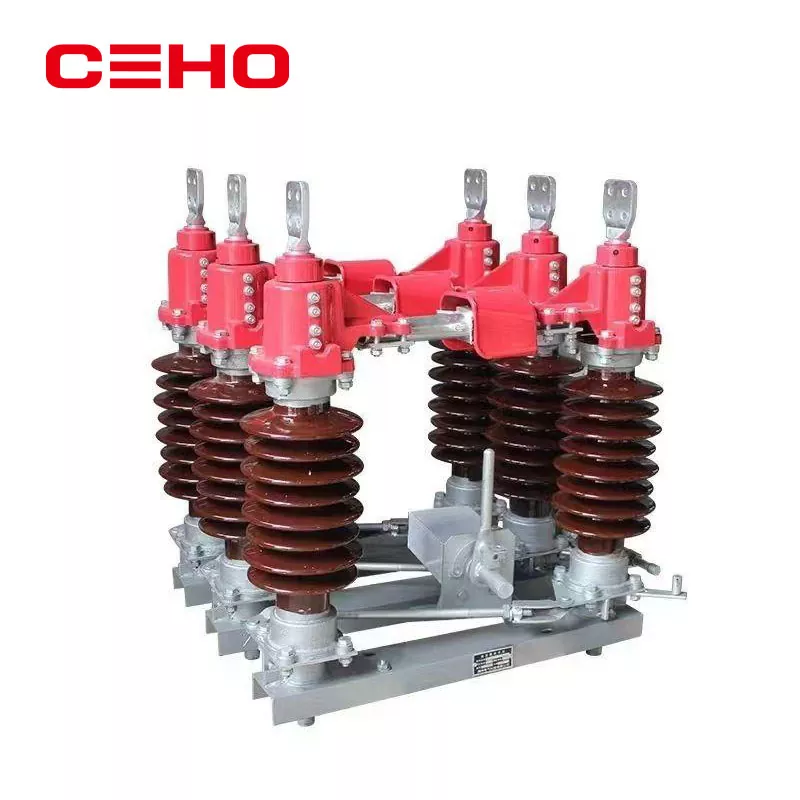
5. Disconnecting Switch (Isolation Component)
Also known as isolator, it is a mechanical manual switch without arc extinguishing function, and it is strictly prohibited to operate with load. Its main function is to realize physical isolation between equipment and power grid, form an obvious power-off breakpoint, provide safe operation conditions for equipment maintenance and line operation and maintenance, and is the basic safety guarantee device for high-voltage operation.
6. Protective Relay (Intelligent Control Component)
The "intelligent brain" of the switchgear can monitor the operating parameters such as line voltage, current and temperature in real time 24 hours a day, and accurately identify abnormal working conditions such as short circuit, overload and ground fault. Once a fault is detected, it immediately sends an instruction to trigger the circuit breaker to trip, and at the same time extinguishes the fault arc and records the fault data, realizing rapid fault isolation and traceability.
7. Busbars (Electric Energy Transmission Channel)
Made of low-impedance conductive materials, it is the main channel for electric energy transmission inside the switchgear. It is responsible for connecting all core components such as circuit breakers, transformers and transformers, ensuring efficient and stable transmission of electric energy in the cabinet. Its material quality and installation process directly affect the overall transmission efficiency of the switchgear.
8. Surge Arresters and Earthing Grid (Overvoltage Protection System)
Surge arresters are specially designed for transient high-voltage impacts such as lightning overvoltage and switching overvoltage. They can quickly absorb surge energy and avoid high-voltage breakdown of equipment insulation layers; the supporting earthing grid is composed of underground metal electrodes and earthing bars, which can quickly conduct fault current and surge current into the earth, providing double protection for equipment against transient high-voltage damage.
9. Contactor
Suitable for low-voltage auxiliary circuits below 1kV, it can frequently switch on and off control circuits and power circuits remotely, mainly controlling loads such as motors, capacitors and lighting equipment. Compared with circuit breakers, contactors have higher operation frequency and longer mechanical life, but no high-voltage fault breaking capacity, and are only used as low-voltage auxiliary control components.
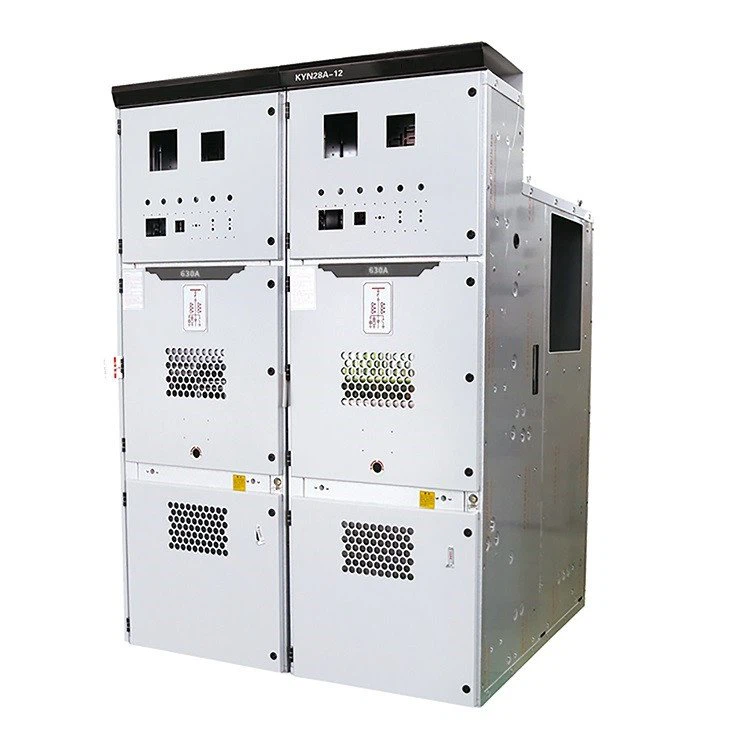
IV. Two Main Types of High-Voltage Switchgear and Their Advantages and Disadvantages Comparison
According to the different insulation media, the industry divides high-voltage switchgear into two categories: Air-Insulated Switchgear (AIS) and Gas-Insulated Switchgear (GIS). The two have significant differences in adaptation scenarios, performance characteristics and operation and maintenance costs:
1. Air-Insulated Switchgear (AIS)
With natural air as the insulation medium, it is the mainstream type of traditional high-voltage switchgear. Its core advantages are simple structure, low cost, convenient installation, intuitive fault diagnosis and low daily maintenance difficulty; its disadvantages are large cabinet volume, insulation performance greatly affected by the environment, and easy insulation degradation in humid, dusty and polluted environments. It is mainly suitable for outdoor conventional substations and high-voltage power distribution scenarios with good working conditions.
2. Gas-Insulated Switchgear (GIS)
Using high-purity sulfur hexafluoride (SF6) gas as the insulation and arc extinguishing medium, all live components are sealed in the gas-filled cabinet. Its core advantages are compact cabinet, small floor area, stable insulation performance, not affected by external dust, humidity and harsh weather, extremely high operation reliability and extremely low failure rate; its disadvantages are high equipment cost, complex maintenance process and strict requirements on sealing performance. It is mainly suitable for high-end scenarios such as urban core substations, closed machine rooms, harsh working conditions and high-density power transmission.
V. Common Faults and Standardized Troubleshooting Schemes of High-Voltage Switchgear
The overall failure rate of high-voltage switchgear is low, but long-term operation, environmental erosion, improper operation and component aging can cause various faults. Combined with front-line operation and maintenance experience, this paper sorts out the causes of high-frequency faults and standardized solutions, which are suitable for daily inspection and equipment maintenance work:
1. The operating handle cannot be locked: It is mostly caused by rust, jamming, aging of the internal locking mechanism or mismatched keys. Treatment method: Check the special operating key, clean and derust the locking mechanism, add special lubricating grease, and directly replace the damaged components to ensure the normal function of the mechanical locking.
2. Abnormal noise inside the cabinet: The core causes are electromagnetic vibration caused by loose fixing screws of the partition plate and cables touching the gland plate. Treatment method: Fully fasten the screws of the cabinet partition plate, and apply sealant to fix the cable interface to eliminate contact vibration noise.
3. Overheated wiring joints: It is mainly caused by loose bolts, long-term overload operation and excessive contact resistance. Treatment method: Operate strictly according to the rated current of the equipment, fasten all wiring bolts, and timely replace the aging and oxidized busbars and joints.
4. Unqualified insulation test and frequent ground faults: The main causes are cracked, damp and contaminated insulators, which will lead to a significant decline in insulation performance. Treatment method: Replace damaged insulators, clean the insulation components of the cabinet with special insulation cleaning agents, and thoroughly dry the damp areas to restore insulation performance.
5. Abnormal opening and closing of protective shutters: Deformation of shutters, lack of oil in moving parts and jamming of sundries will lead to failure to open and close normally. Treatment method: Clean the sundries in the moving parts, correct the deformed shutters, add lubricating oil, and adjust the opening and closing accuracy.
6. Extinction of status indicator lights: Common causes include bulb damage, fuse/resistor burnout, poor contact of auxiliary switches and limit switch faults. Treatment method: Replace damaged bulbs and fuses, clean the contacts of auxiliary switches, and check the operation status of the circuit breaker at the terminal.
7. Disorderly operation of the control unit: The core reasons are loose screws of the terminal block and poor contact of the control plug. Treatment method: Fasten all terminal screws, re-plug and lock the control connector to ensure stable line contact.
VI. Core Five-Prevention Protection Functions of High-Voltage Switchgear (Safety Core)
The five-prevention interlocking function is the core safety design of high-voltage switchgear, which is a mandatory standard configuration in the industry. It can mechanically eliminate major power accidents caused by human misoperation and is the core guarantee for high-voltage operation safety:
1. Prevent closing with load: After the circuit breaker trolley is closed in the test position, the mechanical lock locks the trolley, which cannot be pushed into the working live position, eliminating the accident of closing with load.
2. Prevent closing with earthing line: When the earthing switch of the cabinet is in the closed position, the circuit breaker cannot be closed and powered on, avoiding short circuit and explosion caused by forced power transmission without removing the earthing line.
3. Prevent accidental entry into live interval: When the circuit breaker is in the closed and live operation state, the rear door of the cabinet is locked by the mechanical lock and cannot be opened, preventing personnel from entering the live area and getting an electric shock.
4. Prevent hanging earthing line with electricity: When the circuit breaker is in the closed and live operation state, the operating mechanism of the earthing switch is locked and cannot be closed and earthed, eliminating the short circuit fault caused by hanging earthing line with electricity.
5. Prevent drawing the knife with load: When the circuit breaker is in the closed state with load, the trolley cannot be moved out of the working position, and it is forbidden to open the isolating switch with load.
VII. Core Summary of the Full Text
High-voltage switchgear is the core complete set of power distribution equipment for high-voltage power systems above 75kV. Relying on the coordinated work of modular components such as circuit breakers, instrument transformers, relays and earthing systems, it integrates five core functions: electric energy distribution, circuit control, fault protection, safety protection and real-time monitoring. In terms of categories, it is mainly divided into two types: AIS air-insulated switchgear with simple structure and convenient operation and maintenance, and GIS gas-insulated switchgear with stable performance and suitable for high-end scenarios.
The equipment as a whole has the characteristics of low failure rate, long service life and high reliability, and is in a standby operation state for a long time. Its core safety guarantee comes from the standardized five-prevention interlocking design and perfect overvoltage, overload and short-circuit protection mechanisms. Daily operation faults are mostly caused by component aging, loose installation, environmental erosion and improper operation, and the fault probability can be greatly reduced through regular inspection and standardized operation and maintenance. In fields such as power grid transmission, industrial power distribution and new energy power, the stable operation of high-voltage switchgear is the key foundation for the safe, efficient and continuous operation of the entire power system.
VIII. High-Frequency FAQ (Industry General)
Q1: What is the core difference between high-voltage switchgear and low-voltage switchgear?
A1: The core differences lie in rated voltage, insulation level and functional positioning. High-voltage switchgear (≥75kV) has high-voltage arc extinguishing, short-circuit breaking capacity and five-prevention protection, which is used for main line transmission; low-voltage switchgear (≤1kV) is only used for terminal power distribution, with simple structure and no high-voltage protection.
Q2: How to select between GIS and AIS high-voltage switchgear?
A2: Choose AIS for conventional outdoor, good working conditions and limited budget; choose GIS for urban core areas, closed machine rooms, harsh working conditions and limited space.
Q3: Can high-voltage switchgear be operated frequently?
A3: No. High-voltage circuit breakers are prohibited from frequent load-carrying operation; only low-voltage contactors can frequently switch on and off auxiliary circuits, otherwise it will accelerate equipment aging and cause hidden dangers.
Q4: Can the five-prevention function of high-voltage switchgear be manually released?
A4: It is strictly prohibited to release it without permission. Only professional operation and maintenance personnel can temporarily unlock it according to the specifications during maintenance and after taking safety protection measures, and it must be restored immediately after the operation.
Q5: What are the main hazards and treatment principles of overheated switchgear joints?
A5: Hazards include accelerating component aging, causing short circuits and even fires; treatment principles: check load, fasten joints, replace aging components, and eliminate overload.
Q6: Is it necessary to shut down for maintenance if there is abnormal noise inside the high-voltage switchgear?
A6: Yes. Abnormal noise is an early warning of equipment abnormality. If left unchecked for a long time, it will cause faults. It is necessary to shut down immediately to check and eliminate hidden dangers before resuming operation.
Q7: What indicators need to be detected daily for SF6 gas-insulated switchgear?
A7: Regularly detect SF6 gas (pressure, purity, micro-water) and cabinet airtightness, and check insulation performance and mechanical operation flexibility.
Related News
- Start by Choosing the Right JXF
- SG(B)10-10KV environmentally friendly dry-type transformer: How to deliver safe and green answers under non-encapsulated structure?
- What are the hazards of transformer overload operation? How to carry out real-time load monitoring?
- How can oil immersed transformers achieve future green development in the context of "dual carbon"?
- What does the internal structure of a dry-type transformer look like when disassembled?
- How to choose between power cabinet and lighting distribution box?
Leave me a message