English
- English
- Español
- Português
- русский
- Français
- 日本語
- Deutsch
- tiếng Việt
- Italiano
- Nederlands
- ภาษาไทย
- Polski
- 한국어
- Svenska
- magyar
- Malay
- বাংলা ভাষার
- Dansk
- Suomi
- हिन्दी
- Pilipino
- Türkçe
- Gaeilge
- العربية
- Indonesia
- Norsk
- تمل
- český
- ελληνικά
- український
- Javanese
- فارسی
- தமிழ்
- తెలుగు
- नेपाली
- Burmese
- български
- ລາວ
- Latine
- Қазақша
- Euskal
- Azərbaycan
- Slovenský jazyk
- Македонски
- Lietuvos
- Eesti Keel
- Română
- Slovenski
- मराठी
- Srpski језик

What is Low-voltage Switchgear? Basics and Applications
What is Low-voltage Switchgear? Basics and Applications
In the era of rapid digital transformation and green energy transition, as countries around the world strive to achieve the "dual carbon" goals and build smart energy systems, the stability, safety and efficiency of electrical power systems have become the cornerstone of high-quality economic and social development. Guided by the strategy of integrating digital technology with the real economy, the energy and power industry is accelerating its intelligent upgrading, and low-voltage switchgear, as a core component of low-voltage power distribution systems, is playing an increasingly critical role in this transformation journey. From smart grids and data centers to new energy bases and industrial parks, low-voltage switchgear is the invisible guardian that ensures the stable operation of electrical systems, undertakes the important tasks of energy distribution, safety protection and intelligent monitoring, and provides strong support for the efficient integration of new energy, the intelligent operation of industrial production and the low-carbon development of society. Against the backdrop of the booming development of new quality productive forces in the energy sector, understanding the fundamentals, components, functions and applications of low-voltage switchgear is not only essential for electrical engineering and maintenance practitioners, but also a key prerequisite for promoting the digital and intelligent upgrading of the power industry and safeguarding the security of the energy supply chain. This article will systematically elaborate on all aspects of low-voltage switchgear, helping you grasp the core knowledge and keep pace with the development trend of the energy power industry.
Low-voltage switchgear is a crucial component of electrical systems, providing both safety and control. Understanding the fundamentals is critical for anyone working in electrical engineering or maintenance.
What is low-voltage switchgear?
Low-voltage switchgear refers to a complete set of electrical equipment in power distribution systems with AC rated voltage of 1000V and below and DC rated voltage of 1500V and below. It consists of a enclosure, busbars, switching devices, protective devices, measuring instruments, and auxiliary accessories, and is used to receive, distribute, control, protect, monitor, and convert electrical energy.Low-voltage switchgear belongs to low-voltage complete switchgear. It is a complete set of equipment that assembles electrical components such as circuit breakers, contactors, transformers, instruments, and busbars into a closed or semi-closed metal cabinet according to a certain main circuit scheme, and is used for low-voltage power distribution or motor control.
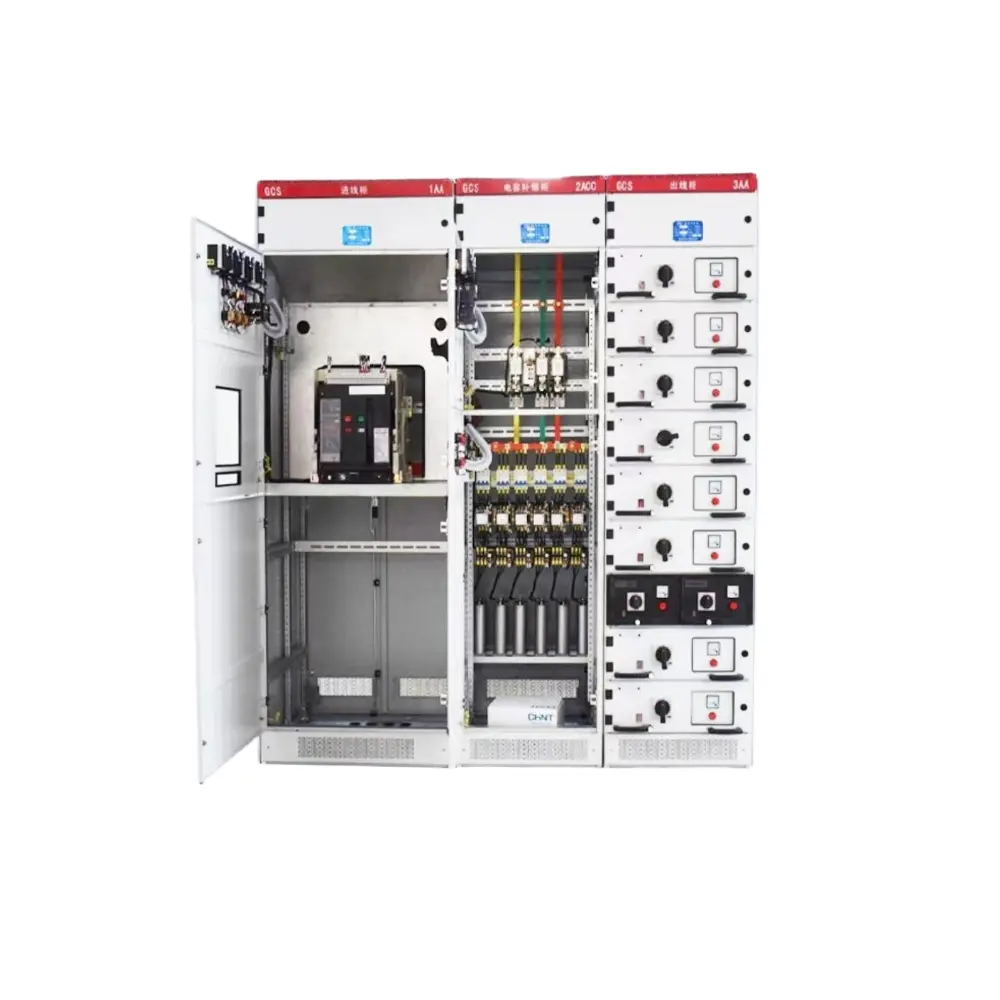
Electrical Switchgear Types
There are three different classes of switchgear systems: low-voltage, medium-voltage, and high-voltage.
· High Voltage Switchgears: High-voltage switchgears (HV) are those that control 75KV of power or more. Because these breakers are designed for high-voltage use, they often include improved safety features.
· Medium Voltage Switchgear: Medium-voltage switchgear(MV) is utilized in systems ranging from 1 KV to 75 KV. This switchgear is commonly found in systems that include motors, feeder circuits, generators, and transmission and distribution lines.
· Low Voltage Switchgear: Low-voltage switchgear(LV) is designed to regulate systems up to 1KV. These are often found on the low-voltage sides of power distribution transformers and are employed in a wide range of industries.
Main Components of Low Voltage Switchgear
Low voltage switches, earth leakage circuit breakers, HRC fuses, electrical isolators, air circuit breakers (ACB), moulded case circuit breakers (MCCB), and tiny circuit breakers (MCB) are examples of low voltage switchgear with a 1KV rating.
· Breaker compartment: Devices that automatically cut off electrical flow in the case of an overload or short circuit. Types include tiny circuit breakers (MCBs) and molded case circuit breakers (MCCBs).
· Switches: Mechanical devices for opening and closing electrical circuits. They can be operated manually or automatically.
· Bus compartment: The bus compartment is located behind the circuit breaker compartment and is likewise separated from it by solid barriers.
· HRC fuses: When the current surpasses a certain threshold, safety devices melt and break the circuit. Fuse types include cartridge fuses and plug fuses.
· Enclosures: Protective cases that house the switchgear components, ensuring safety and compliance with standards such as IP ratings for dust and water resistance.
· Cable compartment: The cable compartment, which is located behind the switchgear section, can be divided from the bus compartment using either vented or unvented barriers.
· And other accessories necessary to protect the system
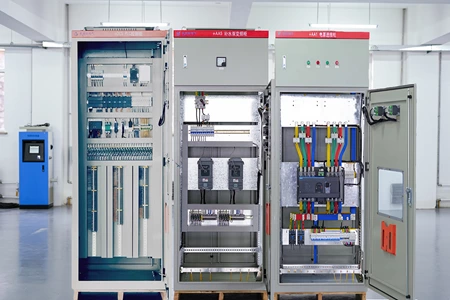
Basic Functions Of Low-Voltage Switchgear Areas
Electrical Parameters
1. Rated Insulation Voltage: AC 660V
2. Rated Operating Voltage: AC 380V
3. Rated Frequency: 50Hz
4. Rated Operating Current:
Horizontal Busbar Rated Current: 630-6300A
Vertical Busbar Rated Current: 630-1600A
5. Rated Short-Time Withstand Current:
Rated Peak Withstand Current (IS): 30-80KA
Rated Short-Time Withstand Current (IS): 30-80KA
6. Rated Peak Withstand Current:
Horizontal Busbar (Main Busbar): 63-176KA
Vertical Busbar (Branch Busbar): 63-176KA
Application of Low Voltage Switchgear
· Power stations
· Transformer stations
· Automotive industry
· Infrastructure
· Machine construction
· Chemicals and petrochemicals
· Pharmaceutical industry
· Oil and gas industry
· Pulp and paper industry
· Cement industry
· Mining industry and steel mills
· Waste disposal
· Water management
· Steel and metal industry
· Glass industry
· Plant construction
· Data centres
· and many more
Usage Conditions
* Ambient air temperature must not exceed +40℃ or fall below -5℃, and the average temperature over 24 hours must not exceed +35℃.
* The air must be clean. At a maximum temperature of +40℃, the relative humidity must not exceed 50%. Higher relative humidity is permissible at lower temperatures.
* Pollution degree: 3.
* The altitude of the installation site must not exceed 2000m.
* Special usage conditions will be negotiated separately when ordering.
Features of Low-Voltage Switchgear:
1. Rational Design: Modular design based on the characteristics of various switchgear components, combining them into functional units.
2. Universal Structure and Flexible Assembly: C-type profiles meet the requirements of various structural forms, protection levels, and operating conditions.
3. Standard Modules: Standard unit modules for protection, operation, conversion, and control can be selected and assembled arbitrarily.
4. Safety Protection: Isolation between areas and mutual isolation between incoming and outgoing lines of functional units effectively enhances safety protection performance.
5. Technical Parameters: Key technical parameters are at an internationally leading level.
Benefits of Low Voltage Switchgear
· Keep safe and sound:One of the best things about low voltage switchgear is that it makes things safer by stopping electrical problems and accidents.
· Speed and dependability: It makes sure that electricity systems work well, which cuts down on downtime and boosts efficiency.
· Efficient use of money: Low voltage switchgear saves money in the long run because it keeps equipment from getting damaged and lowers the cost of upkeep.
Summary
Low-voltage switchgear is a core component of electrical systems, defined as equipment for AC ≤1000V and DC ≤1500V. It integrates multiple electrical components, belonging to low-voltage complete switchgear, mainly used for energy distribution, control and protection. As one of three switchgear types (LV/MV/HV), it is designed for systems ≤1KV and widely used in power stations, various industries and infrastructure.
Its main components include breaker compartments, switches, bus compartments, HRC fuses, enclosures, cable compartments and other accessories. It has clear rated parameters and features modular design, flexible assembly and reliable safety, bringing benefits such as enhanced safety, high reliability and long-term cost savings.
It requires specific usage conditions (temperature: -5℃~+40℃, humidity ≤50% at +40℃, pollution degree 3, altitude ≤2000m; special conditions negotiated separately). It plays a vital role in energy transformation and industrial intelligent upgrading.
FAQ (Frequently Asked Questions)
Q1: What is low-voltage switchgear, and how is it defined?
A1: It refers to equipment for AC ≤1000V/DC ≤1500V, assembling electrical components into a metal cabinet, used for low-voltage power distribution or motor control, with core functions of energy distribution, control and protection.
Q2: How does low-voltage switchgear differ from medium-voltage and high-voltage switchgear?
A2: Distinguished by voltage: HV (≥75KV), MV (1~75KV), LV (≤1KV, used for low-voltage side of transformers and various industries).
Q3: What are the main components of low-voltage switchgear, and what are their functions?
A3: ① Breaker compartment: Cuts off current on overload/short circuit; ② Switches: Opens/closes circuits; ③ Bus compartment: Separated from breaker compartment; ④ HRC fuses: Breaks circuit when current exceeds threshold; ⑤ Enclosures: Protective cases; ⑥ Cable compartment: Separable from bus compartment; ⑦ Other auxiliary accessories.
Q4: What are the key rated electrical parameters of low-voltage switchgear?
A4: AC 660V (insulation), AC 380V (operating), 50Hz (frequency); horizontal busbar 630-6300A, vertical 630-1600A; short-time/peak withstand current 30-80KA/63-176KA.
Q5: In which fields is low-voltage switchgear commonly used?
A5: Widely used in power stations, transformer stations, automotive, chemicals, data centers, mining, water management and other industries/infrastructure.
Q6: What are the usage conditions for low-voltage switchgear?
A6: Temperature -5℃~+40℃, humidity ≤50% at +40℃, pollution degree 3, altitude ≤2000m; special conditions negotiated when ordering.
Q7: What are the main features and benefits of low-voltage switchgear?
A7: Features: Modular design, flexible assembly, standard modules, safe and advanced parameters. Benefits: Safer, more reliable, less downtime and cost-saving.
Related News
- What GT-12 Actually Is
- Power Transformers in School: The Invisible Heart of Campus Energy
- How to Choose the Right Transformer
- How Do You Choose the Right High Voltage Power Cable?
- Copper vs Aluminum Windings in Transformers: Which Should You Choose?
- What Makes Amorphous Metal Distribution Transformers Worth It?
Leave me a message
New Products


News Recommendations